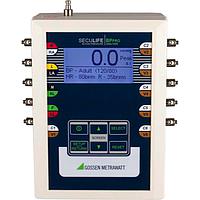
Patient Simulation
Accurate functional testing is essential when working with patient monitors, vital signs devices, and biomedical service workflows. In day-to-day verification, a reliable simulator helps technicians reproduce physiological signals in a controlled way, making it easier to check performance, document results, and identify faults before equipment returns to clinical use.
Patient Simulation equipment is used to generate repeatable signals such as ECG, respiration, SpO2, blood pressure, and temperature, depending on the model. This category is especially relevant for biomedical engineers, hospital maintenance teams, independent service providers, and calibration laboratories that need practical tools for testing monitors across routine inspection, preventive maintenance, and troubleshooting tasks.
Where patient simulators fit in medical device testing
In a medical device testing environment, patient simulators act as controlled signal sources for verifying how monitoring equipment responds to known conditions. Instead of waiting for live inputs or relying on uncertain field conditions, technicians can simulate normal rhythms, abnormal patterns, pressure values, or oxygen saturation behavior in a repeatable and documented process.
This makes the category closely connected to broader biomedical test activities. For teams handling multiple device types, it is often useful to review related tools such as defibrillation test equipment or infusion device analyzers when building a complete service bench.
Typical signals and functions covered in this category
The main value of a patient simulator is its ability to reproduce physiological and performance signals that clinical monitors are designed to detect. Depending on the instrument, this may include ECG waveforms, arrhythmia patterns, respiration, invasive blood pressure, non-invasive blood pressure behavior, SpO2 simulation, and temperature channels.
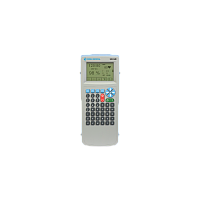
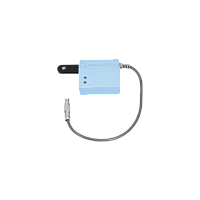
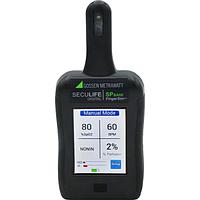
Some applications require a compact tool focused on one parameter, while others need a broader vital signs simulation platform. For example, the Rigel medical Puls-R SpO2 Finger Simulator is intended for oxygen saturation verification in a compact form factor, while multi-parameter instruments such as the Rigel medical UNI-SiM Vital Signs Simulator support a wider range of monitor checks involving NIBP, SpO2, ECG, respiration, and additional functions.
Representative Rigel medical solutions in this range
Rigel medical is a key manufacturer in this category, with instruments suited to different testing depths and service requirements. The range shown here includes both targeted and multi-function simulators, allowing users to choose between focused verification tasks and broader bench coverage.
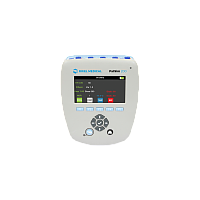
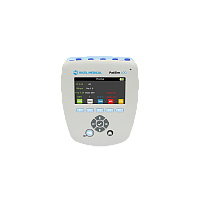
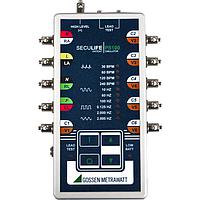
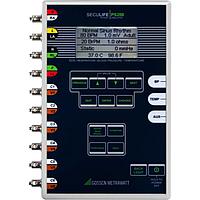
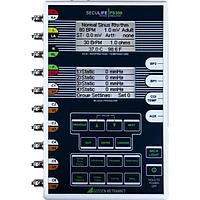
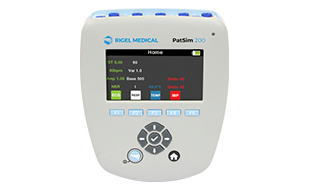
The Rigel medical PatSim 200 Patient Simulator and Rigel medical PatSim 400 Patient Simulator are examples of multi-parameter devices used for monitor performance checks. They support testing scenarios involving ECG, respiration, invasive blood pressure, pacemaker functions, fetal simulation, and temperature, making them suitable for service environments where one instrument must cover multiple verification routines. For more focused SpO2 work, the Rigel medical Puls-R SpO2 Finger Simulator provides a simpler path for checking pulse oximeter response without moving to a full vital signs simulator.
How to choose the right patient simulation equipment
Selection should start with the monitor types you service most often. If your workflow mainly involves bedside monitors and multiparameter systems, a broader simulator may be more efficient because it reduces setup changes and supports more complete performance checks in one session. If you only need to verify one parameter, a specialized device can be the more practical option.
It is also important to match the simulator to the level of testing required. Some teams only need routine output checks, while others require advanced waveform simulation, arrhythmia testing, multiple invasive pressure channels, or support for specialized service procedures. In those cases, reviewing the available functions carefully matters more than choosing by price or product name alone.
Battery operation, portability, interface style, and ease of use can also affect productivity in the field. A compact simulator may be preferable for mobile service work, while a more feature-rich platform can be a better fit for workshop-based biomedical departments handling a larger variety of devices.
Use cases in hospitals, service centers, and calibration labs
Hospitals often use this type of equipment during preventive maintenance and post-repair verification of patient monitors. By applying known simulated inputs, biomedical teams can confirm that devices are reading and displaying values consistently before they are released back into clinical departments.
Independent service organizations and calibration laboratories may need a broader set of tools to support multiple test workflows. In these environments, patient simulation is often used alongside categories such as electrosurgical analyzer systems or phantoms for imaging and medical testing, depending on the scope of devices under service.
Single-parameter vs multi-parameter simulation
A useful way to narrow down this category is to separate single-parameter tools from multi-parameter simulation platforms. Single-function devices are usually easier to deploy for repetitive checks and can be ideal when one test type dominates the workload. They also simplify training and reduce setup time for straightforward verification tasks.
Multi-parameter simulators, by contrast, are better suited to environments where one technician may need to test ECG, respiration, pressure, temperature, and oxygen saturation in sequence. Products such as the Rigel medical UNI-SiM and the PatSim series illustrate this broader approach, where one instrument supports several common monitor verification steps within the same workflow.
Why repeatability matters in biomedical verification
In medical equipment testing, repeatability is just as important as feature coverage. A simulator should provide stable, known outputs so that test results can be compared over time, between departments, or across service events. This helps support maintenance records, troubleshooting decisions, and consistent evaluation standards.
For that reason, many buyers look beyond basic signal generation and focus on how a simulator fits into documented service procedures. The ability to reproduce the same conditions across repeated tests can improve confidence in results and reduce ambiguity when diagnosing monitor behavior.
Finding the right fit for your testing workflow
This category is best approached as part of a practical service process rather than as a simple list of instruments. The right choice depends on whether you need compact SpO2 checking, broader patient monitor verification, or a multi-function platform that supports several physiological simulation tasks in one device.
By comparing the supported test functions, intended workflow, and service environment, buyers can identify a simulator that matches real maintenance needs more closely. For biomedical teams working with patient monitors and vital signs equipment, the patient simulation range provides a solid foundation for controlled, repeatable, and more efficient testing.
Get exclusive volume discounts, bulk pricing updates, and new product alerts delivered directly to your inbox.
By subscribing, you agree to our Terms of Service and Privacy Policy.
Direct access to our certified experts