Digital Oscilloscope
When engineers need to visualize voltage over time, compare multiple signals, or verify switching behavior in real conditions, a modern digital oscilloscope becomes one of the most practical instruments on the bench. It supports troubleshooting, validation, design work, maintenance, and training across electronics, automation, power systems, embedded development, and industrial service environments.
On this page, you can explore digital oscilloscopes for different measurement needs, from compact 2-channel models for routine testing to higher-performance platforms with deeper memory, faster sampling, and expanded analysis capability. The range includes instruments from KEYSIGHT, TEKTRONIX, and BKPRECISION, with options suitable for labs, production support, field service, and technical education.
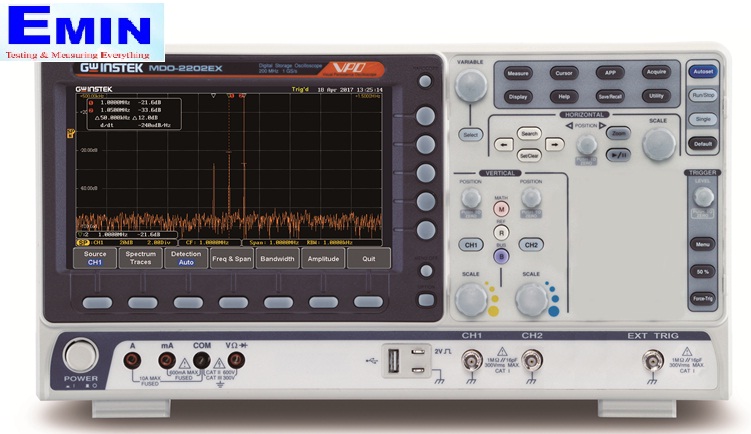
Why digital oscilloscopes remain central to electronic measurement
A digital oscilloscope captures an electrical waveform, stores sampled data, and displays it in a form that is easier to analyze than a purely analog trace. This makes it useful not only for seeing whether a signal exists, but also for checking timing, amplitude, rise behavior, noise, glitches, and repetitive or transient events.
In B2B environments, that matters for a wide range of work: verifying sensor outputs, debugging control boards, checking communication lines, analyzing power rails, and confirming the behavior of converters, drivers, and embedded systems. Compared with a traditional analog oscilloscope, digital models typically offer waveform storage, measurement automation, math functions, and easier documentation through USB or PC connectivity.
Common configurations available in this category
The available product mix shows the typical structure of the category: bandwidth classes from 50 MHz to 200 MHz, 2-channel and 4-channel instruments, and sample rates from 1 GS/s up to 2 GS/s in mainstream bench models. These configurations are common in electronics troubleshooting, board-level verification, and educational labs where a balance between performance, usability, and cost efficiency is important.
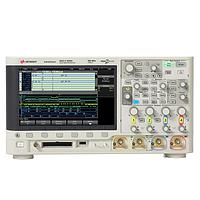
For example, a 2-channel model such as the KEYSIGHT DSOX2022A or TEKTRONIX TBS1202C is often suitable for measuring input/output relationships, clock and data behavior, or comparing a trigger signal with a response. A 4-channel platform such as the KEYSIGHT DSOX2024A, KEYSIGHT DSOX2014A, or TEKTRONIX TBS2104B provides more room for observing multiple nodes at the same time, which is especially useful in embedded systems, motor control, and power electronics.
Some systems in this category also highlight features beyond basic waveform display, such as FFT math, serial protocol analysis, built-in waveform generation, or higher waveform capture rates. In practice, these functions can reduce setup time and help teams move faster from detection to diagnosis.
How to choose the right model for your application
Bandwidth is usually the first filter. Lower-bandwidth instruments can be sufficient for slow control signals, educational use, and general-purpose debugging, while faster digital electronics and sharper edge analysis often require more headroom. Within this category, 50 MHz, 70 MHz, 100 MHz, and 200 MHz models cover many common industrial and laboratory tasks.
Channel count should be matched to the complexity of the circuit under test. Two channels are often enough for routine signal comparison, but four channels provide better visibility when checking several control lines, power sequences, or bus-related timing interactions in one capture. This is why many engineering teams standardize on 4-channel units for development benches.
Sample rate and memory depth also matter. Faster sampling helps preserve waveform detail, while deeper memory makes it easier to inspect longer events without losing time resolution. Instruments such as the KEYSIGHT DSOX2024A and DSOX2022A combine 200 MHz bandwidth with up to 2 GSa/s sampling, while models in the TEKTRONIX TBS2100B family offer stronger record length for users who need to observe longer acquisition windows more comfortably.
Examples from leading manufacturers in this range
TEKTRONIX is represented here with several well-known bench oscilloscopes. The TBS1072C, TBS1102C, and TBS1202C provide straightforward 2-channel measurement for routine test tasks, while the TBS2102B and TBS2104B step up with 100 MHz bandwidth and 2 GS/s sampling for users who need more screen space, longer record length, and broader bench capability.
KEYSIGHT models in this category include both entry-level and general-purpose bench instruments. The EDUX1052A and EDUX1052G are practical 50 MHz options for learning environments and basic electronics work, with the EDUX1052G adding integrated waveform generation for broader bench utility. Higher up, the DSOX2014A, DSOX2022A, and DSOX2024A support 100 MHz to 200 MHz measurement with 2-channel or 4-channel configurations for more demanding validation and troubleshooting workflows.
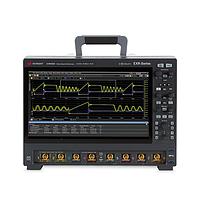
For users looking at additional bench alternatives, BKPRECISION 2190E offers a 100 MHz, 2-channel digital storage oscilloscope format that can fit routine service, maintenance, and general electronics testing. In more advanced mixed-signal work, the TEKTRONIX MSO44B illustrates how this category can extend into higher sampling performance and more flexible channel architecture when project requirements grow.
Typical use cases in industry, labs, and education
In industrial maintenance, digital oscilloscopes help technicians verify sensor outputs, PWM behavior, analog feedback loops, and switching signals in control systems. They are also useful for diagnosing intermittent faults that may not be visible with a multimeter alone. Bench models remain a strong choice when the work is performed in workshops, maintenance rooms, or equipment commissioning areas with stable workspace conditions.
In R&D and electronics design, the instrument is often used for startup sequencing, signal integrity checks, clock validation, noise observation, and waveform comparison before and after a circuit stage. If portability is more important than a benchtop display and interface, some users may also consider a handheld oscilloscope for field-oriented troubleshooting.
Educational environments benefit from digital scopes because stored waveforms, automatic measurements, and visual math tools make signal behavior easier to teach and document. Models with a simpler user interface and moderate bandwidth can be especially effective for training in analog electronics, embedded systems, and basic communications concepts.
Bench oscilloscope or PC-based measurement?
For many buyers, the main decision is not whether to use an oscilloscope, but which format fits the workflow best. A bench digital oscilloscope offers a self-contained display, front-panel controls, fast setup, and a familiar lab experience. That makes it efficient for repeated daily use in production support, service centers, test stations, and engineering benches.
However, there are cases where a PC oscilloscope is a better fit, especially when users want a compact instrument tied closely to computer-based analysis, data logging, or portable lab setups. The right choice depends on whether your priority is stand-alone convenience, mobility, software-driven workflows, or space-saving integration.
What to review before purchasing
Before selecting a unit, it is worth checking the expected signal frequency range, the number of signals that must be viewed simultaneously, and whether the application requires functions such as FFT, serial analysis, LAN connectivity, or built-in waveform generation. These details influence both immediate usability and long-term value in a technical environment.
You should also think about who will use the instrument. A training lab may prioritize simplicity and repeatable setup, while an engineering department may place more value on memory depth, update rate, or more advanced triggering. Matching the oscilloscope to the actual measurement workflow is usually more useful than choosing only by headline bandwidth.
Find a digital oscilloscope that matches your measurement workflow
This category brings together digital oscilloscopes for everyday troubleshooting, education, design validation, and more advanced bench analysis. With models from KEYSIGHT, TEKTRONIX, and BKPRECISION represented across different bandwidths and channel counts, buyers can compare practical options for both standard and evolving test requirements.
If you are narrowing down choices, focus on the signals you measure most often, the number of channels your work really needs, and whether your team benefits more from compact general-purpose scopes or more capable bench platforms. A well-matched digital oscilloscope improves visibility, speeds up diagnosis, and supports more confident decisions across the full measurement process.
Get exclusive volume discounts, bulk pricing updates, and new product alerts delivered directly to your inbox.
By subscribing, you agree to our Terms of Service and Privacy Policy.
Direct access to our certified experts