Picoammeter/Nanovoltmeter
Measuring ultra-low current or extremely small voltage signals requires more than a standard bench instrument. In research labs, semiconductor evaluation, materials testing, and high-resistance applications, signal levels can fall into the femtoamp or nanovolt range, where leakage, noise, and cabling become part of the measurement problem. This is where the Picoammeter/Nanovoltmeter category becomes especially relevant.
In this range, the focus is not only on sensitivity, but also on stable input stages, low-noise connections, suitable fixtures, and reliable triggering or interface options for repeatable test workflows. Whether the task is low-current characterization, leakage analysis, or precision voltage measurement, selecting the right instrument depends on the signal type, the measurement environment, and the rest of the test setup.
Where picoammeters and nanovoltmeters are used
These instruments are designed for applications where conventional meters may not provide enough resolution or noise performance. Typical use cases include insulation and leakage current testing, sensor characterization, photodiode and detector measurement, component research, and low-level electrical analysis in electronics development.
A picoammeter is generally used to measure extremely small DC currents, while a nanovoltmeter focuses on very low voltage signals with high sensitivity. In many advanced setups, these instruments are paired with current sources, voltage sources, or source-measure systems to build a complete low-level test platform. For broader parameter sourcing and characterization tasks, users may also review SMU semiconductor test solutions as part of the same measurement workflow.
What to consider when choosing an instrument
The first question is whether the primary need is current measurement, voltage measurement, or a combined setup. Some laboratories need a dedicated picoammeter for leakage and low-current monitoring, while others need a nanovoltmeter for low-resistance or thermal voltage studies. There are also models that integrate a source function, which can simplify benchtop testing when biasing and measurement must work together.
Resolution and range are important, but they are not the only factors. Low-level measurement quality is also influenced by shielding, cable characteristics, guard techniques, input stability, and data acquisition speed. In practice, interface support such as USB, LAN, GPIB, or SCPI can matter just as much when the instrument is part of an automated B2B test environment.
Representative instruments in this category
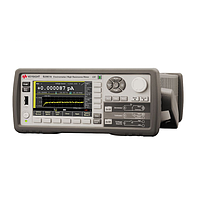
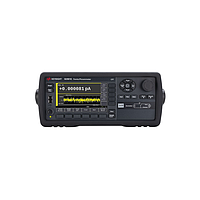
Among the notable options, the KEYSIGHT B2981C and KEYSIGHT B2983C are intended for ultra-low current measurement, with femtoamp-level sensitivity and graphical viewing features that help users analyze trends beyond a single numeric reading. These models can be relevant where very small leakage currents or device currents need to be monitored with better visibility and data handling.
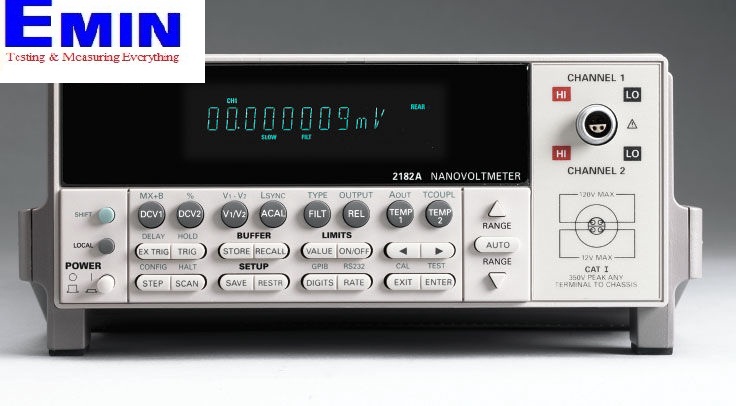
On the nanovolt side, the Keithley 2182A Nanovoltmeter and the KEYSIGHT 34420A NanoVolt/Micro-Ohm Meter are well aligned with applications that demand fine voltage sensitivity. The 34420A is also suited to micro-ohm related work, while the 2182A fits well into precision low-level voltage measurement environments.
For users who need integrated sourcing, the KEITHLEY 6487 Picoammeter/ Voltage Source and Keithley 6482 Dual-Channel Picoammeter / Voltage Source provide a practical route to combined measurement and excitation. These types of instruments are especially useful when the test sequence requires controlled stimulus and synchronized low-current readback.
Accessories and supporting hardware matter
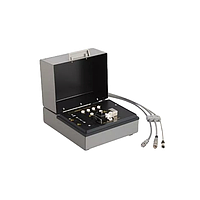
In low-level measurement, accessories are not secondary. Test leads, fixtures, adapters, and shielding directly influence signal integrity. The KEYSIGHT N1425A Low Noise Test Leads and KEYSIGHT N1428A Component Test Fixture illustrate how supporting hardware can help reduce unwanted noise pickup and create a more stable connection for sensitive measurements.
This is also why instrument selection should be considered as part of a complete measurement chain rather than as a standalone product decision. A capable meter paired with unsuitable cables or a poor fixture can undermine the benefits of a high-resolution front end. For many engineering teams, repeatability improves when cabling, fixturing, and instrument family compatibility are planned together from the beginning.
Common setup strategies for low-level measurement
When working at very low current or voltage levels, environmental control becomes part of the test method. Cable routing, grounding practice, connector cleanliness, thermal EMF reduction, and shielding all affect results. Even operator handling and bench layout can introduce error when signal magnitudes are extremely small.
Some applications also combine a low current source with a sensitive measuring instrument. For example, the Keithley 6220 DC Current Source, Keithley 6221 AC and DC Current Source, or the ZEAL ZMLCS DC Low Current Source can support specialized setups where stable low-current excitation is required before evaluating the electrical response. In more general electrical troubleshooting or verification tasks outside this ultra-low range, a digital multimeter may still be the more appropriate tool.
Manufacturer options and platform compatibility
This category includes solutions from KEITHLEY, KEYSIGHT, and ZEAL. In many B2B procurement environments, manufacturer choice is influenced by existing lab standards, software compatibility, service preference, and how well a device fits with installed instrumentation.
Keithley is often associated with low-level electrical measurement and source-oriented test setups, while Keysight provides options that combine sensitive measurement with modern interface and visualization features. ZEAL can be relevant when a compact low-current source is needed in a more focused role. The best fit depends on whether the priority is measurement depth, integrated sourcing, automation, or accessory ecosystem.
How this category fits into a broader test workflow
Picoammeters and nanovoltmeters are rarely isolated purchases in industrial or lab environments. They are often used alongside switching, sourcing, data logging, micro-ohm measurement, or semiconductor characterization tools. That makes category-level selection important, especially when buyers are trying to standardize methods across R&D, incoming inspection, and validation benches.
For users moving between precision low-level work and field-oriented electrical testing, related categories such as earth resistance and resistivity testers may also be relevant, although the measurement principles and use environments are very different. Keeping the application context clear helps avoid choosing a device that is accurate in principle but mismatched in practice.
Choosing with the application in mind
The right selection usually starts with a simple question: what exactly needs to be measured, and under what conditions? A leakage-current bench, a nanovolt sensitivity study, and a source-and-measure characterization task may all sit near each other in the purchasing process, but they do not require the same instrument architecture.
This Picoammeter/Nanovoltmeter range is best viewed as a precision low-level measurement toolkit rather than a single device type. By comparing sensitivity, source capability, interface needs, and accessory requirements, buyers can narrow the shortlist to instruments that fit both the signal level and the workflow. A careful choice at this stage usually leads to more stable measurements, smoother integration, and fewer setup-related errors later on.
Get exclusive volume discounts, bulk pricing updates, and new product alerts delivered directly to your inbox.
By subscribing, you agree to our Terms of Service and Privacy Policy.
Direct access to our certified experts