RF Signal generator
Accurate RF stimulus is fundamental in wireless design, receiver testing, production verification, and automated test environments. Whether the task is checking sensitivity, validating modulation behavior, sweeping through frequencies, or simulating a clean carrier, choosing the right RF Signal generator has a direct impact on repeatability and measurement confidence.
This category brings together instruments used across electronics labs, telecom testing, embedded wireless development, and manufacturing lines. The available range covers compact bench solutions as well as higher-performance platforms for low phase noise, wider frequency coverage, fast switching, and advanced analog or vector signal generation.
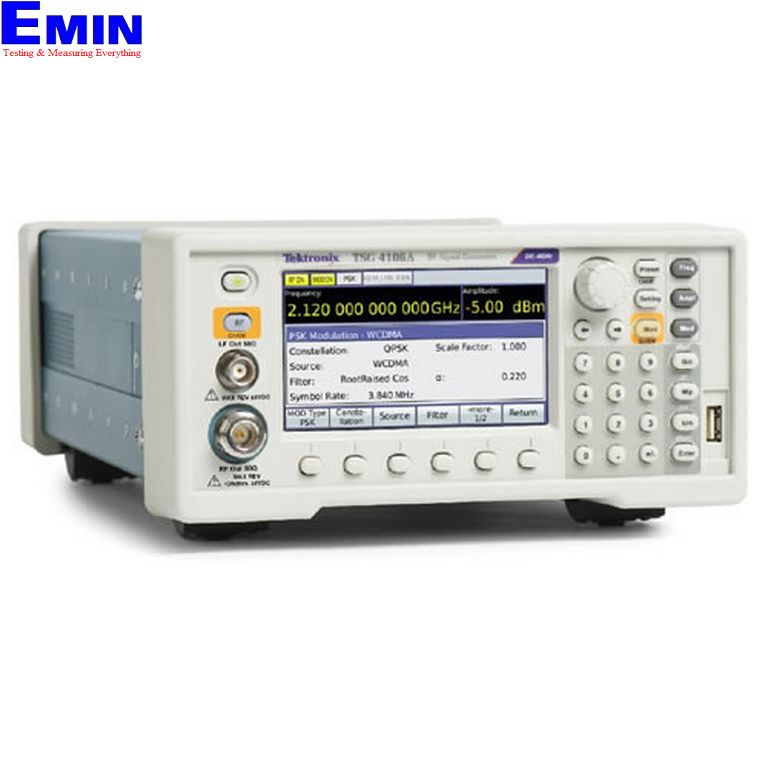
Where RF signal generators are used
In practical engineering work, an RF source is often part of a larger measurement chain. It may feed a device under test during receiver characterization, provide a reference carrier for frequency conversion stages, or support troubleshooting in communication modules, filters, amplifiers, and mixers.
These instruments are also widely used in automated test equipment because they can generate stable output with controlled amplitude, modulation, and sweep behavior. For broader waveform tasks outside dedicated RF applications, engineers may also compare them with function and arbitrary waveform generators, especially when low-frequency stimulus or mixed-signal test setups are involved.
What to evaluate when selecting an RF source
The most important starting point is the frequency range. Some applications only require coverage into the low GHz range, while others need much higher frequency capability for radar, satellite, microwave link development, or advanced component testing. It is equally important to check output level range, settling time, and whether the source can maintain signal quality across the frequencies that matter most in your workflow.
Another key factor is signal purity. Phase noise, harmonic performance, and non-harmonic spurious behavior can strongly influence adjacent-channel measurements, receiver blocking tests, and modulation analysis. In many validation environments, engineers also look for sweep modes, list mode operation, pulse capability, and standard remote interfaces such as USB, LAN, or GPIB to support system integration.
Analog, vector, and sweep-based test needs
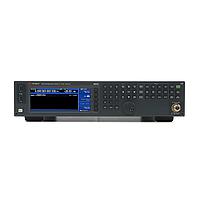
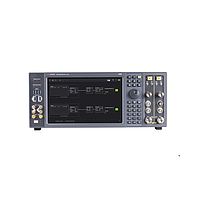
Not every RF project requires the same signal type. For basic CW generation, frequency response checks, and analog modulation tasks, an analog RF source is often sufficient. In this category, models such as the KEYSIGHT N5181B MXG RF Analog Signal Generator and TTI TGR6000 are relevant examples for users working with standard RF generation and sweep-oriented measurement routines.
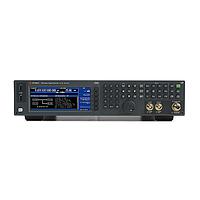
When digital communications testing is required, vector signal generation becomes more relevant because it supports complex modulation formats and waveform memory. A model such as the KEYSIGHT N5166B CXG RF Vector Signal Generator is better aligned with applications involving bandwidth, ACPR, or EVM-related workflows. For users whose requirements extend further into higher-frequency ranges, it is also worth reviewing RF & Microwave Generators for broader coverage and more demanding microwave test scenarios.
Representative products in this category
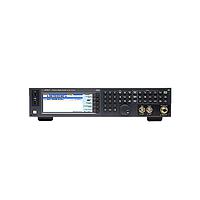
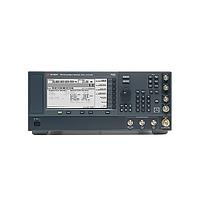
The selection includes instruments aimed at different performance levels and budgets. On the high-performance side, the KEYSIGHT E8257D PSG Analog Signal Generator reaches up to 31.8 GHz, making it suitable for applications that need wide frequency coverage, strong output control, and low phase noise characteristics in demanding RF environments.
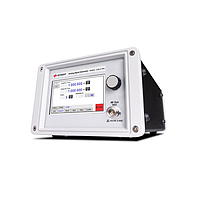
For general-purpose lab and production use, TTI models such as the TGR2051, TGR2053, and TGR6000 provide practical frequency coverage with sweep capability and modulation support. These are often attractive in setups where stable RF output, manageable bench footprint, and remote control are important. In mixed RF and waveform-oriented tasks, BKPRECISION 4089 and 4089GPIB also illustrate how some instruments combine RF generation with waveform and function generation features.
Integration in automated test systems
RF generators are frequently deployed inside ATE systems, where speed and consistency are just as important as headline specifications. Fast switching between test states, reliable triggering, and reference clock synchronization help reduce test time while preserving measurement repeatability. This is especially important when the source must interact with spectrum analyzers, power meters, or other instruments under software control.
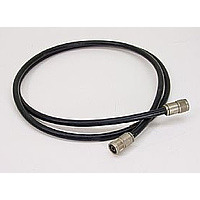
Several products in this category reflect those needs through sweep functions, list-based operation, or standard digital interfaces. TTI platforms, for example, are presented with USB, LAN, RS232, and GPIB-oriented control contexts, while BKPRECISION models also highlight remote connectivity options. For teams building structured test racks, cabling and impedance matching are just as important as the source itself; accessories such as the KEYSIGHT 11500A Cable Assembly can support proper RF interconnection in suitable setups.
Brand landscape and solution coverage
This category includes recognized instrument manufacturers serving different segments of RF testing. Alongside KEYSIGHT and TTI, the broader lineup also prioritizes brands such as ANRITSU, BKPRECISION, GW INSTEK, Promax, Stanford Research Systems, Tabor Electronics, Adivic, and DS INSTRUMENTS. The result is a category that can support both routine bench measurement and more specialized development or production requirements.
In practice, brand choice usually depends on the balance between required frequency range, modulation depth, signal cleanliness, automation features, software environment, and project budget. Rather than focusing only on maximum GHz figures, it is often more useful to match the instrument to the actual DUT, test method, and expected measurement uncertainty.
How to narrow down the right RF signal generator
A practical selection process usually starts with a short checklist:
- Required frequency coverage now and in future test plans
- Needed output power range and level accuracy
- CW, analog modulation, pulse, or vector modulation requirements
- Acceptable phase noise and spurious performance
- Sweep, list mode, and trigger synchronization needs
- USB, LAN, GPIB, or other control interface preferences
- Bench use versus rack integration in automated systems
If the application is mainly educational, service-oriented, or low-to-mid frequency RF work, a compact general-purpose unit may be sufficient. If the job involves wireless standards, advanced component characterization, or wider microwave coverage, a higher-spec platform is typically the better fit.
Final considerations
An RF signal generator is more than a source of carrier frequency; it is a core instrument for creating controlled, repeatable test conditions across research, validation, service, and production. The best choice depends on how frequency coverage, modulation capability, spectral purity, automation support, and integration requirements come together in your actual workflow.
Explore the products in this category to compare available platforms from KEYSIGHT, TTI, BKPRECISION, and other manufacturers. With the right instrument in place, RF measurements become easier to automate, easier to trust, and better aligned with real engineering needs.
Get exclusive volume discounts, bulk pricing updates, and new product alerts delivered directly to your inbox.
By subscribing, you agree to our Terms of Service and Privacy Policy.
Direct access to our certified experts