Measuring low-frequency signals
In telecom, broadcast, and electronics service environments, low-frequency signal measurement is still essential wherever engineers need to verify tone transmission, analyze analog paths, inspect waveform quality, or check level and frequency stability. This type of instrumentation is especially useful when working with audio-range to low-MHz signals in communication circuits, test benches, maintenance labs, and production settings.
Measuring low-frequency signals covers instruments and combined test solutions designed to generate, observe, and evaluate signals with a focus on amplitude, frequency, waveform behavior, and spectral content. For B2B buyers, the key value is not only measurement accuracy, but also how efficiently one device or platform can support troubleshooting, adjustment, and routine verification across different signal conditions.
Where low-frequency signal measurement is used
Low-frequency test equipment is commonly applied in telecom support work, electronic maintenance, laboratory validation, and signal path diagnostics. Engineers may need to confirm RMS voltage, verify frequency, inject a test tone, or examine a waveform when checking amplifiers, communication interfaces, transmission channels, or analog processing stages.
These tasks often overlap with broader measurement workflows. For example, teams that also evaluate modulation behavior or frequency-domain performance may work alongside a signal analyzer, while applications involving controlled source injection can naturally extend to a signal generator when a dedicated generator is required.
What users typically need from this category
Buyers looking for this equipment usually need more than a basic voltmeter. In practical service and verification work, it is often important to combine signal generation, RMS measurement, frequency counting, and waveform observation in one workflow. That reduces setup time and helps operators move more quickly from fault detection to confirmation.
Another important factor is support for different interface conditions. Low-frequency measurements can involve single-ended or differential signals, various input impedances, and a wide range of signal levels. Equipment in this category is therefore especially relevant where test flexibility matters as much as the raw measurement function.
Core functions found in low-frequency signal measuring instruments
The category typically includes instruments that address several complementary tasks. A built-in sine wave source is useful for stimulus and path verification, while broadband or selective voltage measurement supports signal level evaluation under different noise and selectivity requirements. Frequency measurement helps confirm source stability or transmission accuracy, and waveform monitoring adds a visual layer for diagnosing distortion, irregular shapes, or transient behavior.
Some solutions also incorporate spectrum analysis for low-frequency content. This is valuable when engineers need to distinguish wanted components from interference or harmonics without switching to a separate platform. In mixed test environments, these capabilities can bridge the gap between basic electrical checks and more advanced telecom-oriented analysis.
Example solution in this category
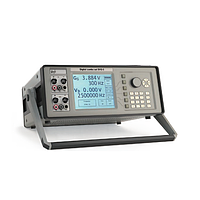
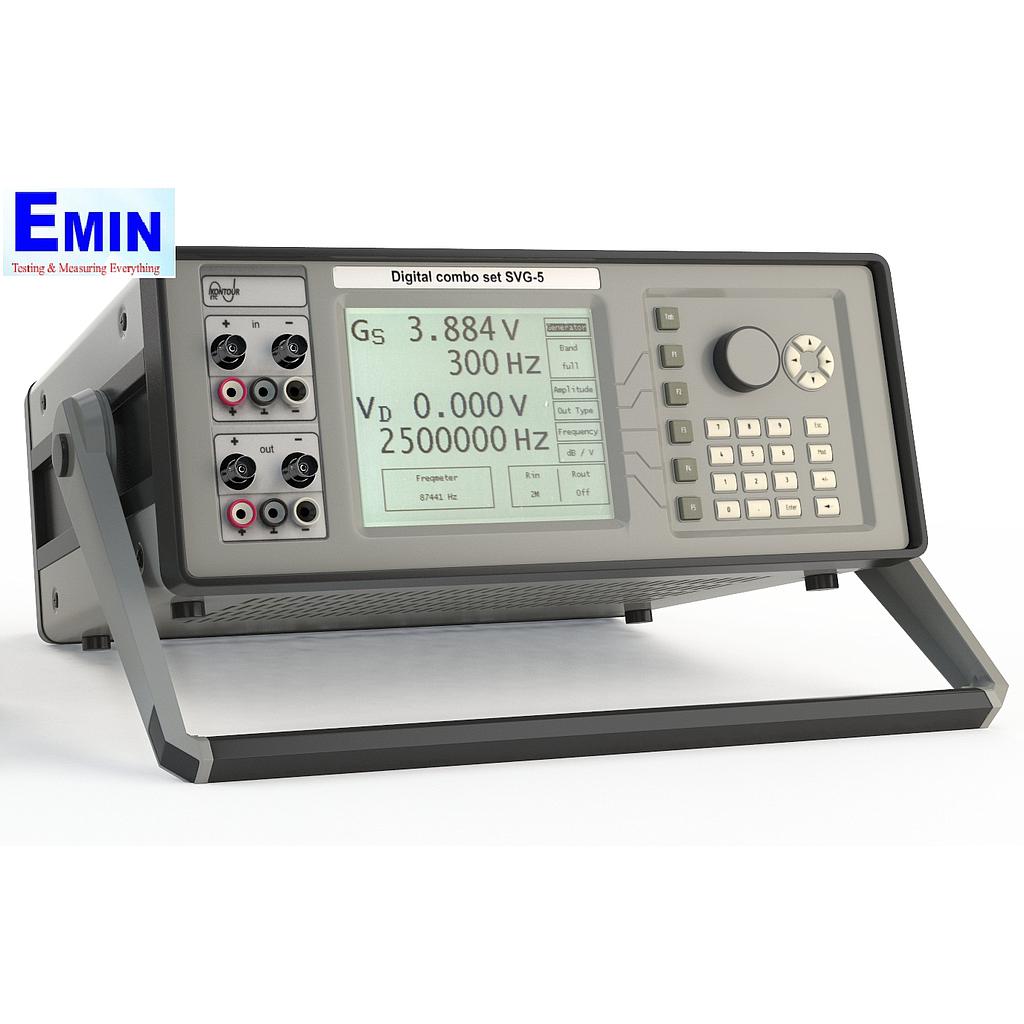
A representative product in this range is the Kontour platform, including the Kontour SVG–5 digital measuring low-frequency signals (2.5MHz). Based on the available configuration, this type of instrument combines several useful functions in one package: sine wave generation, broadband and selective RMS voltage measurement, frequency measurement, waveform monitoring, and low-frequency spectrum analysis.
This integrated approach is well suited to maintenance teams and technical laboratories that need to both inject and verify signals without relying on multiple standalone devices. The SVG–5 example also shows why this category matters for real-world testing: users can work across a practical low-frequency range while assessing level, frequency, waveform shape, and spectral distribution in a more unified process.
How to choose the right instrument for your application
Selection should start with the actual measurement task. If the job is mainly level verification, the required voltage range, acceptable error, and supported impedances will be central. If the workflow involves narrowband checks in the presence of adjacent signals, a selective measurement function may be more important than a general broadband reading.
For troubleshooting and development work, it also helps to consider whether the instrument needs to act as both source and analyzer. A combined unit can simplify field or bench testing, especially when the same operator needs to generate a known reference tone, verify frequency response, and inspect waveform quality in sequence. Where broader telecom maintenance is involved, related tools such as a telephone networks tester may also be relevant depending on the system under evaluation.
Important technical considerations before purchase
Frequency coverage is one of the first checkpoints. The usable range should match the actual signals present in your circuits or lines, with enough margin for diagnostics and verification. Signal level range is equally important, especially when working across weak and comparatively strong inputs in service conditions.
Engineers should also review input and output impedance options, channel configuration, and whether the instrument supports both single-ended and differential measurements. In many B2B environments, the practical benefit comes from test versatility: one device that fits different setups, cable types, and measurement scenarios can reduce equipment duplication and streamline routine work.
Why this category matters in telecom and electronic maintenance
Low-frequency signals are still present in many infrastructure, service, and industrial electronics applications. Even when systems are increasingly digital, analog verification remains necessary during commissioning, repair, and quality control. A suitable measuring solution helps identify level problems, confirm signal integrity, and shorten troubleshooting time.
This category is therefore relevant not only for specialized labs, but also for organizations that need dependable day-to-day testing tools. When the application requires a compact workflow that combines generation, measurement, visualization, and basic analysis, low-frequency signal instruments can offer a practical and efficient fit.
Final thoughts
Choosing equipment for low-frequency signal work should be driven by the signal types you handle, the level of analysis required, and whether your team benefits more from a dedicated instrument or a multifunction platform. For many professional users, the most effective setup is one that supports both routine checks and deeper diagnostics without unnecessary complexity.
Within this category, integrated solutions such as the Kontour SVG–5 illustrate the value of combining source, meter, waveform monitor, and analyzer functions in a single system. If your work involves analog verification, telecom maintenance, or low-frequency bench testing, this product group provides a solid foundation for accurate and efficient measurement.
Get exclusive volume discounts, bulk pricing updates, and new product alerts delivered directly to your inbox.
By subscribing, you agree to our Terms of Service and Privacy Policy.
Direct access to our certified experts