Telecom cable tester
Reliable cabling is the foundation of voice, data, CCTV, and low-voltage infrastructure. When installation faults, hidden pair issues, incorrect terminations, or signal loss appear, a telecom cable tester helps technicians verify the line quickly and isolate problems before they affect network uptime, commissioning schedules, or service quality.
This category brings together practical test tools for checking twisted-pair, telephone, coaxial, and related communication cabling. Depending on the job, users may need basic wire mapping, cable tracing, length measurement, PoE checks, Ethernet link verification, or more advanced validation for industrial and field environments.

Where telecom cable testers are used
These instruments are commonly used during cable installation, maintenance, troubleshooting, and acceptance testing. In building infrastructure, they help verify structured cabling runs for offices, telecom rooms, access control systems, alarms, and IP-based devices. In field service, they support fault finding on telephone lines, CCTV connections, and mixed low-voltage networks.
Many applications involve more than a simple continuity check. Technicians may need to confirm wiremap accuracy, identify opens or shorts, locate a cable inside a bundle, estimate cable length, or detect whether a switch port is active and what type of Ethernet service is present. For adjacent applications focused specifically on voice lines, it may also be useful to review our telephone network testing tools.
Common functions that matter in real troubleshooting
A well-chosen tester should match the actual faults you expect to encounter. For example, low-voltage and structured cabling work often requires detection of opens, shorts, reversals, split pairs, and incorrect pair mapping. Length estimation is also valuable because it helps identify whether a problem is near one end, at a midpoint, or across the full run.
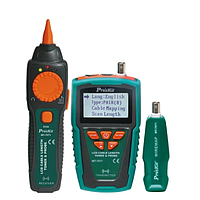
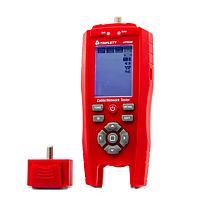
More capable handheld units add features such as cable tracing with probe kits, switch port blink, PoE identification, and Ethernet link tests. Models in this category illustrate that range well: the Triplett LVPRO40 supports multiple cable types and network-related checks, while the Proskit MT-7076 and Proskit MT-7071N combine tracing and test functions that are useful in day-to-day installation and service work.
Choosing by cable type and network environment
Not every tester is designed for the same media. Some jobs focus on twisted-pair Ethernet and telephone wiring, while others also require coaxial support for CCTV or telecom-related video distribution. A practical selection process starts with the connectors and cable families already in use on site: RJ45, RJ11, and BNC support can make a major difference in how versatile a tester is across departments or projects.
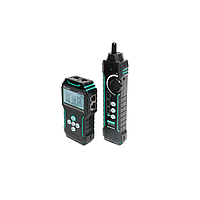
For example, the Proskit MT-7071N is suited to environments where Ethernet, telephone, and BNC-based coax all appear in the same workflow. The Triplett LVPRO40 is relevant when users need a broader low-voltage approach that includes twisted pair, coax, network device indication, and PoE detection. If troubleshooting extends beyond cabling into RF behavior, users may also compare with a cable and antenna analyzer for related measurement tasks.
Examples from leading manufacturers
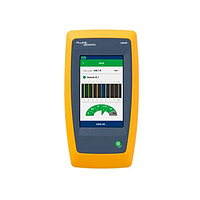
Fluke Network is widely associated with portable tools for cable and network validation. In this category, the LIQ-100 LinkIQ Cable+Network Tester and LIQ-100-IE Cable + Network Industrial Ethernet Tester represent the type of handheld equipment used when users need both cable verification and visibility into active Ethernet links. These tools are especially relevant where network performance and installation quality must be reviewed together rather than as separate tasks.
Proskit offers practical tester-and-probe combinations that fit installation and maintenance workflows. The MT-7076 supports tracing, link checks, PoE testing, and cable length measurement, while the MT-7071N adds useful flexibility for RJ45, telephone, and BNC-based applications. Triplett also stands out in mixed low-voltage environments, where the LVPRO40 can help bridge basic cable verification and network-side checks in one handheld unit.
Understanding tester categories within this page
Although this category is centered on telecom cable testing, the products shown may serve different roles. Some are dedicated field testers for network and low-voltage cable diagnosis, while others support broader telecom and R&D workflows. That distinction matters because users should align the instrument with the physical layer they actually need to validate.
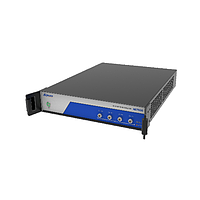
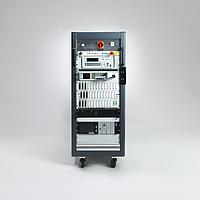
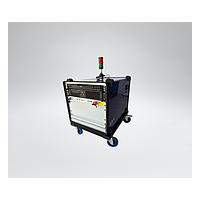
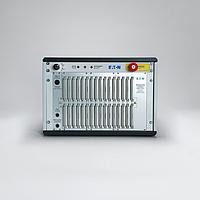
For instance, Alifecom models such as the NE7500NSA, NE7500R, and NE7500P are network emulation platforms rather than handheld cable fault tools. They are better understood as part of a wider telecom test ecosystem for development and validation tasks. Likewise, the KERN AC 41 eccentric roll clamp relates to cable testing in a mechanical test setup, showing that “cable test” can sometimes refer to physical load or material evaluation rather than line qualification in the field.
What to consider before buying
The first question is whether you need a basic pass/fail tool or a more informative diagnostic tester. Installers handling standard patching and termination may prioritize wire mapping and continuity. Maintenance teams often need tracing, fault isolation, and cable length estimation. Network support teams may also require Ethernet speed indication, PoE awareness, and the ability to confirm what is happening at the switch port.
It is also important to consider the working environment. Industrial and field technicians may value a clearer display, rechargeable operation, multilingual interface, and a design suitable for regular transport. If your workflow involves a broader RF chain rather than only copper cabling, a signal analyzer or signal generator may be more appropriate for adjacent test tasks.
Why the right tester improves workflow
A suitable tester reduces repeat visits, speeds up commissioning, and helps document whether the issue lies in the cable, termination, connected device, or live service. In multi-contractor projects, that can save significant time because faults can be isolated more objectively and handed over with clearer evidence.
For B2B buyers, the best fit is usually the one that matches the installed media, the skill level of the users, and the depth of diagnostics required. Whether the priority is structured cabling, telephone and low-voltage wiring, CCTV-related coax checks, or network-aware testing, this category helps narrow the selection to tools built for practical telecom troubleshooting.
Short FAQ
Can a telecom cable tester check Ethernet cables?
Yes, many models in this category support twisted-pair Ethernet cabling and can check issues such as wire mapping, opens, shorts, and in some cases link status or PoE-related information.
Are these testers only for telephone lines?
No. Depending on the model, they may support telephone cable, Ethernet cable, coaxial cable, and other low-voltage wiring used in telecom and building infrastructure.
Do all testers measure cable length?
No. Cable length measurement is a feature available on certain models, so it should be confirmed based on your application before selecting a tester.
When comparing options, focus on the actual cable types, fault conditions, and network checks involved in your daily work. A well-matched telecom cable tester can make troubleshooting faster, reduce uncertainty in the field, and support more consistent installation quality across telecom and low-voltage systems.
Get exclusive volume discounts, bulk pricing updates, and new product alerts delivered directly to your inbox.
By subscribing, you agree to our Terms of Service and Privacy Policy.
Direct access to our certified experts