DC Block
In RF and microwave test setups, protecting sensitive instruments from unwanted DC voltage is often just as important as maintaining signal integrity. A DC Block is a simple but essential passive component that prevents direct current from passing while allowing the RF signal to continue through the line. This makes it useful in measurement benches, telecom labs, antenna paths, spectrum analysis, and many other 50 ohm signal environments.
On this page, you can explore DC blocks used in telecommunication and electronic measurement applications, including models for common connector formats and a range of frequency bands. Whether you are building a new RF path or adding protection to an existing setup, selecting the right DC block helps reduce risk to connected equipment and supports more stable measurement conditions.
Why DC blocks matter in RF measurement and telecom systems
A DC block is commonly inserted between two RF ports when one side may carry DC bias that should not reach the other side. In practical terms, it helps protect analyzers, generators, receivers, amplifiers, and other connected devices from unintended voltage transfer. This is especially relevant in mixed test environments where bias tees, powered antennas, active modules, or external supply paths may be involved.
Although small in size, these components play an important role in maintaining a safer and more controlled signal chain. In many systems, they are used alongside parts such as RF adapters and other interconnect hardware to ensure both mechanical compatibility and electrical protection.
Typical DC block configurations available
Not every application requires the same blocking arrangement. Some models are designed as outer DC blocks, some as inner-outer types, and others are chosen primarily by connector style and compatibility with a specific instrument family. The right choice depends on where DC may appear in the transmission path and how the cable interfaces are arranged.
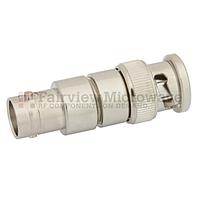
Examples in this category include GW INSTEK options such as the ADB-008 with SMA 50Ω connection, the ADB-006 with N-Type 50Ω connection, and the ADB-002 with BNC 50Ω BNC to N configuration. These are positioned as options for GSP-730, GSP-9330, and GSP-9300B platforms, making them relevant for users working with compatible test instruments and accessory ecosystems.
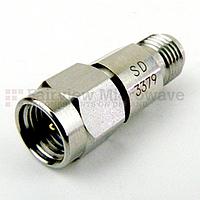
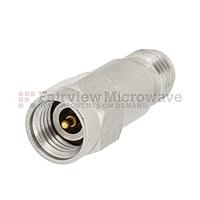
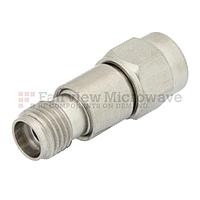
For broader microwave coverage, Fairviewmicrowave models in this category illustrate how DC blocks are offered across different connector families, including SMA, N, TNC, 2.92 mm, and 2.4 mm. This variety is important because connector type influences not only mechanical fit, but also the usable frequency range and the overall suitability of the signal path.
Key selection factors when choosing a DC block
The first point to verify is the frequency range. A DC block should support the full operating band of your measurement or communication signal with appropriate margin. In this category, some models cover lower microwave ranges such as 10 MHz to 18 GHz, while others extend higher, including versions up to 26.5 GHz, 40 GHz, and even 50 GHz for more demanding applications.
The next factor is impedance. Many RF and telecom systems are built around 50 ohm architectures, so matching impedance is critical for minimizing reflections and maintaining measurement quality. Connector style should also be checked carefully, especially when working across SMA, N, TNC, 2.92 mm, or 2.4 mm interfaces.
It is also useful to review insertion loss, VSWR, and DC voltage handling. Lower insertion loss generally helps preserve signal level, while controlled VSWR supports better matching within the line. Depending on the setup, related components such as an isolator or a power divider may also be considered as part of the wider RF chain.
Examples from leading manufacturers in this category
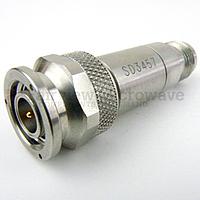
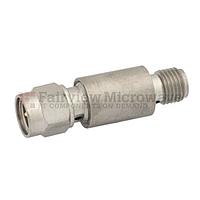
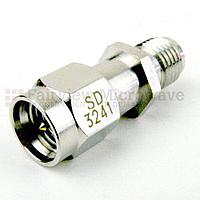
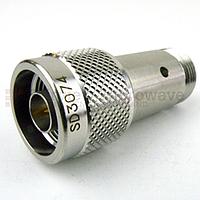
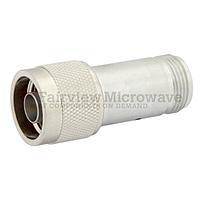
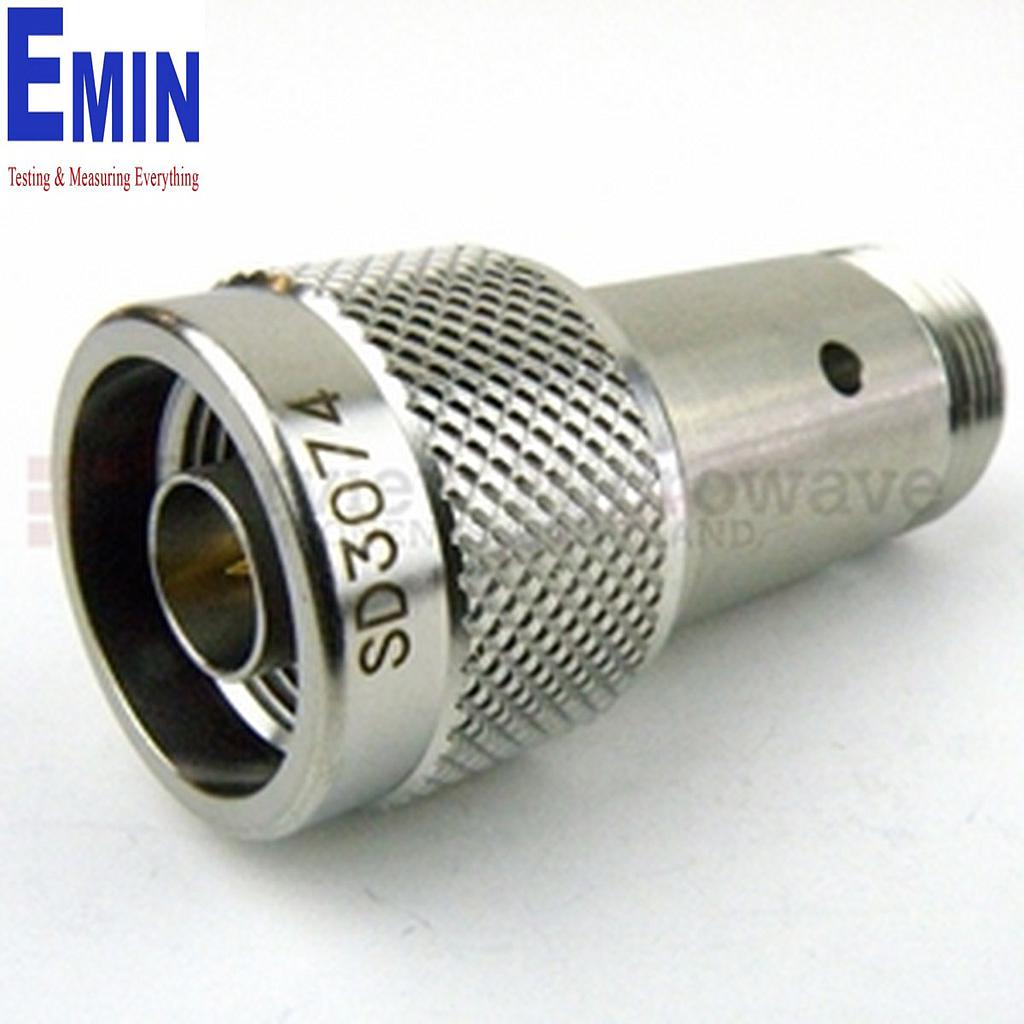
Fairviewmicrowave is represented here with several DC block variants for different connector standards and bandwidth requirements. For example, the SD3471 and SD3465 outer DC block models cover 10 MHz to 18 GHz with TNC and N connectors respectively, while the SD3478 and SD3481 target higher-frequency use cases with 2.92 mm and 2.4 mm interfaces.
Several Fairviewmicrowave models in this category also highlight the difference between outer-only and inner-outer blocking approaches. Products such as the SD3258, SD3082, SD3475, and SD3472 can help engineers compare blocking style, connector format, and operating band based on the topology of the actual test path.
GW INSTEK appears in this category with accessory-style DC blocks intended for compatible spectrum analyzer platforms. For users already working within that instrument environment, these models can be a practical choice when connector compatibility and instrument pairing are the main priorities.
Common application scenarios
DC blocks are widely used in labs and field setups where RF signals share infrastructure with bias or control voltage. Typical examples include instrument input protection, isolation between active and passive RF stages, and prevention of unwanted DC from reaching a measurement receiver. They are also relevant when connecting external modules whose bias conditions may not be fully controlled from the test port side.
In telecom and microwave benches, these components may be part of a larger passive network that includes switches, couplers, and matching accessories. If your setup involves routing or path selection, it can also be useful to review telecommunication switches to understand how protection and signal management work together in a complete signal chain.
How to avoid mismatches in a DC block installation
Before ordering, check the complete path from instrument port to DUT and confirm connector gender, connector series, and expected operating frequency. A DC block that fits mechanically but is not intended for the required band can introduce unnecessary loss or mismatch. Likewise, choosing the wrong blocking style may leave a DC path exposed where protection was expected.
It is also good practice to consider the role of surrounding accessories rather than selecting the component in isolation. Cable assemblies, adapters, attenuators, and other passive parts can all influence overall system performance. A clean RF path usually comes from selecting components as a set, not only from choosing one part with the highest frequency rating.
Choosing the right DC block for your setup
The most suitable model depends on a few practical questions: what frequency band you need to cover, which connectors are already installed in the system, whether you need outer-only or inner-outer blocking, and whether the part is intended as an accessory for a specific instrument platform. Reviewing these points early helps narrow down the options quickly and reduces the chance of rework after installation.
This category brings together DC block solutions for general RF interconnection as well as instrument-oriented options from Fairviewmicrowave and GW INSTEK. If you are comparing models, focus on connector compatibility, 50 ohm matching, bandwidth, and expected operating conditions so the selected component fits naturally into the rest of your telecom or measurement setup.
Get exclusive volume discounts, bulk pricing updates, and new product alerts delivered directly to your inbox.
By subscribing, you agree to our Terms of Service and Privacy Policy.
Direct access to our certified experts