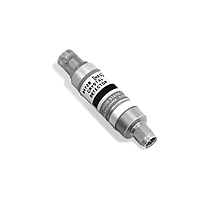
Detector
In RF and microwave measurement work, converting a high-frequency signal into a usable low-frequency or DC output is often the simplest way to monitor power, verify signal presence, or support test setups. That is where Detector components become practical tools across telecom labs, production environments, and general electronic measurement applications.
This category focuses on detector devices and related items used in telecommunication component setups, especially where engineers need reliable signal indication over defined frequency ranges, connector formats, and input power levels. Whether the requirement is wideband diode detection, compact inline measurement support, or a supporting accessory for a test fixture, the selection here helps cover several common RF workflows.
Where detector components fit in telecom measurement
A detector is commonly used to transform an RF or microwave signal into a proportional voltage that can be read by an instrument, monitored during alignment, or used as part of a broader measurement chain. In practice, this makes detectors useful for troubleshooting, signal tracing, comparative testing, and quick power observation without requiring a full spectrum analysis step for every task.
Within telecommunication component systems, these devices are often paired with couplers, switching paths, or signal distribution hardware. Depending on the setup, they may work alongside an isolator to protect signal integrity or with a power divider when one source must be monitored across multiple paths.
Typical detector types represented in this category
The products shown here reflect a practical range of RF detector implementations. A notable example is the KEYSIGHT 8472B Low-Barrier Schottky Diode Detector, which is suited to wideband measurement tasks from low MHz into the GHz range. Low-barrier Schottky diode designs are widely used when engineers need fast response, good sensitivity at lower signal levels, and straightforward signal detection in test environments.
The category also includes several Fairviewmicrowave detector models covering different frequency spans and connector combinations. Examples such as the Fairview SMD0208, SMD0204, SMD0112, SMD0118, and SMD0126 illustrate how detector choice often depends on the required operating band, flatness behavior, voltage sensitivity, and mechanical integration into the RF path.
Not every item in the listing is a primary detector body. The IKONIX USA 39514 cable cordset is an accessory item that supports connection within a compatible setup, showing that detector-related categories can also include useful supporting parts for test system integration.
Key selection criteria before choosing a detector
The first parameter most buyers evaluate is frequency range. A detector intended for 2 GHz to 4 GHz work will not serve the same role as a unit covering 10 MHz to 18 GHz or beyond. Matching the detector bandwidth to the actual test signal is essential for meaningful measurement behavior and stable response across the application.
The next important factors are sensitivity, flatness, VSWR, and allowable input power. Sensitivity affects how well low-level signals can be observed, while flatness helps determine how consistent the output remains across the operating band. VSWR matters because impedance mismatch can degrade measurement quality, and maximum input power must be respected to avoid damaging the detector or introducing unreliable results.
Connector style also matters more than it may seem. In this category, you can find combinations such as SMA male to BNC female or SMA male to SMA female, and even N-male to BNC-female in certain models. If your bench uses different interfaces, related accessories such as RF adapters may be relevant for easier integration.
Examples of detector options in this range
For broad RF and microwave coverage, the KEYSIGHT 8472B is a strong reference point in the category, with operation extending from 10 MHz up to 18 GHz. It is suitable for users looking for a proven diode detector format with defined response behavior, low-level sensitivity, and standard bench-friendly connectivity.
Fairviewmicrowave models offer additional choices for narrower or application-specific bands. The SMD0204 and SMD0204N target the 2 GHz to 4 GHz range, while the SMD0208 extends that concept up to 8 GHz. For wider coverage, the SMD0112, SMD0118, and SMD0126 span from 10 MHz into higher microwave bands, which can be useful when one detector must support varied test points across a broader telecom workflow.
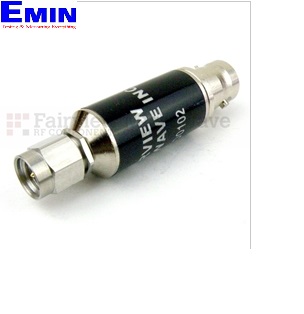
There are also models optimized around different connector and packaging needs. The Fairview SMD0102, for example, uses an SMA male to BNC female arrangement for lower-range work up to 2 GHz, while the SMD0018 provides an N-male to BNC-female format for installations where larger RF interfaces are already part of the test bench.
How detectors are used in real test setups
In a telecom environment, detectors are commonly placed at monitoring points where direct observation of RF power is needed without interrupting the main signal path too heavily. They may be used during transmitter checks, amplifier evaluation, signal chain verification, or maintenance procedures where technicians want a fast electrical indication of signal behavior.
They also support flexible bench configurations built around switches and routing hardware. In more complex paths, engineers may combine a detector with telecommunication switches to compare channels or verify whether a routed signal is present at a selected output. This is especially helpful in repeatable production testing and service diagnostics.
Because many detector models output a measurable voltage rather than a direct RF reading, they can be integrated into simple monitoring circuits, oscilloscopes, meters, or dedicated evaluation setups. This makes them a practical option when full-scale instrumentation is unnecessary for every checkpoint.
Why connector and accessory compatibility matters
Successful RF measurement is not only about bandwidth and sensitivity. Mechanical fit, connector repeatability, and cable compatibility all affect everyday usability. A detector that fits the target frequency range but introduces inconvenient interconnect changes can slow down troubleshooting and increase setup error.
That is why it is useful to review related accessories and supporting components during selection. The presence of the IKONIX USA 39514 cable cordset in this category highlights the broader ecosystem around detector-based setups, where the right cable or accessory can simplify installation and make bench connections more reliable.
Choosing the right detector for your application
If your requirement is broad microwave coverage with a recognized test-equipment manufacturer, a solution from KEYSIGHT may be the right starting point. If you need multiple frequency options, compact inline formats, or specific connector arrangements, the Fairviewmicrowave range in this category provides several practical alternatives across low MHz to multi-GHz applications.
The best choice usually comes down to a few core questions: what frequency band must be covered, what input power will be present, what output connection is expected, and how the detector will fit into the larger RF path. Reviewing those points up front makes it easier to narrow the selection and avoid unnecessary accessories or interface changes later.
For engineers, buyers, and integrators working with telecom measurement hardware, this detector category offers a focused starting point for building dependable RF monitoring and test setups. A well-matched detector can simplify daily measurement tasks, improve repeatability, and support more efficient signal validation across the bench or in the field.
Get exclusive volume discounts, bulk pricing updates, and new product alerts delivered directly to your inbox.
By subscribing, you agree to our Terms of Service and Privacy Policy.
Direct access to our certified experts