Power divider
Signal routing in RF, microwave, and high-voltage measurement setups often depends on one simple function: taking one input and distributing it accurately to multiple paths. That is where the Power divider category becomes useful for engineers working in telecom testing, EMC labs, network measurement, and specialist electrical test environments.
On this page, you can explore power dividers and related divider devices used to split, combine, or scale signals for analysis and system integration. The range includes classic RF and microwave models for broadband measurement as well as voltage divider solutions for high-voltage and pulse applications, making the category relevant to both communication and electrical test workflows.
Where power dividers are used
In practical test systems, a divider is selected when one source must feed two or more circuits while maintaining controlled amplitude and predictable phase behavior. This is common in antenna measurements, signal distribution benches, receiver comparison, and EMC troubleshooting, where stable signal handling has a direct effect on measurement confidence.
Power dividers are also used in reverse as combiners in some setups. For example, a broadband unit may support lab tasks where engineers need to merge paths or compare channels under repeatable conditions. In higher-energy environments, voltage divider designs are used to reduce large input levels to a measurable range for oscilloscopes or dedicated instrumentation.
Different divider types within this category
This category covers more than one device family, so selection should start with the electrical environment rather than the product name alone. For RF and microwave applications, engineers typically focus on frequency range, insertion loss, port matching, isolation, and connector style. For electrical pulse or high-voltage work, the key concerns shift toward divider ratio, bandwidth, rise time, and voltage withstand capability.
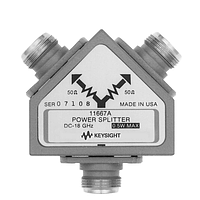
Examples in the range illustrate that difference clearly. The Fairviewmicrowave MPR26M-2 is suited to high-frequency signal splitting, with support up to 26.5 GHz, while the KEYSIGHT 11667A Power Splitter is aimed at wideband measurement up to 18 GHz. By contrast, HILO-test models such as the PVD 10-3 or HVT series are intended for pulse voltage and broadband high-voltage divider applications where attenuation accuracy and transient response matter more than RF connector performance.
What to evaluate before choosing a power divider
The first checkpoint is the working frequency range. A divider that performs well in low-frequency broadband work may not be suitable for microwave use, and a high-voltage divider is built around a completely different measurement task. Matching the device bandwidth to the real signal content is essential for preserving waveform quality and avoiding misleading results.
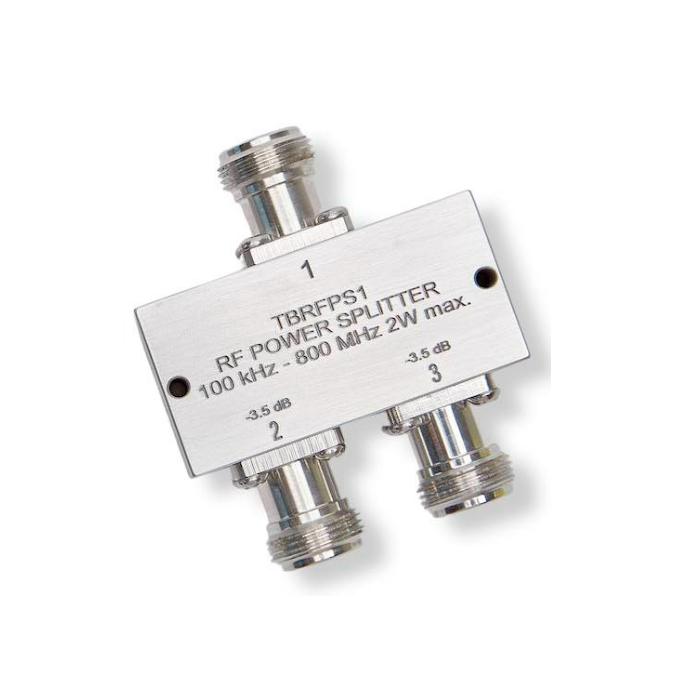
The second point is loss and balance. In RF systems, insertion loss, amplitude unbalance, and phase unbalance affect channel consistency and can influence downstream calibration. Products such as the Tekbox TBRFPS1 and Tekbox TBRFPS4 highlight this kind of selection logic: one may fit lower-frequency broadband work with tighter matching needs, while another may support broader frequency coverage where different trade-offs are acceptable.
A third factor is power or voltage handling. Some models are designed for low-power signal distribution, while others are intended for demanding pulse and high-voltage measurement. Engineers should also check port matching values such as VSWR or SWR, because poor matching can introduce reflections that degrade the entire setup.
Representative products in the range
Several products in this category show how broad the application scope can be. The Fairviewmicrowave MPR26M-2 Power Divider is an example of a compact RF/microwave solution with 3.5 mm interfaces for high-frequency signal paths. The KEYSIGHT 11667A Power Splitter fits general-purpose lab and instrument workflows where wideband performance is important.
For broadband splitter/combiner use in bench testing, Tekbox offers models such as the TBRFPS1 and TBRFPS4. These are relevant when engineers need practical signal distribution over lower or mid-frequency ranges, including tasks such as pre-compliance work, comparative measurements, or signal injection arrangements.
At the other end of the spectrum, HILO-test devices such as the PVD 10-2, PVD 10-3, and HVT 40 RCR through HVT 300 RCR serve specialized high-voltage measurement needs. These products are better understood as measurement interfaces that scale high DC, AC, or pulse voltages down to a safe and measurable level while preserving useful transient information.
How dividers fit into a wider telecom measurement setup
A power divider rarely works alone. In RF benches and telecom labs, it is usually part of a broader signal chain that may include matching accessories, protective components, and switching elements. Depending on the setup, engineers may also need RF adapters to connect different interface types, or an isolator to improve signal stability and reduce reflected energy in sensitive test paths.
In more flexible automated benches, signal routing may also involve telecommunication switches so that one source can be distributed, redirected, or compared across multiple instruments. Looking at the divider as part of the entire measurement chain often leads to a better purchasing decision than focusing on one specification alone.
Manufacturer landscape in this category
The current range includes brands commonly recognized in test and measurement. KEYSIGHT is relevant for instrument-grade RF and microwave workflows, while Fairviewmicrowave provides practical microwave interconnect and passive solutions for lab and integration tasks. Tekbox appears in use cases where engineers want broadband splitter/combiner devices for EMC and measurement benches.
HILO-test stands out in the category for high-voltage and pulse divider solutions, serving a different but important measurement niche. Because these product families address very different applications, brand choice should follow the measurement objective first: RF distribution, broadband signal combining, or safe scaling of high-voltage signals for analysis.
Selection tips for B2B buyers and engineering teams
For procurement teams, the most effective approach is to define the use case in operational terms: signal type, frequency or voltage level, required accuracy, acceptable loss, and connection standard. That prevents confusion between superficially similar devices that are actually intended for very different environments.
For engineering teams, it is worth checking not only the core electrical data but also how the divider will interact with the rest of the system. Cable assemblies, source impedance, instrument input characteristics, and measurement bandwidth all affect real-world performance. A well-matched divider helps maintain repeatability, while an unsuitable choice can introduce avoidable imbalance or distortion.
Choosing the right product from this category
If your application is in RF or microwave measurement, focus on bandwidth, insertion loss, balance, and connector compatibility. If your work involves pulse testing or high-voltage measurement, prioritize divider ratio, rise time, bandwidth, and rated voltage capability. The available range supports both kinds of requirements, but the correct choice depends on the measurement principle you need to preserve.
By comparing the intended application instead of only comparing part names, buyers can narrow the shortlist much faster. This category is built for that process, bringing together RF splitters, combiners, and specialized divider solutions that support reliable signal distribution and measurement across demanding technical environments.
Get exclusive volume discounts, bulk pricing updates, and new product alerts delivered directly to your inbox.
By subscribing, you agree to our Terms of Service and Privacy Policy.
Direct access to our certified experts