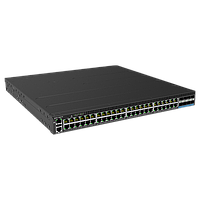
Switch for telecommunications
Reliable signal routing is a core requirement in RF test setups, telecom labs, network infrastructure, and many communication systems. When engineers need to direct signals between multiple paths with low disruption and predictable performance, switches for telecommunications become an essential part of the overall architecture.
This category brings together switching solutions used in telecom and related electronic environments, from RF coaxial switching for measurement workflows to high-density network switching platforms for modern data transport. Depending on the application, the right device can simplify test automation, improve signal distribution, or support scalable traffic handling in enterprise and data center environments.
Where telecom switches are used
Telecommunications switching devices appear in different layers of a system. In RF and microwave measurement, a switch is used to route signals between instruments, antennas, ports, or test paths without manually reconnecting cables. In packet-based networks, switching platforms aggregate, forward, and manage traffic across copper or fiber interfaces.
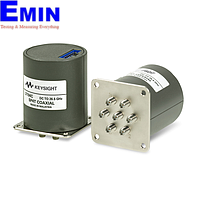
That is why this category can be relevant to both test engineers and network teams. A product such as the KEYSIGHT 87206B Multiport Coaxial Switch is suited to controlled signal path selection in lab or automated test environments, while Ufispace platforms address switching needs in management, PoE access, and high-speed data center deployments.
RF signal switching and automated test workflows
In telecom measurement environments, an RF switch helps reduce repeated cable changes, shorten setup time, and support more repeatable testing. Multiport coaxial switches are often chosen when several DUTs, antennas, or measurement channels must be connected to a shared instrument path under software or remote control.
The KEYSIGHT portfolio in this context is especially relevant for engineers working with microwave and high-frequency signal chains. The KEYSIGHT 87206B Multiport Coaxial Switch, specified for DC to 20 GHz in an SP6T format, is a useful example of a switch designed for routing one input across multiple output paths in demanding RF applications.
When building out a complete signal path, users may also need matching components such as adapters or a power divider to support transitions, distribution, and measurement flexibility around the switch itself.
Network and management switches in telecom infrastructure
Not every telecom switch is an RF component. In operational networks, switching equipment also supports device connectivity, traffic segmentation, uplink aggregation, and management visibility. This is where Ethernet and fiber-based platforms become important, especially in telecom edge, enterprise, and service-provider environments.
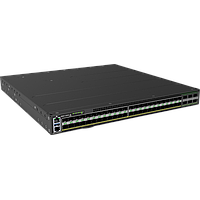
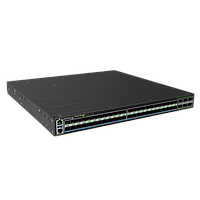
Ufispace appears in this category with several examples that illustrate the broader switching ecosystem. The Ufispace S6301-56ST Management Switch provides a combination of 48 x 1G RJ45 ports and 8 x 10G SFP+ uplinks for management or aggregation roles, while the S6301-56STP Switch PoE extends this concept with PoE support for connected devices that need both data and power through the network.
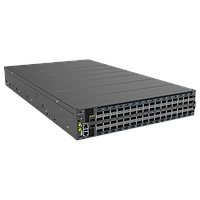
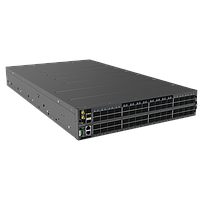
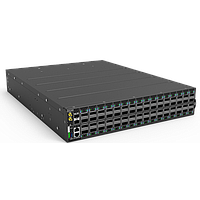
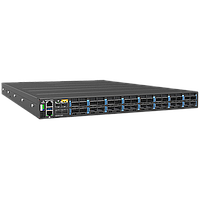
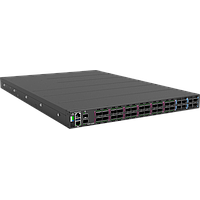
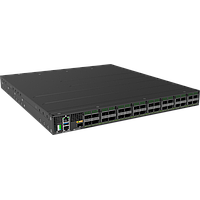
For deployments where throughput density matters, Ufispace also offers data center-oriented platforms such as the S7801-54XS and S8901-54XC. These systems show how telecom switching can scale from access and management functions to higher-speed switching layers using 10G, 25G, 100G, 200G, 400GE, and even 800G classes in specialized environments.
How to choose the right switch for telecommunications
The first selection step is to define the type of switching required. If the task is signal routing in a test bench, the priority will usually be frequency range, port configuration, insertion loss considerations, connection interface, and control compatibility. If the task is packet switching in a network, buyers will focus more on port count, interface mix, uplink speed, power design, redundancy, and deployment role.
It is also important to think about the operating environment. Lab switching may prioritize repeatability and integration with automated measurement systems, while network switching often requires high availability, hot-swappable power or fan modules, and a form factor suitable for rack installation. In higher-capacity environments, air flow, power input options, and expansion planning become more significant.
Another practical point is ecosystem fit. A switch rarely works alone; it sits alongside cabling, passive RF components, optics, and test or network management tools. For some applications, related components such as isolators or additional telecommunication switches may be worth comparing to build a more complete and maintainable system.
Representative products in this category
This category includes products that serve very different technical purposes, so reviewing representative models can help narrow down your search intent. For RF path control, the KEYSIGHT 87206B is a compact example of a multiport coaxial switch intended for high-frequency signal routing across several selectable outputs.
On the network side, the Ufispace S6301-56ST and S6301-56STP cover management and PoE switching needs with 1G access ports and 10G uplinks. For more demanding traffic profiles, models such as the Ufispace S9110-32X, S9300-32D, S9301-32DB, S9311-64D, S9321-64E, and S9321-64EO represent the move toward high-bandwidth switching in modern data center and AI/ML-oriented environments.
These examples are useful not because every buyer needs the same platform, but because they show the breadth of what “switch for telecommunications” can mean in practice: from RF path selection to high-density Ethernet fabric building blocks.
Common application scenarios
In test and measurement, telecom switches are often used for antenna path selection, automated RF verification, production test sequencing, and multi-device lab setups. Here, the main benefit is cleaner workflow management and more consistent signal routing without repeated manual intervention.
In network infrastructure, the application may involve device aggregation, management plane separation, PoE edge connectivity, leaf-spine architectures, or high-speed east-west traffic handling. As networks grow in density and bandwidth requirements, switch selection becomes closely linked to long-term scalability rather than only current port demand.
For buyers evaluating mixed environments, it helps to separate signal switching from packet switching at the start. Both belong to telecom infrastructure, but the technical criteria, integration concerns, and purchasing priorities can be very different.
What to review before ordering
Before choosing a model, confirm the actual role the switch will perform in the system. Check whether you need RF coaxial path routing or Ethernet-based traffic switching, then review the required number of ports, interface type, bandwidth class, rack constraints, and power architecture. This avoids comparing products that serve entirely different layers of the telecom stack.
It is also worth considering serviceability and future changes. In network deployments, redundant power supplies, hot-swappable fans, and uplink headroom can affect lifecycle value. In RF environments, compatibility with the rest of the measurement chain and the expected switching workflow is often just as important as the switch itself.
Final thoughts
The right telecom switch depends on what you are trying to route: RF signals in a controlled test path or digital traffic across a production network. This category covers both ends of that spectrum, giving buyers a practical starting point for comparing specialized switching solutions from manufacturers such as KEYSIGHT and Ufispace.
If you already know your target environment, focus on the switching function, interface type, and system context first. That approach makes it much easier to identify a product that fits the technical requirement without overcomplicating the selection process.
Get exclusive volume discounts, bulk pricing updates, and new product alerts delivered directly to your inbox.
By subscribing, you agree to our Terms of Service and Privacy Policy.
Direct access to our certified experts