
Lightning Arrester Tester
Condition assessment of surge protection equipment is critical in substations, industrial power systems, and utility maintenance work. When an arrester begins to age, changes in leakage behavior or counter operation can indicate insulation deterioration long before a visible failure occurs. A Lightning Arrester Tester helps maintenance teams evaluate that condition more reliably and plan service based on measurement results rather than guesswork.
On this category page, you can explore instruments used for checking arrester performance, measuring leakage-related parameters, and verifying the operation of monitoring or counting components. These tools are relevant for preventive maintenance, commissioning support, and routine inspection in high-voltage environments where dependable surge protection matters.
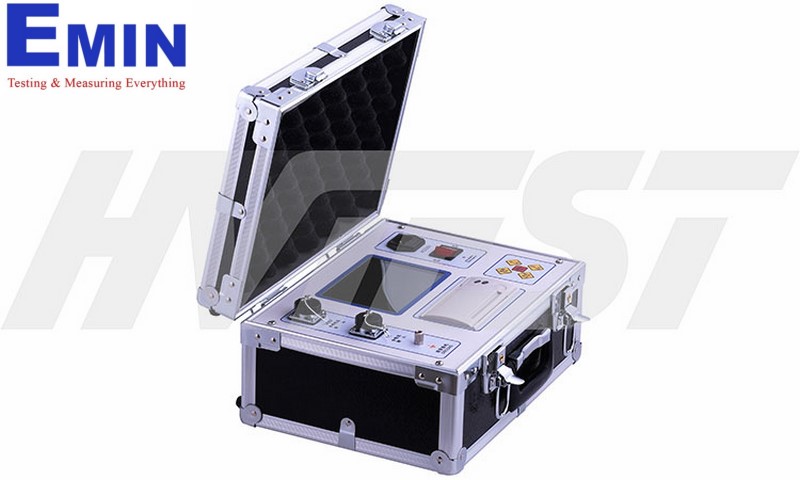
Why lightning arrester testing matters in power systems
Lightning arresters are designed to protect transformers, switchgear, cables, and other valuable assets from overvoltage events. Even when they appear intact from the outside, internal aging, moisture ingress, or insulation degradation can gradually affect their electrical behavior. That is why periodic testing is often part of broader asset management practice in electrical maintenance.
One of the most useful indicators is leakage current analysis, especially the resistive component. In many practical maintenance workflows, this value is monitored to help identify changes in arrester condition over time. For teams working across substations or industrial facilities, combining arrester checks with related insulation diagnostics such as capacitance and tan delta measurement can provide a more complete picture of equipment health.
What you can find in this category
This category focuses on portable instruments used to inspect and evaluate surge arresters in the field. Depending on the test method, the equipment may be intended for resistive current measurement, total leakage current analysis, harmonic component review, or operation checks for arrester counters. These functions are especially useful when maintenance personnel need practical on-site diagnostics without removing every device from service.
Some applications are centered on arrester condition assessment, while others are aimed at confirming whether a lightning arrester counter responds properly to impulse events. In both cases, the tester supports a more structured maintenance approach and helps reduce the risk of unnoticed arrester degradation.
Representative instruments for arrester inspection
A good example in this range is the Surgetec RCA2000 Resistive Current Analyzer for Surge Arrester. This type of instrument is used for analyzing total leakage current, capacitive current, and resistive current, including harmonic components. In practical maintenance work, that helps engineers distinguish between normal behavior and signs that deserve closer investigation.
Another relevant product is the EPHIPOT EPD420 Lightning Arrester Counter Detector (8/20us), which is intended for checking counter operation using an impulse current waveform. This is useful where the maintenance task is not only about insulation-related behavior, but also about confirming that the arrester monitoring or event-counting mechanism is functioning as expected. For users looking into the broader product range from this manufacturer, the EPHIPOT brand page is also worth reviewing.
Key parameters to consider when selecting a tester
Selection depends first on the actual maintenance objective. If the goal is condition monitoring, it is important to look at the tester’s ability to evaluate resistive current, total leakage current, and related harmonic content. These readings are often more meaningful than a simple pass/fail approach because they can support trend analysis over repeated inspections.
If the task is focused on counter verification, then output waveform, test interval, portability, and ease of field use may be more relevant. In both cases, buyers typically consider operating convenience, report generation, display readability, and whether the instrument is suitable for substation or industrial maintenance routines. For applications involving broader dielectric verification, related tools for withstand voltage testing may also be part of the same maintenance toolkit.
Typical use cases in the field
Lightning arrester testers are commonly used during periodic inspection programs, after fault events, and as part of acceptance checks following installation. Utilities and industrial power users may compare readings across similar arresters in the same system to identify outliers. When records are maintained over time, the test data can help prioritize replacements and avoid unnecessary intervention on healthy units.
These instruments are also relevant in maintenance environments where multiple high-voltage assets are assessed together. For example, arrester testing may be scheduled alongside transformer testing, insulation checks, or gas-insulated equipment diagnostics. In that wider workflow, teams may also work with equipment such as an SF6 gas analyzer for other parts of the electrical system.
How to evaluate results in a practical maintenance workflow
Measurement results are most useful when they are interpreted in context. A single reading can indicate current condition, but trend data across several inspections is often more valuable for identifying deterioration. Maintenance teams usually compare current values with historical records, site conditions, and the operating profile of the arrester rather than relying on one isolated number.
In practice, testers that support data storage or report creation can make this process easier. A structured diagnostic workflow helps engineers classify equipment condition, document findings, and decide whether continued monitoring, closer inspection, or replacement should be considered. That is especially important in installations where arrester reliability has a direct effect on system uptime and asset protection.
Choosing the right category for your testing scope
Not every electrical test instrument addresses the same maintenance question, so it is worth matching the category to the job at hand. A lightning arrester tester is the right fit when the focus is on arrester condition, leakage behavior, or counter verification. If the need is instead related to cable or insulation stress testing, very different test methods and equipment may be required.
For procurement teams and engineers, this category is best approached as part of a wider electrical testing strategy. The right choice depends on voltage class, maintenance method, reporting requirements, and whether testing is performed in the lab, in the workshop, or directly on site.
Final thoughts
Reliable arrester assessment starts with the right diagnostic approach. This category brings together instruments that support surge arrester testing in practical field conditions, from leakage current analysis to counter operation checks. If you are comparing options for preventive maintenance, commissioning, or troubleshooting, focus on the type of measurement you need and how the tester will fit into your broader inspection workflow.
By selecting a tool aligned with the real maintenance task, it becomes easier to generate useful data, document equipment condition, and make better service decisions for high-voltage protection systems.
Get exclusive volume discounts, bulk pricing updates, and new product alerts delivered directly to your inbox.
By subscribing, you agree to our Terms of Service and Privacy Policy.
Direct access to our certified experts