
Relay test device
Accurate relay verification is a critical part of commissioning, maintenance, and troubleshooting in power systems. When protection schemes must operate at the right pickup value, timing window, and phase relationship, the test setup needs to reproduce electrical conditions in a controlled and repeatable way. This is where relay test devices become essential for utilities, panel builders, service teams, and industrial maintenance environments.
On this page, you can explore equipment used for secondary injection testing, relay timing checks, phase simulation, and protection verification across single-phase, three-phase, and multi-phase applications. The category covers compact test sets for routine field work as well as advanced systems for more demanding protection and substation testing tasks.
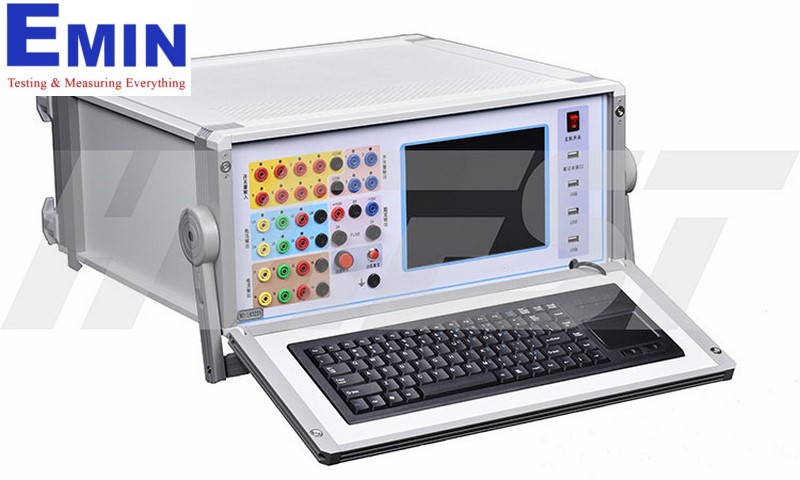
Where relay test devices are used
In electrical protection work, testing is not limited to confirming whether a relay trips or not. Engineers often need to validate pickup thresholds, operate and reset timing, directional behavior, phase angle response, and how the relay performs under simulated fault conditions. A suitable test set allows these checks to be carried out before energization, during scheduled maintenance, or after modifications to protection settings.
Typical use cases include substations, switchgear manufacturing, industrial power distribution, renewable energy systems, and service laboratories. In wider asset condition assessment programs, relay testing is often performed alongside insulation and dielectric checks using equipment such as withstand voltage test systems or related high-voltage diagnostic tools.
Common device formats in this category
The category includes several equipment formats because protection testing requirements can vary significantly. For routine checks on individual electromechanical or simple static relays, a single-phase unit may be sufficient. For example, the MultiTech MTS-1P Single Relay Tester is suited to applications where current injection, voltage output, and timing verification are the main priorities.
For modern protection schemes, three-phase and six-phase platforms are more common because they support more realistic simulation of line conditions, phase rotation, and fault scenarios. Products such as the EPHIPOT EPRP-204, EPHIPOT EPRP-404, and MultiTech MTS-6P 6 Phase Relay Tester illustrate this broader capability, while higher-level systems like the Kocos ARTES 500 or MEGGER SVERKER 900 Expert are aligned with more advanced protection and substation workflows.
What to look for when selecting a relay test device
The first selection point is the required number of current and voltage outputs. A basic maintenance task may only need single-phase injection, while feeder, transformer, generator, or distance protection testing can require multiple synchronized channels. If your work involves complex protective relays or testing several functions in one setup, a multi-phase platform usually offers better flexibility.
The next consideration is output range and burden capability. Higher current output supports testing of relays that require stronger injection or short-duration high-current simulation, while wide voltage ranges help when working with different relay types and operating conditions. It is also useful to review timing resolution, binary inputs and outputs, frequency range, harmonic generation, and whether the unit supports stand-alone operation or PC-controlled software-based testing.
Portability matters as well. Field engineers may prioritize manageable size, front-panel accessibility, and quick connection in switch rooms, whereas workshop or lab users may focus more on automation, reporting, and repeatable test sequences. The right choice depends less on a single headline specification and more on the actual protection tasks being performed.
Representative products and solution levels
Several products in this category show how the market spans from straightforward relay verification to more advanced testing scenarios. The Kocos ARTES 500 Protection Relay Test Equipment is an example of a modern platform with multiple voltage and current outputs, binary I/O, and software-supported operation for detailed protection testing. This type of system is relevant when test coverage and flexible configuration are important.
On the practical field side, the MEGGER SVERKER 750 Relay Test Set is widely aligned with secondary testing workflows where robust current output and everyday usability are key. For more advanced substation-oriented tasks, the MEGGER SVERKER 900 Expert extends the concept toward broader relay and substation test requirements. Users comparing platforms can also consider the range from EPHIPOT, including three-phase and six-phase models such as the EPRP-304, EPRP-605, and EPRP-606 GPS, depending on how much channel count and function coverage is needed.
Single-phase, three-phase, or six-phase: which one fits?
A single-phase relay tester is typically suitable for straightforward overcurrent, voltage, and timing checks on individual devices. It is often a practical choice for maintenance teams handling routine verification without needing to simulate complex network conditions. This approach can keep setup simple and reduce time on site.
A three-phase unit is usually the baseline for testing many modern protection relays, especially when phase relationships, directional elements, or balanced and unbalanced system conditions need to be assessed. Six-phase systems go further by supporting more complex schemes and reducing rewiring when testing multifunction or differential applications. If your work frequently involves advanced protection logic, six-phase output can improve both efficiency and test realism.
How relay testing fits into broader electrical test programs
Relay verification is only one part of a complete power equipment maintenance strategy. In many substations and industrial facilities, protection checks are combined with transformer, cable, and insulation diagnostics to create a more complete view of equipment condition. Depending on the asset type, teams may also use capacitance and tan delta meters or a very low frequency tester for complementary diagnostic work.
This broader perspective is useful because a correctly configured relay still depends on the health of the wider system. Pairing protection testing with dielectric, cable, or insulation assessment helps maintenance teams identify whether the issue lies in the relay logic, the wiring, or the primary equipment itself.
Important evaluation points for B2B buyers
For procurement teams and technical evaluators, the best comparison method is to start with the actual protection relays and test procedures in use. Consider the relay types in your installed base, whether you need AC and DC outputs, the expected test current level, and whether automated reporting is required for compliance or maintenance records. In many projects, ease of operator training and repeatability of test sequences are just as important as raw output capability.
It is also worth checking practical details such as interface options, front-panel access, portability, and whether the device supports efficient operation in both workshop and field conditions. Categories like relay testing often include products aimed at very different use cases, so selecting by application profile is usually more reliable than selecting by price or channel count alone.
Choosing with confidence
This category brings together relay test devices for users who need anything from simple secondary injection to more advanced multi-phase protection verification. Whether the priority is portability, higher current output, broader simulation capability, or a more software-driven workflow, the most suitable device is the one that matches your protection tasks, test frequency, and operating environment.
By reviewing channel configuration, output capability, timing functions, and the overall scope of your electrical maintenance program, you can narrow the options more effectively. A well-matched relay test device supports safer commissioning, more reliable troubleshooting, and better long-term protection performance across power system assets.
Get exclusive volume discounts, bulk pricing updates, and new product alerts delivered directly to your inbox.
By subscribing, you agree to our Terms of Service and Privacy Policy.
Direct access to our certified experts