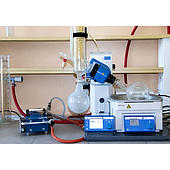
How do melting point and decomposition point differ? Distinguish between their fundamental nature and identifying characteristics, and explain why many substances do not have a melting point but instead decompose upon heating

How do melting point and decomposition point differ? Distinguish between their fundamental nature and identifying characteristics, and explain why many substances do not have a melting point but instead decompose upon heating

What is the melting point of a polymer? Discover why polymers do not have a fixed melting temperature, the differences between thermoplastics and thermosets, and how to determine melting points using a melting point apparatus

Why does a sample exhibit a broad melting range? Explore five common causes ranging from impurities, moisture, and heating rates to sample preparation and learn how to accurately interpret the results.

What are the differences between sample homogenization and emulsification? Learn about the nature of each process, its operating principles, applications in food, cosmetics, pharmaceuticals, and how to choose the right equipment.

What is ASTM Type I, II, and III distilled water? Learn about the differences in purity, conductivity, resistivity, and applications of each grade of water used in laboratories, testing, research, and production.

A guide to accurately converting RPM to RCF. Learn the difference between RPM and RCF, the calculation formulas, practical examples, and why you shouldn't rely solely on RPM when using a centrifuge

When reviewing the specifications of a laboratory circulating bath, two performance parameters frequently appear: Stability and Uniformity. Although both are related to temperature control, they describe two fundamentally different characteristics of the equipment.

Air bubbles that form during stirring not only affect mixing efficiency but can also skew analytical results in some laboratory applications. Learn about the causes and effective ways to minimize them

Circulating baths are widely used in chemical, biological, pharmaceutical, material research, and calibration laboratories. Their function extends beyond heating; they are designed to maintain a stable temperature throughout the entire working area. When temperature uniformity deteriorates, samples placed in different locations within the bath may be exposed to different thermal conditions, affecting the reliability of test results.

If the magnetic stir bar rotates weakly, easily swings away, or no longer creates the same swirling motion as before, has it lost its magnetism? Find out the causes, how to check, and the appropriate solutions.
Get exclusive volume discounts, bulk pricing updates, and new product alerts delivered directly to your inbox.
By subscribing, you agree to our Terms of Service and Privacy Policy.
Direct access to our certified experts