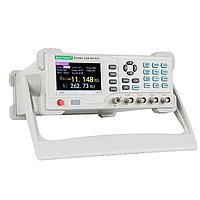
LCR Meter Calibration Service
Accurate impedance measurement depends heavily on a meter that remains stable, traceable, and consistent over time. In production lines, incoming inspection, R&D labs, and repair environments, even small deviations in an LCR meter can affect component verification, quality control decisions, and test repeatability. That is why LCR Meter Calibration Service plays an important role in maintaining confidence in capacitance, inductance, and resistance measurement results.
This category is intended for businesses and technical teams that need calibration support for handheld or bench LCR instruments from widely used manufacturers. Whether the meter is used for routine inspection or more demanding electrical measurement tasks, regular calibration helps reduce uncertainty and supports better alignment with internal quality procedures.
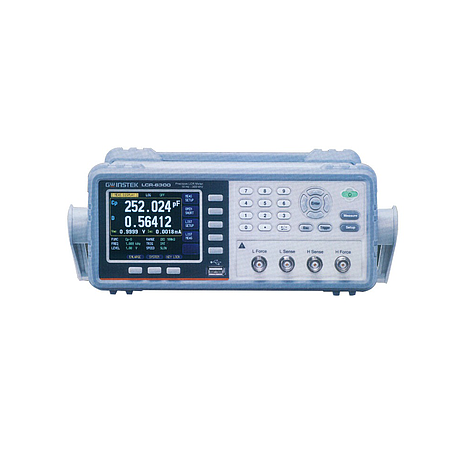
Why LCR meter calibration matters
An LCR meter is typically used to evaluate passive components and related electrical characteristics. Because these measurements are often used to accept or reject parts, verify assemblies, or compare performance over time, calibration is not only a maintenance step but also a practical part of process control.
Calibration traceability helps ensure that the instrument’s readings remain aligned with known references. For organizations working under quality systems, scheduled calibration can support documentation, reduce the risk of hidden drift, and improve consistency between operators, stations, or sites.
Typical use cases for this service
LCR meter calibration is relevant in electronics manufacturing, service workshops, component testing, laboratories, and technical education environments. It is especially useful where teams rely on repeatable measurement of capacitors, inductors, coils, transformers, filters, or other circuit elements whose impedance characteristics must be checked before use or after repair.
In many workflows, the LCR meter is only one part of a broader measurement ecosystem. Companies that also maintain voltage, current, and installation test equipment may want to review related services such as multimeter calibration or clamp meter calibration to keep electrical test assets managed under a consistent service plan.
Supported manufacturers and instrument coverage
This category includes calibration service options for many well-known instrument brands commonly found in technical and industrial environments. Examples in this range include HIOKI, KEYSIGHT, Rohde & Schwarz, BKPRECISION, EXTECH, GW INSTEK, KIKUSUI, SANWA, MICROTEST, and PROTEK.
Representative service listings in this category include HIOKI LCR Meter Calibration Service, KEYSIGHT LCR Meter Calibration Service, Rohde & Schwarz calibration for LCR meters, GW INSTEK LCR Meter Calibration Service, and EXTECH LCR Meter Calibration Service. These examples help illustrate the scope of supported brands without limiting the category to a single manufacturer or instrument family.
How to choose the right calibration service
When selecting a service option, it is useful to begin with the exact instrument brand and model in your facility, followed by its operating condition, usage frequency, and any internal compliance requirements. A meter used daily in inspection or verification work may need closer attention than a backup unit used only occasionally.
You should also consider how the device is applied in practice. If the instrument is part of a wider testing workflow that includes installation testers or specialized electrical verification tools, coordinated calibration scheduling can simplify maintenance planning. In those cases, related categories such as multifunction electrical installations meter calibration may also be relevant.
Examples of service options in this category
For organizations using Japanese, European, or global test equipment brands, this category includes service listings such as HIOKI LCR Meter Calibration Service, SANWA LCR Meter Calibration Service, KIKUSUI LCR Meter Calibration Service, and the Rohde & Schwarz calibration service for LCR meters. These options are useful for companies seeking support that matches the equipment already deployed in their measurement system.
Other examples include BKPRECISION LCR Meter Calibration Service, MICROTEST LCR Meter Calibration Service, PROTEK LCR Meter Calibration Service, and GW INSTEK LCR Meter Calibration Service. Mentioning these services within the category helps buyers quickly identify familiar brands while still focusing on the broader goal of measurement reliability rather than brand repetition.
What calibration helps you manage in daily operation
A calibrated LCR meter supports more reliable decision-making when comparing components, checking incoming goods, validating repairs, or monitoring process stability. In practical terms, it helps teams avoid situations where instrument drift leads to unnecessary troubleshooting, disputed results, or inconsistent acceptance criteria.
It also supports better asset management across the test bench. Facilities that maintain several electrical instruments often benefit from reviewing nearby calibration categories, including phase indicator calibration service, when they want a more complete service structure for electrical and electronic measurement tools.
When to consider recalibration
Recalibration is commonly considered on a periodic schedule, after heavy use, after transportation, or whenever measurement results appear inconsistent with expected values. It may also be appropriate after repair, after long-term storage, or when the instrument is moved into a more critical application than before.
Service interval planning should reflect actual usage conditions, the importance of the measurement in your process, and your organization’s documentation needs. For B2B users, the right interval is usually the one that balances operational continuity, risk control, and the level of confidence required by the application.
Find the suitable LCR calibration option for your equipment
This category brings together calibration service options for LCR meters from established instrument brands used in industry, laboratories, and technical maintenance. It is designed to help buyers identify relevant service coverage more efficiently, especially when managing multiple instruments across different brands and departments.
If your work depends on stable capacitance, inductance, and resistance measurement, choosing the appropriate calibration service is a practical step toward better traceability, more consistent testing, and stronger control over day-to-day measurement quality.
Get exclusive volume discounts, bulk pricing updates, and new product alerts delivered directly to your inbox.
By subscribing, you agree to our Terms of Service and Privacy Policy.
Direct access to our certified experts