
Electrostatic Eliminator Calibration
In ESD-controlled production areas, an ionizer only helps when its output is verified and kept within acceptable performance limits. Over time, emitter wear, contamination, airflow changes, and electronic drift can affect how effectively the unit neutralizes charge. That is why Electrostatic Eliminator Calibration plays an important role in electronics assembly, cleanroom processes, precision manufacturing, and other environments where static control directly affects yield and product reliability.
This category focuses on calibration services for electrostatic eliminators, also called ionizers, used to reduce static charge on parts, workstations, packaging, and process equipment. The goal is not simply to check whether a device powers on, but to assess whether it is operating with the level of balance and performance needed for practical ESD control.
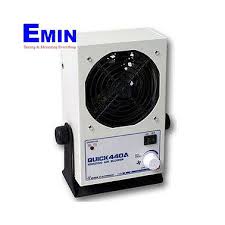
Why ionizer calibration matters in ESD control
Electrostatic eliminators are widely used where grounded conductors and wrist straps are not enough to control charge on insulators or isolated objects. In these applications, an ionizer must generate and deliver positive and negative ions in a stable way so that charged surfaces can be neutralized efficiently. If that performance shifts, static may remain longer than expected or the device may introduce imbalance that affects sensitive work.
Regular calibration helps confirm that the equipment still supports the intended ESD process. It is also useful for maintenance planning, traceability, quality audits, and periodic verification programs where electrostatic control equipment must be monitored as part of a broader compliance routine.
What is typically evaluated during calibration
A proper calibration service for an electrostatic eliminator is centered on ionizer performance verification rather than a basic visual inspection. Depending on the equipment type and the applicable procedure, evaluation may include output behavior related to charge neutralization performance and ion balance. These checks help determine whether the unit remains suitable for controlled use in static-sensitive areas.
Because ionizers are part of a wider electrostatic control system, calibration data is most useful when reviewed together with other ESD measurements. For example, organizations that also verify field measurement devices may benefit from related services such as electrostatic meter calibration to maintain consistency across their monitoring workflow.
Common equipment types covered in this category
This category is intended for calibration support for static eliminators used in industrial and technical environments. In practice, that may include ionizers integrated into benches, overhead units, compact workcell installations, or localized static control points, provided the service scope matches the equipment submitted for calibration.
Examples featured in this category include the SIMCO Static Eliminator (Ionizer) Calibration Service, TREK Static Eliminator (Ionizer) Calibration Service, Vessel Static Eliminator (Ionizer) Calibration Service, KASUGA Static Eliminator (Ionizer) Calibration Service, HAKKO Static Eliminator (Ionizer) Calibration Service, and KESD Static Eliminator (Ionizer) Calibration Service. These examples illustrate that calibration demand often spans multiple manufacturers rather than a single equipment platform.
Supported brands and practical service context
Many facilities standardize on familiar ionizer brands, but the calibration requirement is essentially the same: confirm that the installed or submitted unit is still performing as expected. This category includes services associated with well-known names such as HAKKO, SIMCO, TREK, Vessel, KASUGA, and KESD. Mentioning the brand is useful for service matching, but the real focus remains the condition and measurement results of the individual unit.
For procurement teams and maintenance engineers, brand-based service selection can simplify asset grouping and recordkeeping. It can also help when an operation manages mixed ESD infrastructure across several lines, benches, or production rooms where different ionizer models are already in use.
How to choose the right calibration service
When selecting a calibration service, it helps to start with the actual role of the ionizer in the process. A unit used near sensitive components, optical parts, films, or automated handling stages may require tighter control and more disciplined verification intervals than one used in a less critical area. The service should therefore align with your equipment type, usage pattern, and internal quality requirements.
It is also useful to consider calibration as one part of a broader ESD control program. If your process depends on workstation monitoring or compliance checks at multiple control points, related categories such as ESD and charge monitoring equipment calibration or surface resistance tester calibration service may also be relevant.
Who typically needs electrostatic eliminator calibration
This service is relevant to manufacturers and laboratories working with static-sensitive products or materials. Typical users include electronics assembly lines, semiconductor-related processes, precision packaging operations, cleanroom environments, and technical service organizations responsible for periodic equipment verification.
It is especially valuable where documented calibration status is required for internal audits, customer quality systems, or preventive maintenance programs. In these cases, calibration supports not only equipment confidence but also more consistent process control across the full ESD handling environment.
Why this category fits long-term maintenance planning
Ionizers are often treated as background equipment because they run continuously and may not show obvious faults until performance has already shifted. A structured calibration plan makes it easier to detect drift, identify units that need adjustment or service attention, and reduce the risk of hidden static problems affecting production.
Used in combination with broader electrostatic equipment verification, electrostatic eliminator calibration helps maintain a more reliable and traceable control system. If you are reviewing ionizer performance across one workstation or an entire facility, this category provides a focused starting point for selecting the appropriate calibration service by brand and application context.
Get exclusive volume discounts, bulk pricing updates, and new product alerts delivered directly to your inbox.
By subscribing, you agree to our Terms of Service and Privacy Policy.
Direct access to our certified experts
