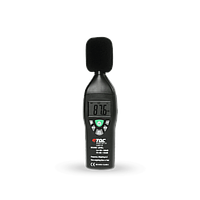
Sound Level Meter Calibration Service
Accurate noise measurement depends on more than the meter itself. In occupational safety, environmental monitoring, plant maintenance, and building acoustics, even a small deviation can affect compliance records, trend analysis, and field decisions. A professional Sound Level Meter Calibration Service helps maintain confidence in measured dB values and supports reliable documentation over the instrument’s working life.
This category is intended for organizations that use sound level meters in regular inspection, audit, or monitoring work and need a practical route to calibration for common market brands. Whether the instrument is used for workplace noise surveys, machinery noise checks, or environmental assessments, periodic calibration is a key part of keeping measurement quality under control.
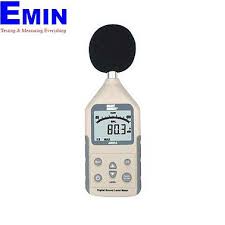
Why sound level meter calibration matters
A sound level meter is expected to detect and process acoustic pressure accurately across defined operating conditions. Over time, normal handling, transport, sensor aging, and exposure to field environments can influence performance. Calibration helps verify that the instrument remains within its intended measurement behavior and that reported results are still dependable for technical or audit purposes.
For many users, calibration is not only about instrument maintenance but also about measurement traceability. When noise data is used in reports, safety programs, environmental records, or quality processes, a calibrated meter provides stronger support for repeatable measurement practice. This is especially relevant when multiple teams, sites, or instruments are involved.
Typical applications that require regular calibration
Sound level meters are used in a wide range of B2B and industrial contexts. Common examples include occupational noise assessment in factories, equipment noise checks in utilities or process plants, environmental surveys around facilities, and acoustic verification in commercial buildings. In these cases, stable meter performance is important because decisions may depend on threshold values, comparison over time, or evidence for compliance review.
Organizations that also work with other environmental instruments often manage calibration as part of a broader maintenance schedule. If your team handles several types of field instruments, related services such as light meter calibration or dew point meter calibration may be relevant within the same quality system.
Brand coverage and service examples
This category includes calibration service options for a broad range of commonly used manufacturers. Examples available here include services for instruments from HIOKI, TESTO, TSI, EXTECH, KANOMAX, PCE, Promax, Amprobe, BKPRECISION, and Chauvin Arnoux. The goal is to help buyers quickly identify brand-aligned service options without having to search across multiple product groups.
Representative listings include HIOKI Sound level meter Calibration Service, TESTO Sound level meter Calibration Service, EXTECH Sound level meter Calibration Service, KANOMAX Sound level meter Calibration Service, and Chauvin Arnoux Sound level meter Calibration Service. These examples illustrate the brand scope of the category rather than suggesting identical service workflows for every model. Buyers should still confirm compatibility based on the specific instrument they are maintaining.
What to consider when selecting a calibration service
When choosing a service, the first step is to match the request to the instrument brand and intended use. Users in regulated environments may prioritize service records, calibration intervals, and internal documentation requirements, while maintenance teams may focus on turnaround, continuity of operations, and keeping field instruments ready for scheduled work.
It is also useful to review how the meter is used in practice. Instruments that travel frequently between sites or are exposed to demanding environments may benefit from closer calibration planning than devices used only occasionally in controlled conditions. For organizations running a larger environmental monitoring program, combining this service with related categories such as radiometers and heat stress instrument calibration can simplify service coordination.
How calibration supports measurement consistency
The practical value of calibration is often seen in long-term data consistency. If a facility tracks workplace noise trends, compares zones, or verifies changes after equipment maintenance, the usefulness of those records depends on instruments behaving consistently from one period to the next. Calibration helps reduce uncertainty about whether a change in readings reflects the environment or the instrument itself.
For technical teams, this also improves confidence when comparing data between departments, contractors, or different locations. A structured calibration approach supports repeatable measurement practice, which is especially important in multi-site operations or whenever sound measurement is part of an established safety or environmental procedure.
Suitable for industrial, commercial, and technical service environments
This category is relevant to manufacturers, EHS teams, utilities, laboratories, building service providers, and inspection contractors that depend on portable acoustic measurement tools. It can also support procurement teams looking for brand-specific calibration options for existing instrument fleets. Because service needs often follow the installed base of instruments, having access to multiple recognized brands in one place makes sourcing more efficient.
Users who already work with brands such as TESTO or Chauvin Arnoux in other measurement categories may also prefer to keep calibration planning aligned with their current equipment ecosystem. That can make administration easier when service schedules, instrument records, and purchasing are handled centrally.
When it is time to recalibrate
Calibration intervals are usually determined by internal quality procedures, usage frequency, operating conditions, and any relevant compliance requirements. In practical terms, recalibration is commonly considered after extended field use, when an instrument has been subject to impact or unusual conditions, or when measurement stability becomes a concern during routine work.
If your team relies on acoustic data for inspections, reporting, or preventive action, regular calibration should be treated as part of normal instrument lifecycle management rather than a one-time task. A well-maintained and properly calibrated meter supports better decisions, cleaner records, and more dependable day-to-day field measurements.
Choose the right service for your instrument fleet
This Sound Level Meter Calibration Service category is designed to make brand-based service selection easier while keeping the focus on real operational needs. Whether you are managing a few handheld meters or a broader set of environmental instruments, calibration is a practical step toward maintaining measurement reliability and documentation quality.
Review the available service options by brand, check suitability for your instrument, and align calibration planning with how the meter is used in the field. A clear service schedule today can help avoid questionable readings, reporting gaps, and unnecessary downtime later.
Get exclusive volume discounts, bulk pricing updates, and new product alerts delivered directly to your inbox.
By subscribing, you agree to our Terms of Service and Privacy Policy.
Direct access to our certified experts