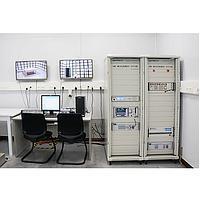
EMC and EMI Tester Inspection Service
Reliable electromagnetic compatibility testing depends not only on the test method, but also on the condition of the equipment used to generate, measure, and evaluate disturbances. When EMC or EMI instruments drift, degrade, or develop unnoticed faults, the result can be unstable measurements, failed audits, repeated tests, and unnecessary troubleshooting time. A professional EMC and EMI Tester Inspection Service helps verify that critical test equipment remains suitable for routine laboratory, production, and pre-compliance work.
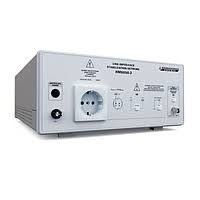
Why inspection matters for EMC and EMI test equipment
EMC and EMI testing often involves a chain of instruments rather than a single device. Signal generation, disturbance injection, power conditioning, isolation, and measurement all influence the final result. If one element in that chain is no longer performing as expected, the overall test setup may produce misleading data even when the DUT has not changed.
An inspection service is valuable for identifying issues before they affect validation schedules or customer acceptance testing. It is especially relevant for teams using equipment in repetitive workflows, internal compliance screening, or support functions around broader RF and telecom test environments.
What is typically covered in this service category
This category is focused on inspection services for instruments and systems used in EMI/EMC testing. The goal is to assess the operating condition of equipment, confirm functional behavior, and support continued use in environments where consistency matters. Depending on the instrument type, inspection may involve checks related to output behavior, signal integrity, disturbance generation, isolation performance, or general operational status.
Examples in this category include the Rohde & Schwarz EMC Precompliance Set Inspection Service, the KIKUSUI EMI and EMC Test System Inspection Service, and the Schloeder Generator & Conducted Disturbances Test System Inspection Service. These examples reflect how the category supports both integrated EMC setups and specific subsystems used in conducted disturbance or pre-compliance workflows.
Common equipment types found in EMC and EMI environments
EMC laboratories and engineering teams often work with a mix of supporting devices around the core test setup. These may include pre-compliance systems, disturbance generators, low-distortion power sources, isolated transformers, and dynamic range amplifiers. Each of these plays a different role in building a reliable test environment, whether the focus is emissions, immunity, or bench-level investigation.
Representative services here include the Tekbox Dynamic Range Amplifier Inspection Service, the TTI Low Distortion Power Source Inspection Service, and the GW INSTEK Isolated Transformer Inspection Service. While these are not identical instruments, they all support the broader objective of maintaining stable and trustworthy EMC-related measurements.
How inspection supports more consistent test results
One of the main benefits of equipment inspection is improved confidence in test repeatability. In EMC work, small deviations in source quality, disturbance behavior, or measurement response can create confusion when comparing test runs across time, operators, or locations. Inspection helps reduce uncertainty by confirming that the equipment itself is not the cause of inconsistent results.
This is particularly useful for engineering teams that run internal qualification, incoming verification, or troubleshooting activities before formal certification testing. A checked and stable setup makes it easier to separate genuine DUT behavior from problems caused by the test bench.
Choosing the right inspection service for your setup
The most suitable service depends on how the equipment is used in your process. If your work centers on pre-compliance screening, an inspection service for a dedicated EMC set may be the best starting point. If your workflow relies on supporting infrastructure such as power conditioning or isolation, then inspection of those devices can be equally important for maintaining a dependable environment.
It is also helpful to consider the age of the equipment, frequency of use, operating conditions, and the consequence of downtime. Users working with brands such as Rohde & Schwarz, KIKUSUI, TTI, Schloeder, or Tekbox may prioritize inspection differently depending on whether the instrument is part of daily production support, engineering validation, or occasional diagnostic work.
Related inspection services in RF and telecom test workflows
EMC and EMI equipment rarely operates in complete isolation from other electronic test assets. In many labs, teams also maintain RF and microwave instruments used for characterization, troubleshooting, or signal-path validation. Where that broader workflow exists, it can be useful to review related services such as Vector Network Analyzer Inspection Service or RF and microwave power meter inspection.
These related categories can help organizations maintain a more complete service strategy across connected test systems. For teams responsible for both EMC verification and RF measurement, coordinated inspection planning often simplifies maintenance scheduling and reduces disruption to engineering activities.
Who can benefit from this category
This service category is relevant for EMC labs, electronics manufacturers, repair and validation teams, contract test providers, and industrial R&D groups. It is also useful for organizations that rely on pre-compliance testing to reduce risk before sending products to formal certification.
In practice, inspection is most valuable where equipment availability and dependable measurement quality directly affect project timelines. That includes production support environments, development labs, and technical service centers that need instruments to remain operational and predictable over time.
Final considerations before arranging inspection
Before selecting a service, it helps to identify the instrument’s role in your workflow and the impact of any performance issue on your testing process. A generator, amplifier, transformer, or pre-compliance system may each require different attention depending on how heavily it is used and how critical it is to your setup. Reviewing the service options in this category can make it easier to match the inspection scope to the actual function of the equipment.
For organizations that depend on test reliability, stable operation, and better control over troubleshooting time, an EMC and EMI inspection plan is a practical step. The right service approach supports equipment condition assessment, helps maintain confidence in measurement consistency, and provides a more dependable foundation for ongoing EMC work.
Get exclusive volume discounts, bulk pricing updates, and new product alerts delivered directly to your inbox.
By subscribing, you agree to our Terms of Service and Privacy Policy.
Direct access to our certified experts