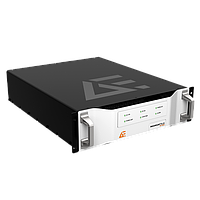
Plasma Power Supply Repair Service
Stable plasma processes depend heavily on power delivery. When a plasma power source begins to drift, trip unexpectedly, or fail to ignite and regulate correctly, production quality, chamber stability, and maintenance cost can all be affected. This is where a professional Plasma Power Supply Repair Service becomes important for manufacturers, OEM support teams, and industrial maintenance departments that need dependable equipment recovery rather than unnecessary replacement.
Plasma power supplies are used in demanding environments such as semiconductor processing, thin film deposition, surface treatment, and other industrial plasma applications. Because these systems operate under electrically and thermally stressful conditions, repair work often requires more than simple part replacement. A useful service approach focuses on fault isolation, performance recovery, and verification that the unit can return to operation with predictable output behavior.
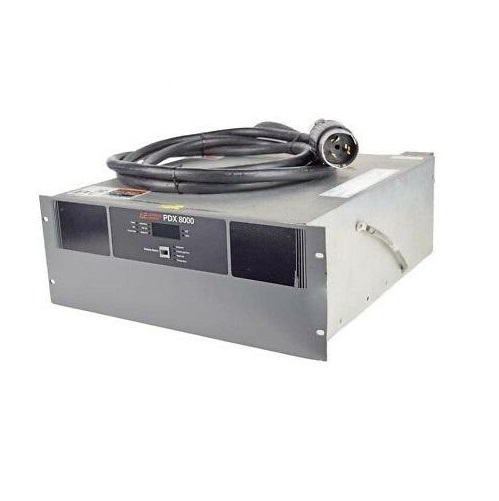
Why plasma power supply repair matters in industrial systems
A plasma process is only as stable as the power platform behind it. Variations in output, ignition instability, arc events, or communication faults can lead to inconsistent process windows, lower throughput, and increased scrap risk. In many facilities, repairing the existing unit is a practical way to restore uptime while preserving compatibility with the installed toolset.
Compared with general power electronics, plasma power supplies often require application-aware troubleshooting because their performance is closely tied to matching networks, chamber conditions, and process recipes. A repair service for this category should therefore support not only hardware restoration but also confidence in how the unit behaves under real operating demands.
Typical issues addressed by a repair service
Service needs can range from complete no-power conditions to intermittent faults that only appear under load. Common repair scenarios include unstable output, startup failure, protection trips, abnormal alarms, communication problems, cooling-related damage, and aging of internal power components. In plasma systems, even small deviations can have an outsized effect on process consistency, so accurate diagnosis is essential.
For users working with RF-based platforms, repair support may also be relevant when symptoms appear upstream or overlap with generator performance. One example in this ecosystem is the Advanced Energy RF Plasma generator repair service, which is useful when the issue involves RF plasma generation hardware rather than a broader facility power source. Distinguishing the failure point helps avoid replacing the wrong assembly and shortens downtime.
Support for Advanced Energy equipment and similar platforms
Many industrial users look for service support around well-known plasma power brands because installed systems often remain in operation for long service cycles. For facilities using Advanced Energy equipment, repair capability is especially relevant in applications where process repeatability and tool integration are critical. Brand familiarity can help speed up fault tracing, but the repair objective remains the same: restore safe, stable, and repeatable power delivery.
At the category level, the goal is not simply to mention manufacturers but to provide a repair path that aligns with the operational role of the equipment. That includes attention to output behavior, protective circuitry, control response, and the practical requirements of returning a repaired unit to service in a production environment.
How plasma power supply repair fits into a broader service strategy
Not every power-related fault belongs in the same repair workflow. Some issues originate in general-purpose DC sources, some in AC conversion stages, and others specifically in plasma-oriented power systems. If your equipment problem is tied to process plasma generation, this category is the most relevant starting point; if the unit is part of another power architecture, related service paths may be more appropriate.
For example, users comparing repair options may also review DC power supply repair for conventional DC systems or AC power supply repair when the fault is centered on AC output equipment. This distinction matters because the operating characteristics, failure modes, and validation methods can differ significantly from those of plasma-focused platforms.
What to evaluate before sending a unit for repair
Useful repair decisions begin with a clear description of the failure. If available, record alarm messages, startup behavior, operating history, load conditions, and any recent maintenance events. Information about intermittent faults, environmental conditions, and whether the issue appears only during certain process steps can also improve troubleshooting efficiency.
It is also helpful to identify whether the affected unit is a dedicated plasma source, a programmable supply, or a related subsystem within a larger tool. This avoids delays during intake and helps determine whether a service path such as programmable DC power supply repair would be more appropriate for equipment with configurable output behavior outside a plasma application context.
What a good repair outcome should deliver
A successful repair should do more than power the unit back on. In this category, the practical target is restored operating reliability, meaning the repaired power supply can return to service with stable electrical performance and predictable response under intended conditions. For industrial users, this supports lower unplanned downtime and better continuity in maintenance planning.
Good service value also comes from reducing uncertainty. Instead of treating plasma equipment faults as generic electronics failures, a specialized approach helps align repair work with how the unit is actually used in the field. That is particularly important where process sensitivity is high and equipment replacement may be costly or disruptive.
Choosing the right service path for plasma-related power issues
Plasma systems place unique demands on power electronics, and those demands make repair quality especially important. Whether the problem involves unstable output, protection trips, ignition behavior, or suspected RF-related faults, choosing a service category that matches the application can improve turnaround and help restore confidence in the equipment.
If your facility relies on plasma-based production or treatment processes, this category provides a focused route for evaluating and restoring affected units. A well-matched repair service can extend equipment life, support process continuity, and help maintenance teams make more informed decisions about repair versus replacement.
Get exclusive volume discounts, bulk pricing updates, and new product alerts delivered directly to your inbox.
By subscribing, you agree to our Terms of Service and Privacy Policy.
Direct access to our certified experts