
DC Power Supply Repair Service
Unexpected output voltage, unstable current, startup failures, or repeated protection trips can quickly interrupt production, testing, and maintenance work. When a bench unit, rack-mounted source, or integrated industrial supply begins to drift or shut down intermittently, a focused DC Power Supply Repair Service helps restore stable operation without turning every fault into a full replacement decision.
DC power supplies are used across electronics manufacturing, automation panels, laboratories, service centers, and OEM environments. Because these units often sit at the center of a wider system, repair work is not only about replacing failed parts. It also involves checking output stability, regulation behavior, protection circuits, thermal performance, and overall reliability under realistic operating conditions.
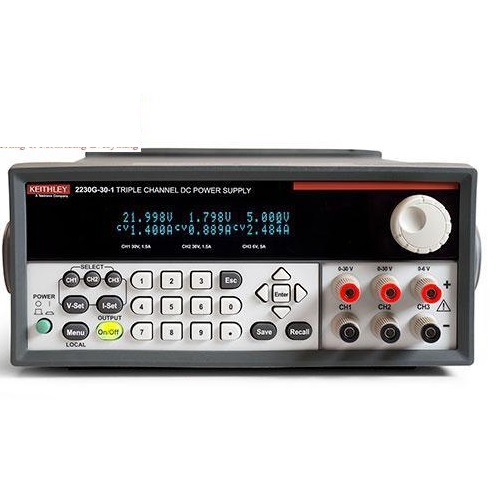
Why DC power supply repair matters in technical environments
A faulty DC source can create more than a simple power problem. In many applications, it affects measurement accuracy, product quality, controller behavior, battery charging processes, and the safety margin of connected loads. Even when the unit still powers on, symptoms such as voltage fluctuation, current limiting at the wrong threshold, fan issues, or abnormal noise may point to deeper internal faults.
Repair is often relevant when the power supply is part of an established workflow, built into a test station, or matched to specific electrical and mechanical requirements. In those cases, restoring the original unit can be more practical than redesigning wiring, mounting, interfaces, or operating procedures around a new device.
Common issues addressed during service
Power supply faults can appear suddenly after an overload event, or develop gradually due to aging components, thermal stress, contamination, or repeated duty cycles. A proper service workflow starts with identifying the actual failure mode rather than treating all no-output conditions as the same problem.
Typical service cases may include:
- No output or intermittent output
- Incorrect voltage or current regulation
- Output ripple, instability, or drift under load
- Overcurrent, overvoltage, or thermal protection triggering unexpectedly
- Display, control, fan, relay, or internal startup issues
- Damage linked to input faults, overloads, or harsh operating conditions
In practical terms, these symptoms need to be evaluated in relation to the unit’s operating role. A lab power source used for precision testing may require tighter verification of regulation behavior, while an industrial DC supply may be judged more heavily on load handling, thermal stability, and dependable long-duration operation.
What a structured repair process should cover
A useful repair service should go beyond replacing visibly damaged components. The goal is to identify the root cause, confirm the integrity of the power stage and control circuitry, and verify that the unit performs consistently after intervention. This is especially important for supplies that support sensitive loads or continuous production use.
Typical repair work may involve fault isolation, inspection of stressed components, checks on regulation and protection behavior, and operational verification after corrective work is completed. Depending on the design and application, technicians may also review cooling performance, connector condition, control response, and signs of recurring electrical stress.
Where the application calls for tighter functionality or advanced control features, a more specialized programmable DC power supply repair service may be the better fit. Units with digital interfaces, stored profiles, or remote programming functions often require a different troubleshooting approach from standard fixed-output or manually adjustable supplies.
Choosing the right service scope for your equipment
Not every DC power supply is used in the same way, so service expectations should match the actual operating environment. A unit that powers R&D prototypes, for example, may need careful confirmation of setpoint accuracy and output response. A supply in an industrial cabinet may place greater emphasis on restart behavior, load tolerance, and recovery after thermal stress.
When evaluating service options, it helps to consider the following points:
- Application criticality: Is the unit part of production, maintenance, validation, or general bench use?
- Load profile: Does it run continuously, cycle frequently, or support variable loads?
- Control complexity: Is it a basic output supply or a programmable platform with interface functions?
- Integration level: Is it a standalone device or part of a wider system that depends on a specific form factor or behavior?
These practical questions help determine whether a standard repair path is suitable or whether the equipment should be assessed alongside application-specific performance expectations.
How DC repair differs from AC and other power supply service categories
Although many service principles overlap, DC power supplies are not identical to AC sources or process-specific power systems. Output characteristics, control methods, regulation targets, and protection logic can differ significantly depending on whether the equipment provides direct current, alternating current, or application-specific power delivery.
For equipment that generates alternating output, a dedicated AC power supply repair service is usually more appropriate. Likewise, systems used in demanding process applications may require a specialized plasma power supply repair service, where the electrical behavior and operating stresses are very different from a conventional DC source.
When repair is a practical option
Replacement is not always the only path when a unit fails. Repair can make sense when the power supply has a known role in an existing station, when replacement lead time is a concern, or when maintaining electrical compatibility is important for uptime. This is especially true in B2B environments where the supply may support test fixtures, automation hardware, burn-in setups, or dedicated maintenance benches.
A repair-first approach can also be useful when the problem appears isolated and the unit remains otherwise suitable for the application. In these cases, restoring performance and verifying stable operation may offer a more efficient route than introducing a different model with new wiring, mounting, or qualification requirements.
Support for broader power supply service needs
Some facilities manage a mixed installed base rather than a single equipment type. If your maintenance workflow includes multiple source types, it may be helpful to review the broader DC/AC power supply repair service area to compare related service categories and identify the right path for each unit.
This is particularly useful for organizations supporting laboratories, production lines, field service teams, and repair benches at the same time. Matching the service category to the power architecture helps reduce misrouting and improves the relevance of diagnostics and follow-up testing.
Finding the right path for a faulty DC power supply
When a DC source begins to show instability, incorrect output behavior, or complete loss of function, the most effective next step is a repair path that reflects how the unit is actually used. A good service decision is based not only on the visible symptom, but also on regulation requirements, protection behavior, duty cycle, and the importance of the supply within the wider system.
This category is intended to support that evaluation for standalone and application-integrated DC units. If your equipment requires restoration of reliable output performance and a service scope aligned with real operating conditions, DC power supply repair is a practical starting point.
Get exclusive volume discounts, bulk pricing updates, and new product alerts delivered directly to your inbox.
By subscribing, you agree to our Terms of Service and Privacy Policy.
Direct access to our certified experts