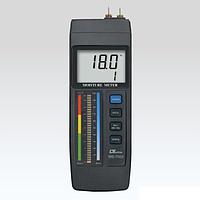
Wood and Construction Moisture Meter Repair Service
Reliable moisture readings are critical when checking timber, drywall, concrete, flooring substrates, and other building materials before installation, inspection, or handover. When a meter starts drifting, responds slowly, shows unstable values, or suffers mechanical damage, repair becomes more than a maintenance task—it directly affects measurement confidence and project decisions. This page covers Wood and Construction Moisture Meter Repair Service for commonly used instruments in building inspection, restoration, woodworking, and site quality control.
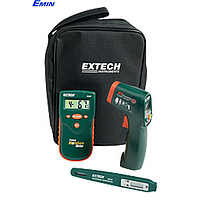
Why repair matters for wood and building material moisture meters
Moisture meters used in construction are exposed to demanding conditions: dust, impact, fluctuating temperature, jobsite handling, and frequent transport. Over time, these factors can affect sensor response, display quality, button operation, housing integrity, probe condition, and overall measurement stability. A meter that appears functional may still produce readings that are inconsistent enough to disrupt drying verification, material acceptance, or root-cause analysis in moisture-related defects.
Professional repair helps restore the instrument to usable condition and supports more dependable field measurements. For teams working across restoration, flooring, woodworking, finishing, or general building inspection, addressing faults early can reduce downtime and avoid unnecessary replacement of otherwise serviceable equipment.
Common issues seen in this category
Typical service requests include meters that do not power on, display intermittent errors, fail to hold calibration behavior, or show abnormal differences between repeated measurements on the same material. Physical wear is also common, especially on housings, battery compartments, keypads, connectors, and sensing parts that are regularly used on site.
Instruments for wood and construction materials may also develop problems after exposure to moisture, accidental drops, or long periods of storage. In practical use, users often notice issues such as unstable readings, delayed response, damaged pins or contact surfaces, and unreliable operation during inspections. These symptoms are a strong indication that the device should be checked before it is used for further decision-making.
Supported brands and representative repair services
This category is relevant for many widely used brands in portable test and inspection equipment. Common examples include instruments from FLIR, TESTO, DELMHORST, ELCOMETER, EXTECH, PCE, PROCEQ, Sauermann, Amprobe, and Chauvin Arnoux. Mentioning these brands is useful because repair requirements can vary by device design, measuring method, and application environment.
Representative services in this category include FLIR Wood and Construction Moisture Meter Repair Service, TESTO Wood and Construction Moisture Meter Repair Service, ELCOMETER Wood and Construction Moisture Meter Repair Service, EXTECH Wood and Construction Moisture Meter Repair Service, PCE Wood and Construction Moisture Meter Repair Service, PROCEQ Wood and Construction Moisture Meter Repair Service, DELMHORST Wood and Construction Moisture Meter Repair Service, and Chauvin Arnoux Wood and Construction Moisture Meter Repair Service. These examples illustrate the scope of support for instruments used to assess moisture in timber and construction materials rather than serving as a simple brand list.
Typical service scope during inspection and repair
A repair workflow for this type of device generally starts with fault assessment and condition checking. The goal is to identify whether the issue comes from power supply behavior, electronic boards, sensing components, connectors, switches, display modules, or wear caused by field use. For moisture meters used on wood and construction materials, attention is often given to the condition of the measuring interface because even minor damage there can affect real-world readings.
Depending on the instrument condition, service may involve component-level repair, replacement of damaged parts where applicable, functional verification, and overall operation testing after the fix. For many B2B users, the important outcome is not only that the meter turns on again, but that it can return to consistent use in inspection and maintenance workflows.
How to decide when repair is the right option
Repair is usually worth considering when the instrument still fits your workflow, the fault is localized, and the meter remains relevant for your material testing tasks. This is especially true when technicians are already familiar with a specific device platform and want to maintain continuity in field procedures, reporting habits, or internal work instructions.
On the other hand, an evaluation is helpful if the meter has multiple faults, severe physical damage, or repeated instability after heavy site use. In those cases, service assessment can clarify whether repair is practical and whether additional inspection or comparison with other moisture-related equipment is needed. If your application extends beyond wood and building materials, you may also want to review related services such as soil moisture meter repair or repair service for agricultural moisture meters.
Applications that depend on accurate moisture measurement
Moisture verification plays a key role in many technical and commercial activities. In construction and interior finishing, readings influence decisions before installing flooring, coatings, wall systems, or wood-based products. In woodworking and material storage, the meter helps users monitor whether material conditions are suitable for processing, transport, or use in controlled environments.
In building inspection and restoration work, reliable measurements support documentation, troubleshooting, and follow-up after water intrusion or drying activity. Because these tasks often affect quality control and handover decisions, keeping the instrument in proper operating condition is essential. Where broader humidity control equipment is also involved, related support such as dehumidifier repair service can be relevant in the same maintenance ecosystem.
Information that helps speed up repair handling
When arranging service, it is useful to provide the brand, exact product name, observed fault, and the conditions under which the issue appears. Notes such as whether the meter fails on startup, gives unstable readings, has damaged probes, or was exposed to impact or moisture can make the initial assessment more efficient. This is especially helpful for portable meters used intensively across multiple sites.
If the device belongs to a known manufacturer such as Chauvin Arnoux, FLIR, TESTO, DELMHORST, or EXTECH, identifying that early can also streamline service routing. For organizations managing multiple instruments, clear labeling and a simple fault history can reduce turnaround uncertainty and improve maintenance planning.
Choose service with long-term usability in mind
The value of a repair is not limited to fixing a visible fault. For professional users, the real objective is restoring measurement reliability so the instrument can continue to support inspection, maintenance, and quality control tasks with fewer interruptions. That is why repair should be approached as part of overall equipment lifecycle management, not just a one-time corrective action.
If your team relies on portable meters for timber, drywall, concrete, or related building materials, this category provides a focused path for evaluating and repairing affected devices. A well-handled repair service can help extend instrument usability, reduce unnecessary replacement, and support more consistent field results across construction and material assessment work.
Get exclusive volume discounts, bulk pricing updates, and new product alerts delivered directly to your inbox.
By subscribing, you agree to our Terms of Service and Privacy Policy.
Direct access to our certified experts