
Electrostatic eliminator Repair Service
When static charge starts causing dust attraction, product defects, unstable handling, or unexpected ESD events, an ionizer that no longer performs correctly can quickly affect yield and process stability. This is why Electrostatic eliminator Repair Service is an important part of maintenance for electronics manufacturing, clean production areas, packaging lines, and other static-sensitive environments.
On this page, you can explore repair support for electrostatic eliminators and ionizers used to neutralize charged surfaces in production and inspection workflows. The focus is not only on restoring operation, but also on helping users return static control equipment to a condition suitable for reliable daily use.
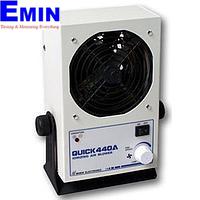
Why electrostatic eliminator repair matters
Electrostatic eliminators are used to reduce or neutralize static charge by generating balanced ions that reach the target surface. In practical applications, performance can decline over time because of contamination, wear, aging components, unstable output, airflow-related issues, or control circuit faults. Even when the device still powers on, ion balance or neutralization efficiency may no longer be at the required level.
A repair service helps address these issues before they lead to broader process problems. In static-sensitive production, poor ionization can contribute to dust adhesion, handling errors, part attraction, or electrostatic discharge risk. Repair therefore supports not just equipment uptime, but also product quality and ESD control across the line.
Typical equipment covered in this category
This category is intended for repair needs related to ionizers and static eliminators from major manufacturers commonly used in industrial environments. Examples include repair support for equipment from HAKKO, SIMCO, TREK, Vessel, KASUGA, and KESD, depending on the model and condition of the unit.
Representative service entries in this category include KESD Static Eliminator (Ionizer) Repair Service, TREK Static Eliminator (Ionizer) Repair Service, SIMCO Static Eliminator (Ionizer) Repair Service, Vessel Static Eliminator (Ionizer) Repair Service, KASUGA Static Eliminator (Ionizer) Repair Service, and HAKKO Static Eliminator (Ionizer) Repair Service. These examples help illustrate the scope of supported brands without limiting the category to a single device format or installation style.
Common symptoms that indicate service may be needed
Users usually start looking for service when static problems return even though an ionizer is still installed on the line. This can appear as recurring dust adhesion, poor charge neutralization, inconsistent effect across the working area, unstable indicators, abnormal alarms, or operation that seems normal but no longer controls static effectively.
In some cases, the issue is noticed through process results rather than the equipment itself. A station that previously worked well may begin showing more ESD-related handling concerns or more contamination on parts and films. If that happens, repair and inspection of the static eliminator is often more efficient than continuing to troubleshoot the process without checking the ionization source.
How repair fits into a broader electrostatic maintenance workflow
Ionizers are only one part of a complete static control environment. Their condition is closely related to how charge is measured, monitored, and verified in production. For that reason, companies maintaining ESD programs often review associated equipment at the same time, such as electrostatic meter repair services when field measurement tools also need attention.
Likewise, if the application involves material-level verification, it may be useful to check related support for surface resistance tester repair. Looking at the broader static control ecosystem helps ensure that repair decisions are based on the actual source of the problem rather than on one device in isolation.
Choosing the right repair path for your equipment
A suitable repair path starts with identifying the actual role of the unit in your process. Some electrostatic eliminators are used near assembly benches, while others are integrated into automated handling, inspection, or packaging stations. The service approach should consider the operating environment, the importance of ion balance, and how the equipment interacts with surrounding tools and fixtures.
Brand and model are also important when evaluating service suitability. Equipment from SIMCO, TREK, Vessel, KASUGA, KESD, and HAKKO may differ in construction, output method, control design, and intended application, so repair planning should align with the specific unit being used. In B2B settings, this is especially relevant when the equipment is part of a validated or repeatable production process.
Repair service benefits for industrial users
For manufacturers and technical teams, repair is often a practical way to extend equipment life while maintaining process continuity. A functioning ionizer contributes to cleaner handling, more stable product flow, and better control of static-related variables in sensitive work areas. This is particularly important where electrostatic behavior can affect assembly quality, inspection reliability, or contamination control.
Repair can also support maintenance planning by reducing unnecessary replacement and helping teams keep existing static control assets in service. In facilities with multiple ESD control devices, a structured approach to repair makes it easier to manage maintenance priorities across ionizers, meters, and monitoring equipment.
Related electrostatic equipment services to consider
If your site uses a broader ESD control setup, related service categories may also be relevant. For example, production lines with continuous verification needs may benefit from reviewing electrostatic discharge and charge monitoring equipment repair alongside ionizer service requirements.
This broader view is useful because static problems are not always caused by the eliminator alone. Measurement tools, monitoring devices, and other electrostatic control hardware should work together as a system. Checking related repair categories can help maintenance teams narrow down faults more efficiently and restore stable operation with less trial and error.
Support for major ionizer brands
This category includes repair service references for well-known brands used in electrostatic control, including HAKKO, SIMCO, TREK, Vessel, KASUGA, and KESD. The available examples are meant to help users quickly identify relevant service directions for their installed equipment and simplify the search process when a specific ionizer brand needs technical attention.
If you are reviewing options for a static eliminator that is no longer performing as expected, this category provides a focused starting point. By matching the service to the brand, equipment role, and process requirements, it becomes easier to restore effective static neutralization and maintain a more stable production environment.
For facilities that rely on ionizers as part of daily ESD control, timely repair is a practical step toward preserving process consistency and reducing static-related disruption. Use this category to identify suitable repair support for your electrostatic eliminator and to assess related service needs across the rest of your static control equipment.
Get exclusive volume discounts, bulk pricing updates, and new product alerts delivered directly to your inbox.
By subscribing, you agree to our Terms of Service and Privacy Policy.
Direct access to our certified experts
