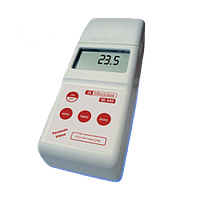
Food Testing Machine Repair Service
When food quality instruments start drifting, failing to stabilize, or producing inconsistent readings, the impact goes beyond maintenance inconvenience. In food production, laboratories, beverage processing, and incoming material inspection, reliable measurement is closely tied to product consistency, compliance work, and process control. That is why a professional Food Testing Machine Repair Service is important for keeping critical instruments usable, accurate, and dependable in day-to-day operations.
This category covers repair support for a range of food-related testing and inspection devices used to evaluate moisture, refractive properties, sample quality, and related parameters. Whether the issue involves display faults, sensor problems, unstable measurement behavior, or general wear from routine industrial use, repair can help extend equipment life and reduce unnecessary replacement costs.
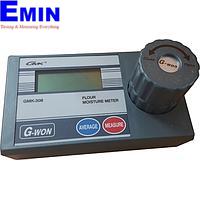
Repair support for food quality and inspection instruments
Food testing equipment is often used in demanding environments where temperature variation, sample residue, frequent handling, and repeated cleaning can gradually affect performance. Over time, instruments may develop problems such as slow response, reading deviation, keypad failure, damaged optics, connector issues, or power-related faults. A structured repair process helps identify the root cause instead of relying on trial-and-error replacement.
This service category is relevant for instruments used in food manufacturing, grain handling, beverage analysis, quality control rooms, and inspection workflows. In many cases, restoring an instrument to proper operating condition is more practical than replacing a familiar device that is already integrated into the user’s process.
Typical equipment covered in this category
The scope of this category includes repair support for several types of food testing instruments. Examples include the G-WON Food Moisture Meter Repair Service, which is relevant where moisture measurement is part of raw material acceptance or production monitoring, and the skSATO Food Refractometer Repair Service, commonly associated with concentration or soluble solids checks in food and beverage applications.
It also includes repair support for broader inspection devices such as the DICKEY john Food inspection equipment Repair Service, PCE Food inspection equipment Repair Service, and Yamato Food inspection equipment Repair Service. For beverage-related analysis, the MILWAUKEE Wine Photometer Repair Service is another example within this category. These references illustrate the range of equipment types involved, from dedicated handheld testers to more specialized analytical instruments.
Common faults seen in food testing machines
Instrument failure does not always mean complete shutdown. In practice, many service cases begin with subtle symptoms: readings that drift between samples, poor repeatability, buttons that no longer respond consistently, or optical results that no longer align with expected values. Mechanical damage from transport, contamination from product residue, and aging electronic components are also common contributors.
For moisture meters, refractometers, photometers, and inspection units, problems may appear in different ways depending on the measurement principle. What matters most is careful evaluation of the instrument’s behavior, inspection of affected assemblies, and repair work suited to the device’s function. Where related instruments are used in the same quality workflow, users may also need support for adjacent categories such as water activity meter repair service or alcohol meter repair service.
Why timely repair matters in production and laboratory settings
A faulty tester can interrupt more than one inspection point. In food and beverage operations, one unstable instrument may delay batch release, incoming goods verification, in-process checks, or final quality review. Fast and appropriate repair therefore supports not only instrument uptime but also smoother coordination between production, QC, and laboratory teams.
Timely service can also help protect historical consistency. Many facilities rely on known instruments and established operating procedures, and changing equipment too quickly may require retraining, method review, or comparison testing. Repair is often the more efficient route when the instrument remains suitable for the application and the fault is serviceable.
Brand familiarity and service compatibility
Users often search for repair support by manufacturer because different brands can have different construction styles, user interfaces, and sensing methods. This category includes commonly requested brands such as DICKEY john, MILWAUKEE, PCE, skSATO, Yamato, and G-WON. Brand familiarity can be useful during troubleshooting because it helps align service expectations with the device type and typical field usage.
At the same time, repair decisions should focus on the actual condition of the instrument rather than the brand name alone. The key questions are whether the unit is economically repairable, whether the measurement function can be restored, and whether the repaired instrument remains appropriate for the intended testing task.
How to choose the right repair service request
When submitting a repair inquiry, it helps to describe the instrument type, the observed fault, and the operating context. Useful details often include whether the unit powers on, whether the display is normal, whether the measurement error is constant or intermittent, and whether the problem started after cleaning, transport, storage, or continuous heavy use. These details can make the evaluation process more efficient.
It is also a good idea to identify the measurement role of the instrument within your process. A moisture meter used for raw agricultural materials, a refractometer used for concentration checks, and a photometer used in beverage analysis each support different quality decisions. Clear application context helps ensure the repair path matches the operational importance of the equipment.
Supporting a broader measurement ecosystem
Food testing machines rarely operate in isolation. Many facilities manage a wider set of environmental and analytical instruments to support product safety, storage conditions, and process stability. As a result, repair needs may overlap with other devices used around the same workflow, including humidity-related, alcohol-related, or specialized environmental meters.
Keeping these instruments in service as a coordinated measurement ecosystem can reduce disruption and simplify maintenance planning. If your operation uses several categories of testing devices, it is often helpful to review repair requirements across related equipment rather than handling each failure only after it becomes urgent.
Practical next step for equipment owners
If your instrument shows unstable readings, visible damage, or signs of performance decline, arranging a proper repair assessment is often the most practical next step. This category is intended for users who need service support for food testing and inspection equipment from manufacturers such as DICKEY john, MILWAUKEE, PCE, skSATO, Yamato, and G-WON, without limiting the discussion to one device type alone.
By approaching repair with clear fault information and realistic application needs, buyers and maintenance teams can make better decisions on restoration, continued use, or replacement planning. For organizations that depend on consistent measurement in food and beverage processes, professional repair support helps maintain measurement reliability, protect workflow continuity, and extend the useful life of valuable instruments.
Get exclusive volume discounts, bulk pricing updates, and new product alerts delivered directly to your inbox.
By subscribing, you agree to our Terms of Service and Privacy Policy.
Direct access to our certified experts