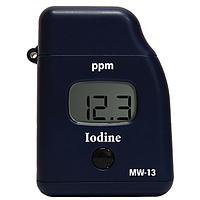
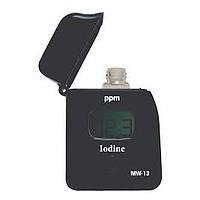
Iodine Concentration Meter Repair Service
When an iodine meter starts showing unstable readings, slow response, or measurement drift, the impact is rarely limited to the instrument itself. In water testing, process monitoring, and routine quality control, unreliable iodine data can interrupt verification steps and make it harder to trust day-to-day decisions. A professional Iodine Concentration Meter Repair Service helps restore instrument performance so testing workflows can return to normal with better confidence.
This service category is intended for users who need practical support for iodine measurement instruments used in technical and industrial environments. Whether the issue involves display behavior, optical reading consistency, sensor-related problems, or general wear from field use, repair work should focus on bringing the device back to dependable operating condition while preserving its role in the wider measurement process.
Why iodine meter repair matters in routine testing
Iodine measurement is often part of a controlled testing sequence where repeatability matters as much as the final value. If a handheld photometer or iodine meter becomes inconsistent, even small errors can create unnecessary retesting, slow inspections, or uncertainty in recorded results. Repair service is therefore not only about fixing a fault, but also about helping the instrument return to stable and usable performance.
Compared with replacing equipment immediately, repair can be the more practical path when the instrument is already integrated into existing procedures. This is especially relevant for teams that rely on familiar platforms from HANNA or MILWAUKEE and want to keep their current workflow, accessories, and operator experience intact.
Common situations that indicate service is needed
In many cases, the need for repair appears gradually rather than as a complete failure. Users may notice drifting values, poor repeatability between tests, startup issues, keypad or display faults, or abnormal behavior during measurement. For photometer-based devices, performance can also be affected by handling conditions, aging components, or contamination that influences normal operation.
Another common trigger is when the instrument still powers on but no longer inspires confidence in the result. In technical environments, that kind of partial failure can be more disruptive than a complete shutdown because it increases the risk of using uncertain data. Sending the unit for service helps determine whether the issue is related to internal electronics, optical performance, user interface components, or general instrument condition.
Supported examples within this category
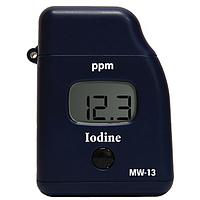
This category includes service options for selected iodine testing instruments from established manufacturers. Examples include the HANNA Iodine Meter Repair Service and the MILWAUKEEIodine Handy Photometer Repair Service. These references help illustrate the type of equipment covered, especially for users searching by brand or by installed instrument base.
Because repair needs vary by model condition and usage history, the service focus should remain on diagnosing functional issues and restoring reliable operation rather than treating every unit as identical. A handheld photometer used frequently in field conditions may present different service requirements than a lightly used meter kept in a controlled environment, even if both are intended for iodine analysis.
What to consider before sending an instrument for repair
Before arranging service, it is useful to note the symptoms as clearly as possible. Information such as error behavior, inconsistent readings, response time changes, battery or power issues, and the conditions in which the fault occurs can help streamline evaluation. If the problem is intermittent, a short description of when it appears can be especially valuable.
It is also worth reviewing whether the instrument has been exposed to heavy transport, chemical residue, moisture, or long periods without use. While these details do not replace technical inspection, they provide context that supports faster troubleshooting. For organizations managing multiple environmental instruments, documenting these details consistently can also improve service planning across other categories such as light meter repair service.
Repair service in the context of instrument lifecycle management
For B2B users, repair decisions are usually connected to uptime, asset utilization, and measurement continuity. Keeping an iodine concentration meter in service can reduce disruption for laboratories, utilities, production facilities, and technical service teams that depend on established measurement routines. This makes repair an important part of instrument lifecycle management, not just a reactive maintenance step.
In broader maintenance programs, iodine meter service often sits alongside support for other specialized instruments. Teams that monitor multiple environmental parameters may also need related categories such as dew point meter repair or water activity meter repair. Looking at service needs in this wider context can help standardize maintenance handling across different measurement devices.
How to choose the right repair path
The most suitable repair option depends on the instrument type, the observed fault, and how critical the device is to current operations. For some users, the priority is restoring a single meter as quickly as possible; for others, it is maintaining consistency across a fleet of instruments from the same manufacturer. In either case, a good repair path starts with accurate identification of the unit and a clear description of the problem.
Brand familiarity can also be relevant when selecting service. Instruments from HANNA and MILWAUKEE are commonly used in portable and routine testing applications, so matching the service request to the actual device family helps avoid delays. When the objective is to recover dependable iodine measurement rather than simply address a visible fault, clear service alignment becomes even more important.
Final considerations
An iodine meter that is no longer performing as expected can quickly affect testing reliability, documentation quality, and operational efficiency. Choosing a repair service for the right instrument category helps narrow the process and supports a more practical route back to usable measurement performance.
If you are maintaining handheld photometers or iodine meters used in regular monitoring tasks, this category provides a focused starting point for service-related evaluation. With the right repair approach, organizations can extend equipment usability, reduce avoidable replacement, and keep critical iodine testing steps aligned with everyday technical requirements.
Get exclusive volume discounts, bulk pricing updates, and new product alerts delivered directly to your inbox.
By subscribing, you agree to our Terms of Service and Privacy Policy.
Direct access to our certified experts