
Flocculator Repair Service
When mixing performance becomes unstable or timer-controlled jar testing no longer runs consistently, laboratory work can slow down quickly. In water treatment, environmental analysis, and process laboratories, a reliable Flocculator Repair Service helps restore repeatable test conditions, reduce downtime, and keep daily bench work moving without unnecessary replacement costs.
Flocculators are used to simulate coagulation and flocculation processes under controlled mixing conditions, so even small mechanical or control issues can affect test quality. Repair support typically focuses on bringing the equipment back to dependable operation, whether the problem involves stirring speed, drive components, timers, control panels, or general wear from routine laboratory use.
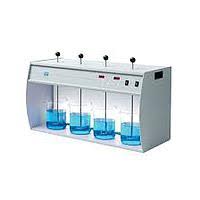
Why flocculator repair matters in laboratory workflows
A flocculator is more than just a mixer. In many labs, it is part of a controlled testing workflow used to evaluate treatment chemistry, compare dosing conditions, or observe settling behavior. If paddle rotation is uneven, speed settings drift, or the timer becomes unreliable, the resulting test conditions may no longer be consistent from batch to batch.
Timely repair helps protect process repeatability and extends the usable life of existing equipment. For organizations that depend on routine jar testing, restoring stable operation can be more practical than replacing the unit, especially when the main issue is isolated to electrical, mechanical, or control-related components.
Common issues seen in flocculator systems
Service needs can vary depending on design, age, and frequency of use, but a few failure patterns are common. These often include motors that no longer start correctly, abnormal vibration during operation, inconsistent paddle speed, worn drive assemblies, damaged switches, or timer faults that interrupt test sequences.
In some cases, the equipment may still run, but performance is no longer reliable enough for laboratory work. Symptoms such as unstable mixing, unusual noise, intermittent power behavior, or difficulty maintaining set parameters can indicate the need for inspection and repair before the issue develops into a larger failure.
What a repair service may involve
A professional flocculator repair process generally begins with fault identification and condition assessment. This may include checking the power section, control functions, drive behavior, mechanical integrity, and visible wear points that influence mixing performance.
Depending on the condition of the unit, repair work may address electrical faults, damaged controls, worn mechanical parts, or alignment-related issues. Functional verification after repair is also important, because laboratory users need confidence that the system returns to stable, usable operation rather than simply powering on.
For many facilities, repair is also a good opportunity to review the broader condition of other bench and sample-preparation equipment. If your lab supports multiple wet-process workflows, related services such as water bath repair may also be relevant when maintaining overall equipment readiness.
When to schedule service instead of waiting for full failure
Many laboratories delay repair until the flocculator stops working completely, but earlier service is often the better option. If operators notice slower startup, inconsistent speed response, irregular paddle movement, or control settings that no longer behave predictably, the equipment may already be affecting test reliability.
Preventing unplanned downtime is especially important when the instrument is used for recurring water quality evaluation or treatment optimization. Addressing issues early can reduce disruption, limit secondary damage, and make it easier to return the equipment to service without extended interruption.
Choosing the right support for laboratory repair needs
Not every equipment issue should be handled the same way, particularly in laboratory environments where workflow continuity matters. A suitable service approach should consider the function of the unit, the severity of the fault, and whether the repaired system can return to practical day-to-day use under normal lab conditions.
It is also useful to work with repair support that understands neighboring equipment categories in the same environment. For example, labs managing temperature-sensitive materials may also require pharmacy refrigerator repair services, while facilities handling protected sample workflows may need biosafety cabinet repair as part of a broader maintenance strategy.
Typical use environments for flocculators
Flocculators are commonly associated with water and wastewater testing, but they may also be used in environmental laboratories, teaching labs, and industrial quality control settings where controlled mixing and observation are required. Because these applications depend on comparable test conditions, equipment stability is a central concern.
Laboratories often rely on the same unit for repeated routine testing, which means wear can build gradually rather than appearing all at once. That is why functional consistency matters as much as obvious breakdown. A unit that operates but no longer behaves predictably can still create problems for data quality and workflow timing.
Supporting a broader laboratory maintenance plan
Flocculator repair is often one part of a larger equipment support program. Labs that maintain several specialized instruments may benefit from aligning repair planning across different systems so service can be prioritized based on operational risk, usage frequency, and the impact of downtime on testing schedules.
Where solvent handling or sample concentration equipment is also in use, related support such as rotary evaporator repair service can help keep adjacent laboratory processes running with fewer interruptions. Looking at repair needs in context often makes planning more efficient than treating each instrument issue in isolation.
Find the right repair path for your flocculator
If your equipment shows signs of unstable mixing, timer errors, control problems, or mechanical wear, a focused repair assessment can help determine the most practical next step. The goal is not simply to restart the unit, but to restore dependable operation that supports routine laboratory testing with fewer interruptions.
For laboratories that depend on jar testing and controlled mixing, reliable repair service can help extend equipment life and improve day-to-day usability. A well-planned service approach makes it easier to return the flocculator to regular use while supporting the wider performance of the lab environment.
Get exclusive volume discounts, bulk pricing updates, and new product alerts delivered directly to your inbox.
By subscribing, you agree to our Terms of Service and Privacy Policy.
Direct access to our certified experts