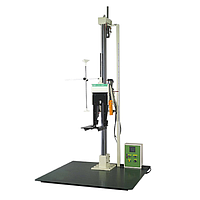
Drop Tester Repair Service
Unexpected impact failures, unstable readings, or inconsistent drop heights can quickly make a test program unreliable. When a drop tester is used for packaging validation, product durability checks, or transport simulation, even small mechanical or control issues may affect repeatability and confidence in the results. This is why a professional Drop Tester Repair Service is not only about restoring operation, but also about helping maintain stable test conditions in demanding industrial environments.
On this page, you can explore repair support for drop test equipment used in mechanical and physical testing workflows. The service scope is relevant for facilities that need to troubleshoot wear, recover machine performance, and reduce downtime across commonly used systems from manufacturers such as Lisun, Vibsource, ASLI, HST, and Hongdu.
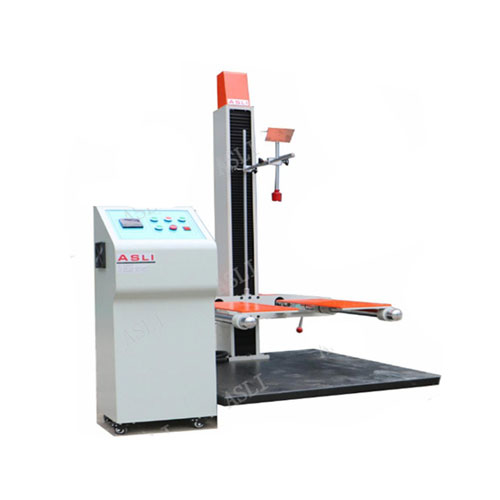
Why drop tester repair matters in routine testing
Drop testing equipment is designed to reproduce impact conditions in a controlled way. Over time, repeated use can lead to issues in lifting mechanisms, release systems, fixtures, frames, sensors, or operator interfaces. When these parts no longer perform smoothly, the tester may still run, but the quality of the test can deteriorate.
A well-executed repair process helps restore repeatability, operational safety, and day-to-day usability. For laboratories, quality departments, and manufacturers, that means fewer interruptions, more dependable test execution, and a better foundation for internal quality checks.
Common problems seen in drop test machines
Service needs often begin with practical symptoms rather than a clearly identified fault. A machine may fail to release properly, show irregular drop positioning, produce abnormal vibration or noise, or stop mid-cycle because of electrical or control-related problems. In other cases, structural wear or alignment drift can gradually affect performance without causing a complete shutdown.
These issues should be assessed in the context of the machine’s operating condition and intended test method. A proper repair approach typically focuses on the root cause, whether it comes from mechanical wear, actuator behavior, switching components, control logic, or accumulated stress in moving assemblies.
Repair support across major equipment brands
Many facilities operate mixed fleets of testing equipment, so brand familiarity can be important when arranging service. This category includes repair options for representative brands such as ASLI, Vibsource, HST, Hongdu, and Lisun, helping users find support that matches their installed base more efficiently.
Examples listed in this category include Hongdu Drop Test Machine Repair Service, ASLI Drop Test Machine Repair Service, Vibsource Drop Test Machine Repair Service, HST Drop Test Machine Repair Service, and Lisun Drop Test Machine Repair Service. These examples illustrate the available service coverage for different equipment origins, while the actual repair path will depend on the condition and configuration of the machine being serviced.
What to consider before requesting a repair
Before scheduling service, it is useful to record the machine behavior as clearly as possible. Details such as the fault condition, when the problem occurs, whether it is intermittent or constant, and whether any recent maintenance or relocation took place can all help shorten diagnosis time. If available, a product model reference and photos of the affected area can also improve communication.
Buyers should also consider how critical the tester is within their quality workflow. If the drop tester is part of a larger reliability or packaging validation process, repair timing can affect production schedules, engineering sign-off, and incoming or outgoing inspection plans. In these cases, a targeted repair strategy is often more practical than running equipment with uncertain performance.
Repair service in the wider testing equipment ecosystem
Drop testers are only one part of a broader mechanical and physical testing environment. Facilities that manage multiple instruments often need service planning across different device types, especially when maintenance resources are centralized. Depending on the application, users may also need support for related systems such as abrasion tester repair or furnace repair services.
Looking at repair needs in a broader way can help maintenance teams standardize reporting, prioritize downtime, and manage service activity more effectively. This is especially useful in B2B environments where testing equipment supports product qualification, compliance work, or ongoing production quality monitoring.
How repaired equipment supports more reliable operations
When a drop tester is returned to stable working condition, the benefit is not limited to the machine itself. Operators can work with more confidence, engineering teams can interpret results more consistently, and maintenance staff can reduce the risk of repeated unplanned stoppages. In practical terms, repair contributes to a more dependable testing workflow.
For organizations handling fragile goods, consumer products, electronics, packaging, or transport-related validation, reliable impact testing helps support better decision-making. A functioning tester does not automatically guarantee perfect results, but unresolved faults can clearly undermine test credibility and slow down problem-solving across departments.
Choosing the right service path for your equipment
The most suitable repair option depends on the equipment brand, fault type, usage intensity, and the role the machine plays in your operation. Some users need support for a specific branded unit, while others are comparing service coverage across several installed machines from different manufacturers. In both cases, the goal is to restore functionality in a way that aligns with actual testing needs rather than applying a generic maintenance approach.
If you are reviewing service options for a damaged or unstable tester, this category helps narrow the search to relevant repair support for drop testing equipment. By focusing on equipment condition, service compatibility, and operational impact, it becomes easier to identify an appropriate repair solution and keep your testing process moving with less disruption.
Get exclusive volume discounts, bulk pricing updates, and new product alerts delivered directly to your inbox.
By subscribing, you agree to our Terms of Service and Privacy Policy.
Direct access to our certified experts