Mechanical Shock Tester Repair Service
Unexpected impact events can quickly turn a reliable test setup into a source of inconsistent data, failed validation runs, or production delays. When a shock test system starts showing unstable results, abnormal noise, timing errors, or mechanical wear, a focused Mechanical Shock Tester Repair Service helps restore the equipment to dependable working condition and supports safer, more repeatable testing.
This category is intended for users who need repair support for mechanical shock testing equipment used in laboratories, quality control environments, and product reliability programs. Whether the issue involves the impact mechanism, control behavior, fixture alignment, or general performance degradation, repair work should be approached with attention to both mechanical integrity and test repeatability.
Why repair quality matters for shock testing equipment
Mechanical shock testers are used to simulate sudden impact conditions so manufacturers and test labs can evaluate how products respond to short-duration, high-force events. Because the test outcome depends on controlled motion, repeatable impact delivery, and stable fixture conditions, even minor faults can affect data quality and make comparisons between test runs less reliable.
A proper repair process is not only about getting the machine to power on again. It is also about recovering repeatable shock performance, consistent triggering behavior, and the mechanical condition needed for routine test work. This is especially important in environments where test records support product development, incoming inspection, qualification, or failure analysis.
Common issues that may require service
Mechanical shock testers are subject to ongoing stress from repeated operation, moving parts, and impact loading. Over time, wear can appear in structural components, mounts, damping elements, fasteners, actuation systems, or control-related parts. Some users first notice the problem through visible vibration, unusual sound, off-target motion, or difficulty reproducing previous test conditions.
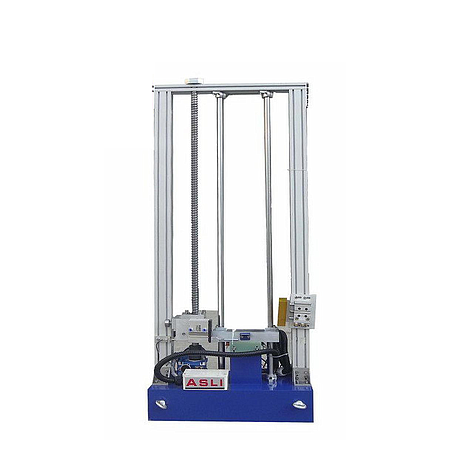
In other cases, the warning signs are less obvious. Drift in test behavior, inconsistent setup response, unreliable cycle operation, or problems with fixtures and alignment may indicate that the system needs inspection and repair. For these situations, an example available in this category is the ASLI Mechanical Shock Tester Repair Service, which is relevant for users maintaining ASLI equipment in this application area.
What a repair service typically focuses on
For this type of equipment, service work generally begins with fault identification and condition assessment. The goal is to determine whether the problem is related to the impact mechanism, structural wear, control response, mounting accuracy, or supporting assemblies that influence how the shock event is generated and repeated.
From there, repair activities may involve restoring worn or damaged parts, correcting misalignment, checking mechanical travel, and verifying that the tester returns to stable operation. In practical terms, the most valuable outcome is not just functional recovery, but confidence in test consistency after the repair is completed.
Brand context and equipment support
When users are looking for service by manufacturer, it helps to work within the correct equipment context. This category includes support related to ASLI, a brand represented here through a dedicated repair service listing for mechanical shock testing equipment. Referring to the manufacturer context can also make it easier to align service requests with the installed base and the type of tester already in operation.
Even within the same general class of laboratory equipment, service priorities can differ depending on the machine architecture and how it is used. A shock tester used for repetitive validation work may face different wear patterns than equipment used occasionally for development trials, so repair planning should consider operating history, test frequency, and the criticality of the results.
How to evaluate when repair is the right next step
Repair is often the right option when the equipment still fits the application but no longer performs with the expected stability or mechanical condition. If the unit has become difficult to operate, produces irregular test behavior, or shows signs of mechanical deterioration, service can be more appropriate than continuing to run uncertain tests or delaying important qualification work.
It is useful to prepare a clear description of the fault before requesting service. Notes about the symptoms, the stage of operation where the issue occurs, any recent maintenance history, and whether the problem is intermittent or constant can help narrow the likely cause. This type of information is especially helpful when troubleshooting equipment that combines moving assemblies with timing-sensitive test actions.
Related repair services in mechanical and physical testing environments
Many laboratories and industrial test rooms operate several types of material and package testing systems alongside shock equipment. If your facility maintains a wider test setup, it may also be useful to review related service categories such as abrasion tester repair service for wear testing equipment or furnaces repair service for thermal test assets.
Looking at related categories can help maintenance teams organize service planning across the lab rather than treating each instrument in isolation. That approach is often useful in quality systems where uptime, traceable maintenance, and test readiness all matter to production support or product verification workflows.
Choosing a service category that matches the equipment problem
Shock testing systems are specialized machines, so selecting the correct repair category matters. A service request should reflect the actual equipment function and the dominant symptom, especially when a lab uses multiple testing technologies with similar support processes but very different mechanical principles.
This category is designed for users seeking repair support specifically for mechanical shock testers. If the issue lies with an impact or shock test system, keeping the request within the appropriate service path can make diagnosis more efficient and reduce confusion between unrelated equipment types. That is particularly important where mechanical condition, impact behavior, and fixture stability directly affect test quality.
Support dependable testing with timely repair
Reliable shock testing depends on more than basic machine operation. It depends on stable mechanics, controlled motion, and the ability to reproduce test conditions with confidence over time. When those conditions begin to deteriorate, targeted repair service can help restore the tester to a more dependable state for routine laboratory or industrial use.
If you are maintaining an ASLI unit or reviewing service options for impact-testing equipment, this category provides a focused starting point for mechanical shock tester repair. A well-scoped repair request can reduce downtime, improve test reliability, and help keep critical validation or quality workflows moving forward.
Get exclusive volume discounts, bulk pricing updates, and new product alerts delivered directly to your inbox.
By subscribing, you agree to our Terms of Service and Privacy Policy.
Direct access to our certified experts