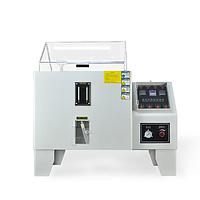
Salt Spray, Corrosion testing Chamber Repair Service
Corrosion chambers are often run for long test cycles, and even a small fault can interrupt qualification work, delay product release, or compromise repeatability. When a salt spray or corrosion test system starts showing unstable temperature, spray inconsistency, control errors, or chamber leakage, timely service becomes essential to keep testing aligned with internal quality procedures and common lab practice.
Salt Spray, Corrosion testing Chamber Repair Service is intended for laboratories, quality departments, and industrial testing environments that rely on controlled corrosion exposure. This category focuses on repair support for salt spray chambers, cyclic corrosion chambers, and related corrosion testing systems used to evaluate coatings, plated parts, metal components, and material durability under accelerated conditions.
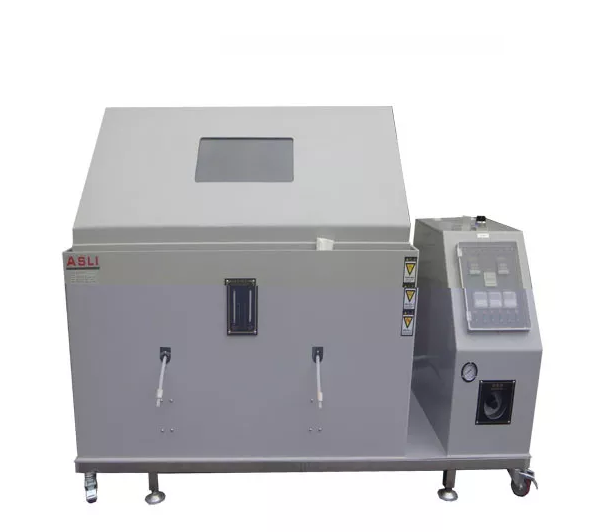
Why corrosion chamber repair matters in routine testing
Salt spray and corrosion test chambers operate as integrated systems rather than simple cabinets. Stable performance depends on the interaction of the controller, heater, spray delivery path, humidification or conditioning section, air regulation, sensors, seals, and chamber construction. If one part drifts or fails, the overall test environment can become unreliable even when the unit still appears to be running.
In practical terms, repair service helps restore test consistency, reduce unplanned downtime, and extend the usable life of installed equipment. This is especially important for labs that support supplier approval, coating verification, automotive parts validation, electronics durability checks, or ongoing production quality control.
Common issues seen in salt spray and corrosion test chambers
Many service requests begin with symptoms that seem minor at first: slow warm-up, poor spray atomization, uneven chamber conditions, alarms on the control panel, or recurring water supply problems. Over time, these issues may affect chamber stability, increase failed test runs, or make it difficult to compare results across batches.
Repair work for this equipment category commonly relates to control circuitry, sensor response, heating functions, spray system performance, air and liquid flow paths, chamber sealing, and general wear caused by corrosive operation. Because these systems are exposed to aggressive environments, components can degrade faster than in standard thermal equipment, making preventive diagnosis just as important as corrective intervention.
Supported equipment examples across key manufacturers
This category may be relevant when servicing equipment from brands such as Cometech, KMT, C&W, JFM, and SMTech. Different manufacturers may use different chamber layouts or control architectures, but the service objective remains the same: restore safe, stable, and repeatable corrosion testing performance.
Representative service entries in this category include the Cometech Salt Spray Tester Repair Service, MStech Salt Spray Corrosion test Chamber Repair Service, C&W Sulfur Dioxide Test Chamber Repair Service, KMT Salt Spray Test Chamber Repair Service, and JFM Cyclic corrosion test chamber Repair Service. These examples illustrate the range of supported corrosion-related systems, from conventional salt fog setups to more advanced cyclic corrosion testing configurations.
What a repair service typically helps restore
For most users, the goal is not only to make the chamber power on again, but to recover dependable operating conditions. A proper repair approach usually focuses on the functions that directly influence chamber behavior: temperature control, spray generation, media circulation, timing, alarms, and operator interface response.
In corrosion testing, small deviations can have outsized consequences. If atomization is inconsistent or chamber conditions drift during a long run, test outcomes may no longer reflect the intended exposure method. That is why repair support is closely tied to the restoration of repeatable chamber performance, not just basic hardware replacement.
When to consider repair instead of delaying service
It is usually worth scheduling service when a chamber shows recurring alarms, visible corrosion damage around functional parts, unstable readings, abnormal noise from pumps or air sections, or repeated interruption during programmed cycles. Waiting too long can turn a limited component issue into a wider system problem that affects more assemblies and increases recovery time.
Repair is also a practical option when the chamber is still structurally useful but no longer performs consistently enough for routine qualification work. In labs operating multiple physical test systems, similar service planning often applies to related equipment such as furnaces repair service or abrasion tester repair service, where performance drift can directly affect test validity.
Choosing the right service scope for your chamber
Not every fault requires the same level of intervention. Some chambers need focused troubleshooting around one failed section, while others benefit from broader inspection because multiple subsystems have degraded together. The right service scope depends on usage intensity, chamber age, the corrosive exposure history, and whether the issue affects operation, stability, or both.
For buyers comparing repair options, it helps to identify the chamber type, observed fault pattern, control symptoms, and manufacturer. If your application also includes barrier-property or material performance testing, you may also want to review adjacent support categories such as oxygen permeation system repair service to keep the wider lab workflow maintained with similar service standards.
Applications that depend on reliable corrosion chamber operation
Salt spray and corrosion chambers are widely used wherever material resistance to aggressive environments must be verified under controlled conditions. Typical use cases include coated metal parts, fasteners, painted surfaces, electroplated components, automotive assemblies, industrial hardware, and selected electronic enclosures or connectors.
Because these chambers support product validation and comparative testing, the quality of repair has a direct impact on confidence in laboratory output. A chamber that runs, but cannot maintain stable conditions, may still create operational risk. For that reason, service decisions should be guided by the need to recover a reliable accelerated corrosion testing environment rather than simply returning the unit to partial operation.
Practical FAQ
Can repair service apply to both salt spray and cyclic corrosion chambers?
Yes. This category covers repair needs across conventional salt spray equipment and related corrosion test systems, including cyclic corrosion chamber configurations where applicable in the listed service examples.
Is service limited to one manufacturer?
No. The category includes representative repair services for Cometech, KMT, C&W, JFM, and SMTech equipment, reflecting a broader need for support across common corrosion chamber platforms.
When is repair especially important for test labs?
Repair becomes especially important when chamber instability starts affecting repeatability, qualification timelines, or routine quality control work. Early intervention can reduce downtime and help preserve test continuity.
For organizations that rely on corrosion exposure testing as part of product quality assurance, repair service plays a practical role in maintaining uptime and preserving confidence in test conditions. Reviewing the chamber type, brand, and observed fault symptoms is the best starting point for choosing the most suitable repair path within this category.
Get exclusive volume discounts, bulk pricing updates, and new product alerts delivered directly to your inbox.
By subscribing, you agree to our Terms of Service and Privacy Policy.
Direct access to our certified experts