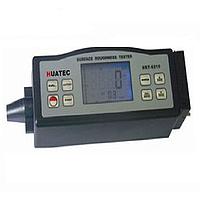
Gloss Meter, Roughness Meter Repair Service
Reliable surface measurement depends not only on instrument accuracy, but also on stable long-term performance in real production environments. When a gloss meter or roughness meter begins to show drift, inconsistent readings, display faults, probe issues, or communication problems, timely service helps reduce inspection risk and keeps quality control workflows moving.
Gloss Meter, Roughness Meter Repair Service supports maintenance and restoration needs for instruments used in coating inspection, surface finishing control, machining verification, and material quality assessment. This category is relevant for companies that rely on repeatable surface data and need practical support for instruments from established manufacturers used across industrial inspection and laboratory applications.
Service scope for gloss and roughness measuring instruments
Gloss meters and roughness testers serve different measurement purposes, but both are critical where surface condition affects product acceptance. Gloss meters are commonly used to evaluate reflected light from painted, plated, plastic, paper, or coated surfaces, while roughness instruments help assess machining quality, wear condition, or surface finish consistency.
Repair service in this category is intended for equipment that may suffer from sensor instability, mechanical wear, damaged measuring tips, optical problems, key or display failure, charging and power issues, or general loss of measurement confidence. In many cases, repair is not only about restoring operation, but also about returning the instrument to a condition suitable for dependable inspection use.
Typical instruments covered in this category
This category includes service references for a range of commonly used brands and instrument types. Examples include the PCE Gloss Meter Repair Service, HORIBA Gloss Meter Repair Service, SANKO Angle Glossmeters Repair Service, and TASCO Gloss Meter Repair Service for gloss evaluation tasks in coating and appearance inspection.
For surface finish measurement, representative service entries include Mahr Roughness Measuring Instrument Repair Service, MITUTOYO Surface Roughness Tester Repair Service, and PCE Surface Roughness Tester Repair Service. Surface profile related instruments are also relevant in nearby applications, such as the DEFELSKO Surface Profile Gage Repair Service, ELCOMETER Surface Profile Gage Repair Service, and TQCSheen Surface Profile Gage Repair Service where coating preparation and substrate condition are part of the measurement process.
Why repair matters in surface quality control
A small deviation in surface measurement can affect batch approval, supplier evaluation, or process adjustment decisions. In coating lines, inaccurate gloss readings may lead to unnecessary rework or missed appearance defects. In machining and finishing operations, unreliable roughness values can make it difficult to verify whether a part actually meets drawing or process requirements.
Measurement repeatability is especially important for incoming inspection, in-process control, and final quality documentation. Repair service helps address faults before they create larger problems in audit trails, customer complaints, or production delays. For B2B users, the goal is usually not just to power the device back on, but to recover useful and consistent measurement performance.
Common signs that a gloss meter or roughness tester needs service
Users often send equipment for service when readings no longer match expected process conditions, the instrument fails to initialize correctly, or mechanical contact components appear worn. Optical measuring instruments may also show unstable results if internal alignment, light path components, or electronic subsystems are affected by impact, age, or environmental exposure.
For roughness instruments, service may be needed when the stylus response becomes inconsistent, movement is abnormal, or measurement results vary more than expected between repeated tests. For gloss meters, warning signs can include erratic gloss values, poor display response, battery charging faults, or difficulty maintaining normal operation during routine inspection work.
Supported brands and service context
This category includes repair service references for instruments from manufacturers such as HORIBA, Mahr, MITUTOYO, DEFELSKO, ELCOMETER, PCE, TQCSheen, SANKO, and TASCO. These brands are widely recognized in industrial measurement environments, and service requests may come from coating inspection teams, metalworking plants, laboratories, maintenance departments, and third-party quality providers.
Where needed, related measurement service needs may extend beyond gloss and roughness equipment. Companies managing dimensional and material inspection assets may also need support for instruments in adjacent categories such as thickness gauge repair service or hardness meter repair service, depending on the inspection workflow.
How to choose the right repair path
Choosing a suitable repair option starts with identifying the instrument type, manufacturer, visible fault symptoms, and the role of the device in your quality process. A handheld gloss meter used for quick field checks may have different service priorities from a roughness measuring instrument used for formal acceptance testing or process capability control.
It is also useful to consider whether the issue appears optical, mechanical, electronic, or related to accessories and handling. Providing model information and a clear description of the failure condition can help speed up diagnosis and reduce unnecessary downtime. For organizations with broader dimensional inspection needs, related services such as micrometers repair service may also be relevant when maintaining a complete inspection system.
Applications where reliable surface measurement is essential
Surface appearance and finish control is important in industries such as metal fabrication, automotive components, coating and painting, plastics, electronics housings, printing materials, and precision machining. In these environments, gloss and roughness values are often used to compare production lots, verify process consistency, and support customer quality requirements.
Because these instruments are frequently used at inspection stations, near production equipment, or in mobile QA work, they can be exposed to vibration, dust, accidental impact, and repeated handling. That operating context makes periodic maintenance and timely repair an important part of protecting measurement reliability over time.
Practical value for B2B maintenance and QA teams
For maintenance managers and quality engineers, a structured repair route helps extend instrument life and avoid unnecessary replacement. It also supports better planning for inspection asset availability, especially where one device is shared across multiple lines or departments.
Whether you are dealing with a gloss meter used in coating assessment or a roughness tester used in machining inspection, this category helps centralize repair options for relevant instruments and manufacturers. A careful service decision can improve uptime, protect data confidence, and support more stable surface quality control across day-to-day operations.
Get exclusive volume discounts, bulk pricing updates, and new product alerts delivered directly to your inbox.
By subscribing, you agree to our Terms of Service and Privacy Policy.
Direct access to our certified experts