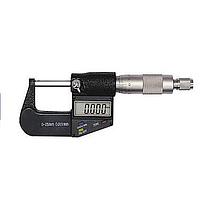
Micrometers Repair Service
When a micrometer starts giving inconsistent readings, feels rough through the spindle travel, or shows visible wear on the measuring faces, measurement reliability can drop quickly. In quality control, machining, toolroom work, and inspection workflows, even small errors in a handheld mechanical instrument can affect acceptance decisions, process settings, and documentation. A professional Micrometers Repair Service helps restore usability, repeatability, and confidence in daily measurement tasks.
This service category is intended for businesses that rely on micrometers as part of regular dimensional inspection. Whether the instrument is used on the shop floor or in a metrology environment, repair work is often needed when the frame has been impacted, the thimble movement is no longer smooth, the ratchet no longer behaves consistently, or the zero point has shifted from normal operation. In many cases, repair is a practical step before returning the tool to calibration or routine use.
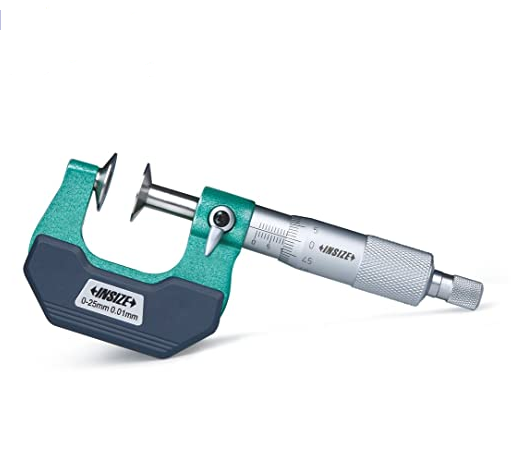
Why micrometer repair matters in industrial measurement
Micrometers are designed for precise dimensional checks, but they are still exposed to wear, contamination, accidental drops, over-tightening, and storage issues. These problems can affect spindle alignment, contact surface condition, reading accuracy, and general handling feel. A repair service focuses on bringing the instrument back to a condition where it can be properly evaluated and used with fewer risks in production or inspection work.
For many users, the issue is not always complete failure. More often, the instrument still works but no longer performs with the consistency expected for controlled measurement. That is why repair should be seen as part of wider instrument lifecycle management, alongside related services such as callipers repair service and support for other mechanical measuring tools used in the same environment.
Typical issues addressed by a repair service
A micrometer may need service for several practical reasons. Common cases include stiffness in spindle movement, backlash, damaged anvils or spindle faces, worn ratchet mechanisms, misalignment after impact, scale readability issues, or general mechanical deterioration after long-term use. In workshop conditions, dust, coolant residue, and poor storage can also contribute to gradual performance decline.
Repair work usually begins with inspection of the instrument’s mechanical condition and likely fault points. The goal is not only to fix an obvious symptom, but also to identify whether the instrument can still support reliable measurement after corrective work. For users managing a broader inspection setup, this is often part of the same maintenance mindset applied to services like thickness gauge repair service when multiple dimensional tools are used together.
What to look for before sending a micrometer for repair
Before arranging service, it helps to review the actual problem observed during use. If the micrometer does not return to zero consistently, gives different results for the same feature, or feels abnormal during operation, those symptoms should be noted clearly. Information about the instrument brand, application, and visible damage can also help streamline evaluation.
Users should also consider whether the issue appears mechanical, handling-related, or likely connected to wear over time. A micrometer that has been dropped may need different attention compared with one that has gradually become stiff from contamination or aging. In a production setting, separating damaged instruments from in-service tools early helps reduce the risk of incorrect measurements entering the process.
Supported brands and example service options
This category includes service options for widely used brands in industrial measurement. Examples available here include MITUTOYO, Mahr, MOORE & WRIGHT, YATO, LUTRON, and METROLOGY. Brand-specific repair listings can be useful when your organization standardizes on one manufacturer or needs to manage service records by supplier.
Representative service entries include MITUTOYO Micrometers Repair Service, Mahr Micrometers Repair Service, Moore & Wright Micrometers Repair Service, Lutron Micrometers Repair Service, Metrology Micrometers Repair Service, and Yato Micrometers Repair Service. These listings help buyers quickly identify a relevant route for service requests without turning the page into an overload of models or fragmented references.
How repair fits into the measurement workflow
In many companies, a micrometer is only one part of a wider inspection toolkit. A damaged measuring instrument can interrupt incoming inspection, in-process checks, final verification, or maintenance work. Timely repair reduces unnecessary replacement decisions and supports continuity in established measurement routines, especially when operators are already trained on specific instrument types.
Repair is also closely linked to post-service verification and instrument control. Once the mechanical condition has been addressed, businesses often review whether the tool should return directly to use, move to calibration, or be reassigned to less critical work. This practical decision-making approach is equally relevant for other precision instruments, including depth gauge repair service in mixed inspection environments.
Choosing the right service for your application
The most suitable repair path depends on how the micrometer is used, how critical the measurement task is, and the overall condition of the instrument. A tool used for routine comparative checks may not be evaluated in the same way as one used in tighter inspection workflows. Clear information about the fault, working environment, and urgency helps make the service process more efficient.
It is also useful to review the broader fleet of mechanical measuring equipment within the facility. If several devices show similar wear patterns, that may indicate handling, storage, or maintenance issues rather than isolated instrument failure. Looking at repair needs as part of a measurement equipment management strategy can improve uptime and reduce repeated problems.
When repair is a practical option
Repair is often worth considering when the instrument remains structurally serviceable and the issue appears related to wear, contamination, impact, or mechanical adjustment. For many users, this is a sensible option when the micrometer is still valuable in day-to-day work and replacement would disrupt established procedures or brand standardization. Services linked to manufacturers such as Mahr and MOORE & WRIGHT can be especially relevant for sites with existing instrument sets from those suppliers.
By contrast, the decision should always be guided by actual condition rather than assumption. The main goal is to restore dependable function where practical and to support proper follow-up assessment before the instrument is returned to operation.
Support more reliable dimensional inspection
A dependable micrometer is a basic but important part of dimensional control. When the instrument no longer feels stable, readable, or mechanically sound, repair service becomes an important step in protecting measurement quality and reducing avoidable errors in inspection work.
Browsing this category helps you identify suitable service options for common industrial brands and organize repair requirements more efficiently. If your facility manages multiple precision instruments, taking a structured approach to mechanical measuring instrument service can improve both equipment life and confidence in measurement results.
Get exclusive volume discounts, bulk pricing updates, and new product alerts delivered directly to your inbox.
By subscribing, you agree to our Terms of Service and Privacy Policy.
Direct access to our certified experts