
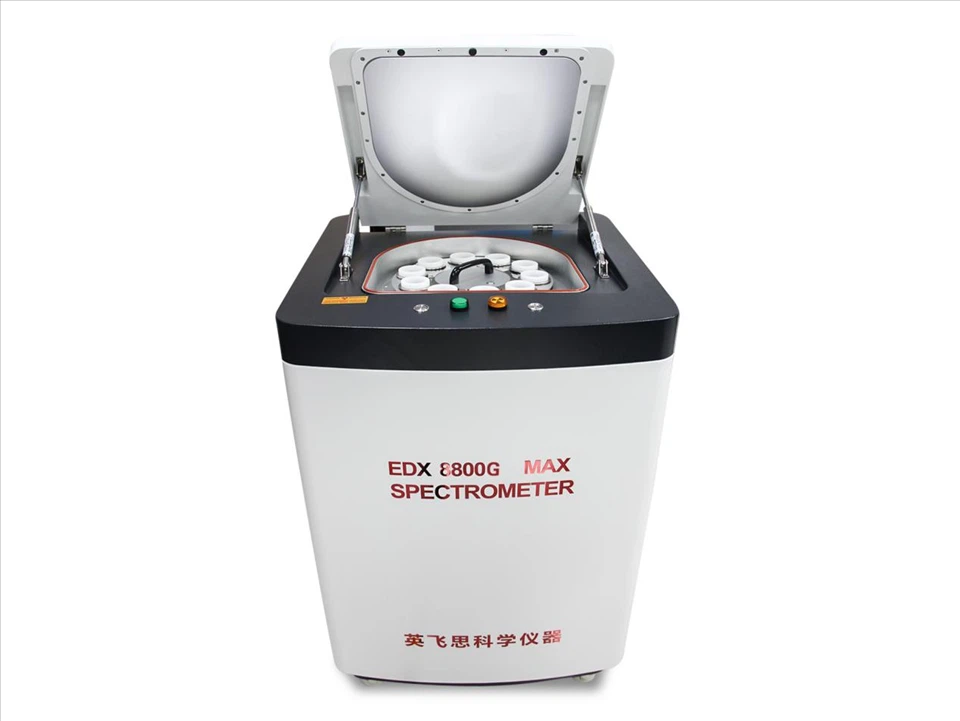
ESi EDX-8800G X-ray Fluorescence Spectrometer
Size: 650mm*600mm*900mm
Weight: 105Kg
Element analysis range:9F-95Am F-Am
Analyzable content range:0.2ppm- 99.99%
Detector:Original imported ultra-high resolution silicon drift detector
Multi - channel analyzer: Digital 4096 - channel analyzer, peak drift less than 0.5 channels (within 24 hours)
X - ray tube: Original imported high - power tube (high - power composite target tube is optional)
Sample types: Solids, liquids, powders, air filters
Automatic sampler: Standard with 10 positions, 12 - position and 14 - position options available
Collimator system: 8 groups with automatic adjustment
Filter system: 7 groups with automatic adjustment
Sample chamber: Air, vacuum, helium - filled (optional)
Size of the vacuum sample chamber: 360mm * 360mm * 60mm
Voltage: 220ACV 50/60HZ
Ambient temperature: - 10 °C to 35 °C
Optional configurations:
1 Sample spinning system
2 Helium gas filling system (One - click switching among vacuum, helium, and air states)
Application
Alloy Composition Analysis:
Rapidly determine the elemental content in materials such as stainless steel and aluminum alloys.
Quality Control: Ensure that metal materials comply with industry standards (such as ASTM, ISO).
Scrap Metal Sorting: Identify the components in scrap metals to optimize the recycling process.
Mining and Geological Exploration:
Ore Grade Evaluation: Analyze the content of target elements in minerals.
Mineral Identification: Determine the composition of rock and mineral samples to assist in geological research.
Environmental Monitoring and Governance:
Soil/Sediment Analysis: Detect heavy metal pollution (such as lead, arsenic, cadmium).
Water Quality Testing: Screen for harmful elements in industrial wastewater.
Air Particle Analysis: Monitor the metal components in atmospheric dust.
Building Materials, Ceramics and Glass:
Cement Quality Control: Analyze elements such as calcium, silicon, and iron in raw materials.
Glass Manufacturing: Ensure that the proportion of oxides in the formulation meets the requirements.
Coatings and Paints: Detect lead or other restricted components.
Electrical Appliances and Consumer Goods:
RoHS/WEEE Compliance: Detect hazardous substances such as lead, cadmium, and mercury in electronic products.
Toy Safety: Ensure that plastic or coating materials comply with international safety standards.
Petrochemical and Energy Industry:
Fuel Sulfur Content Detection: Comply with environmental protection regulations (such as sulfur limits in diesel).
Lubricating Oil Analysis: Monitor wear metals (iron, copper) to predict equipment failures.
Catalyst Research: Evaluate the distribution and content of active components (such as platinum, palladium)
Archaeology and Cultural Relic Protection:
Analysis of Cultural Relic Materials: Identify the composition and origin of ancient ceramics and metal artifacts.
Restoration Assistance: Match the chemical composition of restoration materials with that of the original artifacts.
Pharmaceutical and Food Industries:
Drug Impurity Detection: Screen for heavy metal pollution in active pharmaceutical ingredients (such as in accordance with USP <232> standard).
Food Safety: Detect toxic elements in food (such as arsenic in rice and mercury in fish).
Scientific Research and Education:
Materials Science Research: Analyze the correlation between the elemental composition and properties of new materials.
Teaching Experiments: Used for practical teaching in disciplines such as chemistry and geology.
Jewelry and Precious Metals: Purity Identification:
Rapidly determine the fineness of precious metals such as gold, silver, and platinum (such as the content of karat gold).
Gemstone Treatment Detection: Identify traces of filling or dyeing treatments.
Nuclear Industry and Special Materials:
Nuclear Fuel Analysis: Detect the purity and composition of nuclear materials such as uranium and plutonium.
Radiation Shielding Materials: Analyze the distribution effect of elements such as lead.
Get exclusive volume discounts, bulk pricing updates, and new product alerts delivered directly to your inbox.
By subscribing, you agree to our Terms of Service and Privacy Policy.
Direct access to our certified experts