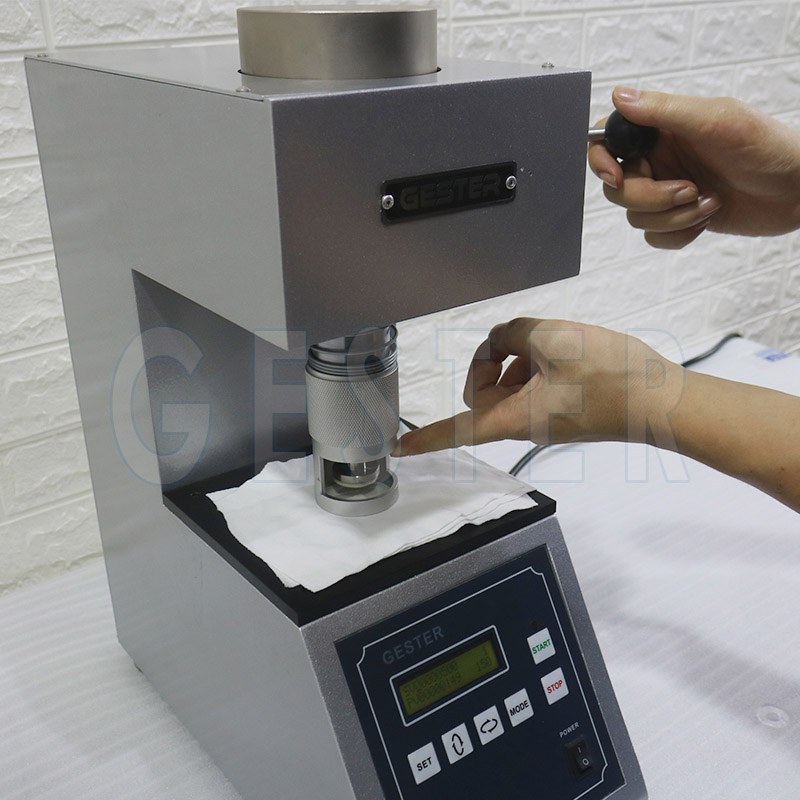
The GT-KC52 Circular Rubbing Colour Fastness Tester is designed to assess how coloured material surfaces respond to friction. It can be used when quality-control teams need to observe rubbing damage on a specimen and colour transfer to the rubbing pad. This type of evaluation is relevant to materials such as leather, plastics, and fabrics.
For manufacturers and laboratories, a repeatable rubbing procedure helps make visual comparisons more consistent across samples, production lots, or material options. The GT-KC52 applies circular rubbing under constant pressure with a wool felt rubbing medium. After the selected number of rubs is reached, the machine stops, allowing the operator to remove the sample and inspect the result.
What the GT-KC52 Circular Rubbing Colour Fastness Tester Evaluates
Colour fastness to rubbing concerns the ability of a coloured surface to retain its appearance when exposed to friction. The evaluation can consider two visible outcomes: changes on the specimen surface and colour transferred from the specimen to the rubbing pad. Results may be assessed by reference to a standard gray scale where applicable to the laboratory’s procedure.
The GT-KC52 is described for circular rubbing tests performed with dry or wet wool felt. It also supports rubbing procedures involving perspiration, alcohol, and organic liquids. Any required test liquid must be prepared by the customer. Before adopting a particular procedure, the laboratory should confirm that its specimen preparation, rubbing medium, load, liquid, and assessment method match its own quality requirements.
Key Operating Features
Preset count and automatic stopping
The tester provides a counter for setting the intended number of rubbing cycles and displaying the actual count. Once the preset count is reached, the test stops automatically. This helps the operator run a defined test sequence rather than manually estimating the number of cycles.
Saved count during a manual stop
If a test is stopped manually before the preset count is reached, the current count can be retained so testing can continue later or be cleared to zero. The source information also notes that restarting the machine clears the current count, while the preset value remains the last setting used. Operators should therefore record important test details before powering down.
Load selection for the test requirement
Different rubbing evaluations may call for different loads. The GT-KC52 can be used with corresponding loads according to the test requirement. Confirm the required accessories and weights when specifying the equipment, as the supplied accessories may depend on the order.
Typical Dry Rubbing Test Workflow
A careful setup supports a more controlled result. First, position the tester on a level surface, verify the power connection, and check that the friction head lifts and lowers smoothly without jamming. Install the wool felt on the fixture, place the specimen with its test surface facing upward, lower the fixture, and install the required weights.
Next, select the counter mode and enter the required test count. The source procedure gives an example of 64 cycles and a speed setting of 150 ± 5 r/min. These values should be treated as a stated operating example, not as a universal setting for every material or test program. Clear the existing count before starting the test.
When the preset cycle count is reached, the unit stops. The operator can then lift the fixture, remove the specimen, and inspect the specimen and rubbing pad for surface change or transferred colour. Consistent documentation of the material, test condition, load, rubbing medium, cycle count, and observations makes later comparisons more useful.
Handling Heat-Sensitive Surface Coatings
Some specimens may have coatings with a low melting or softening temperature. In such cases, periodic stops may be necessary to reduce the risk of heat-related damage during rubbing. The source procedure describes placing a round aluminum block over the rubbed area and allowing the specimen to rest for 30 seconds before continuing. This is intended to help cool the test area during a dry rubbing procedure.
Because coating behaviour can differ significantly among materials, laboratories should define a controlled approach for interruptions and cooling when evaluating heat-sensitive surfaces. The key objective is to distinguish rubbing-related performance from unintended thermal effects.
What to Consider Before Selecting a Rubbing Colour Fastness Tester
Start with the materials your team needs to evaluate, such as leather, plastics, or fabrics. Then identify whether your process requires dry rubbing, wet rubbing, or tests using perspiration, alcohol, or other organic liquids. Review the intended rubbing count, applicable load, required rubbing pad, and the method used to judge surface change and colour transfer.
Also consider routine operation. A preset counter and automatic stop can support repeated testing, while the ability to resume after a manual stop may be useful when observing sensitive specimens. Finally, confirm the accessories required for the planned procedure, including weights and any blocks used for special test conditions.
Summary
The GT-KC52 Circular Rubbing Colour Fastness Tester provides a practical way to examine friction-related surface damage and colour transfer on coloured materials. Its circular rubbing action, selectable test conditions, count control, and automatic stopping function can support structured quality-control evaluations. A well-defined in-house procedure remains essential for obtaining meaningful and comparable observations.