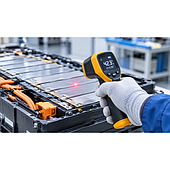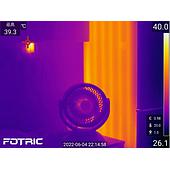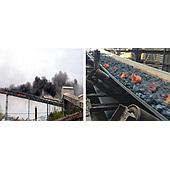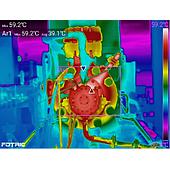
Thermal imaging supports oil pipeline inspection by helping maintenance teams identify conditions associated with aging pipes and cables without direct contact. In oil and gas facilities, it can be used to examine worn insulation layers, aged flange joints, and failing cable wires from a distance.
Periodic inspection is particularly relevant where platforms have extensive, complex infrastructure and older assets remain in continuous production. Thermal images can help teams locate potential issues for further maintenance assessment.
Summary: Aging pipelines and cables may be associated with oil leakage, wire overheating, energy loss, and material damage. Thermal imaging enables non-contact observation from a distance. The FOTRIC 348A is stated to have 640 × 480 resolution, 40 mK sensitivity, and a length measurement function with laser ranger.
Why do aging oil pipelines and cables need periodic inspection?
Aging pipelines and worn-out cables can create safety and asset-management concerns, including oil leakage and wire overheating. These conditions may also contribute to energy loss or material damage, so periodic inspection is used to identify conditions that require attention.
Offshore oil and gas facilities can be difficult to inspect with conventional methods because platforms may cover large areas and include complex infrastructure. As older platforms continue operating beyond their original intended service life, efficiently monitoring pipes, insulation, joints, and cables becomes more challenging.
What can thermal imaging identify during oil pipeline inspection?
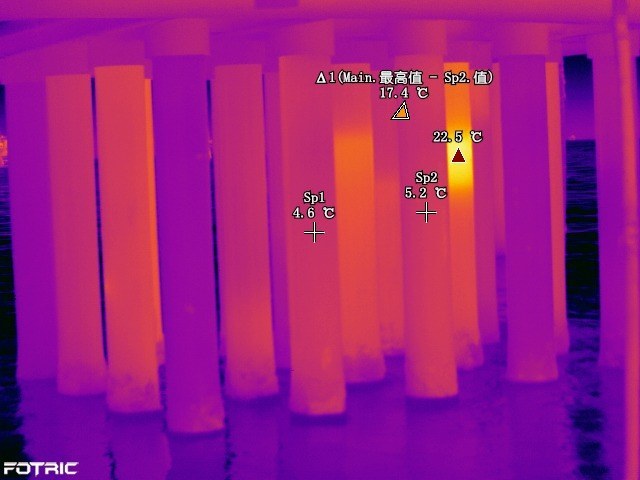
Thermal imaging can be used to identify and diagnose worn insulation layers on pipes, aged flange joints, and failing cable wires.
For pipe insulation, thermal images can help reveal a missing insulation area or other aging-related conditions. For electrical infrastructure, the approach helps maintenance personnel observe cable conditions associated with potential overheating from afar rather than relying solely on close physical access.
How can thermal inspection improve maintenance planning for oil and gas assets?
Periodic thermal inspections can help maintenance professionals detect potential problems without contact and determine their physical location more accurately. This gives teams information for prioritizing inspection follow-up, repair, or replacement activities.
The intended maintenance value is earlier identification of risky pipe and cable conditions before they contribute to a possible platform shutdown. By locating conditions remotely across extensive facilities, thermal imaging can support efforts to reduce economic loss and safety hazards.
When is thermal imaging most useful for pipeline and cable checks?
Thermal camera is useful when inspection teams need to monitor large or difficult-to-access oil and gas infrastructure efficiently. It is especially applicable to periodic checks of aging pipe insulation, flange joints, and cables where conventional inspection can be costly or impractical.
Note: A thermal image helps identify conditions for maintenance attention; findings should be assessed within the facility's inspection and maintenance process before repair decisions are made.