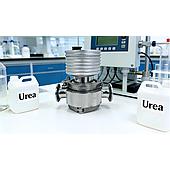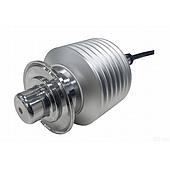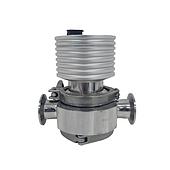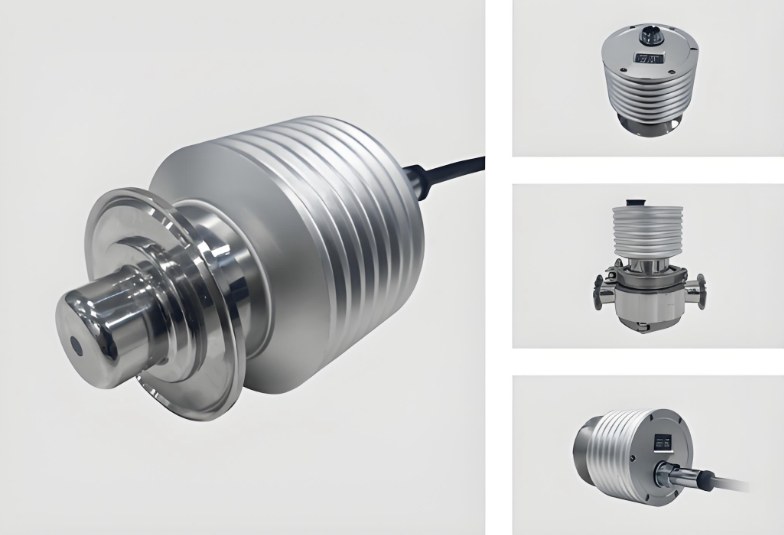
An inline refractometer measures liquid concentration through refractive index, supporting process monitoring without relying solely on manual sampling. It can be considered for applications where concentration changes affect product consistency, raw-material use, dosing, or process control. Selecting the right instrument requires more than comparing a single accuracy figure. The device must also suit the process medium, installation point, cleaning method, and available control-system connections.
Start with the measurement objective
Define what the process needs to control before reviewing product features. In food and beverage production, the objective may be to monitor juice concentrate or syrup consistency. In chemical processing, it may involve tracking concentration during reaction or transfer. Water-treatment applications may focus on brine, cutting fluid, or wastewater-related process streams.
Clarify the measurement scale required by the process, such as concentration, Brix, or refractive index. Also consider how quickly process conditions can change and whether the measurement will be used for indication, quality checks, alarms, or automated adjustment. This context helps determine which performance data need to be verified under real operating conditions.
Evaluate measurement stability in the actual process
Published measurement performance should be reviewed alongside the conditions where the inline refractometer will operate. Bubbles, suspended particles, turbidity, temperature variation, and changes in flow can all influence readings. A specification established in a controlled setting may not represent performance in a production line.
Temperature compensation is particularly relevant when liquid temperature changes during heating, cooling, sterilization, or batch transfer. For concentration processes, stable readings help operators avoid over-concentration or under-concentration that can affect material consumption and product uniformity. Ask how the instrument handles the expected temperature range and whether the measurement can be checked against the process reference method.
Match wetted materials and protection to the medium
The process medium and cleaning regime should drive material selection. Corrosive chemicals may require probes and wetted components designed for chemical resistance. The source information describes Hastelloy and PTFE as materials considered for corrosive applications, while 316L stainless steel and sapphire prisms are described for sanitary process environments. Compatibility should always be confirmed for the specific liquid, concentration, temperature, and cleaning chemicals.
For demanding environments, enclosure protection and resistance to washdown matter as well. The CHNSpec CRN series is described in the source material as having IP68 protection, with sapphire prisms and corrosion-resistant probe options. These attributes should be assessed in relation to the site’s actual exposure, rather than treated as a universal suitability guarantee.
Plan installation before purchasing
Installation can determine whether an instrument delivers useful data consistently. Review the pipe size, tank geometry, available mounting location, flow behavior, access for service, and any restrictions on process-line modification. The source material references DN25–DN80 flange interfaces, sanitary clamps, and small-diameter adapters for the CHNSpec CRN series. Confirm the required connection and mechanical arrangement with the production line layout.
The sensing point should represent the process stream and remain accessible for inspection. Applications with viscous liquids, bubbles, or fouling require special attention because these conditions can interfere with the optical surface or make cleaning more frequent.
Consider cleaning, diagnostics, and automation
Maintenance requirements have a direct effect on total operating effort. Where the process supports cleaning-in-place or sterilization-in-place practices, confirm that the selected configuration fits those procedures. The source material identifies CIP/SIP capability and automatic calibration as relevant considerations for process refractometers.
Integration requirements should also be established early. Signal outputs such as 4–20 mA and RS485 can be relevant when measurements must be sent to PLC or DCS systems for central monitoring or control. Diagnostic functions can help maintenance teams identify instrument issues, but the usefulness of any diagnostic feature depends on the site’s response procedures and available technical support.
Use an application-specific selection checklist
- Define the liquid, concentration range, temperature, pressure, and flow conditions.
- Identify possible bubbles, particles, turbidity, viscosity, fouling, and corrosive exposure.
- Confirm required wetted materials, process connection, enclosure protection, and installation space.
- Determine whether Brix, concentration, or refractive index is the required output.
- Review cleaning and sterilization practices, including CIP/SIP where applicable.
- Specify control-system interfaces and the role of the measurement in alarms or automation.
- Assess calibration, service access, spare-parts planning, and post-warranty support.
Choose based on process fit
An inline refractometer is most valuable when its measurement capability, materials, installation method, and maintenance approach align with the production process. Rather than selecting solely by headline parameters, evaluate the complete operating environment and validate critical requirements against the intended application. This approach supports a more reliable concentration-monitoring strategy across food, chemical, pharmaceutical, and water-treatment operations.