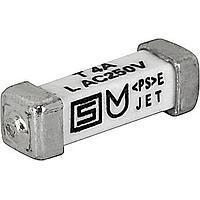
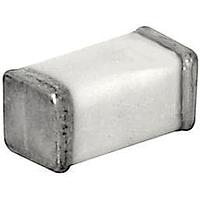
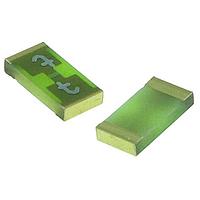
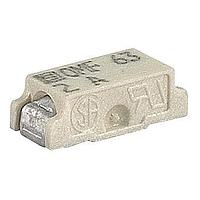
Surface Mount Fuses
Compact electronics often leave very little room for overcurrent protection, yet the risk of damage from short circuits, startup surges, or downstream faults remains the same. Surface Mount Fuses are designed for these space-constrained assemblies, helping engineers protect power rails and sensitive components without moving away from automated PCB assembly.
In modern industrial, embedded, and electronic product design, these fuses are commonly selected where board density, repeatable manufacturing, and predictable protection behavior matter. This category brings together miniature fuse options for SMT layouts, with current ratings, package sizes, and blow characteristics suited to a wide range of low-voltage protection tasks.
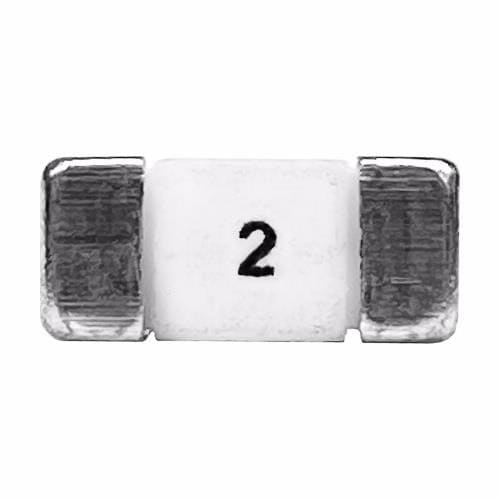
Why surface mount fuses are used in PCB protection
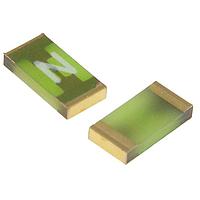
Unlike larger cartridge or panel-mounted devices, SMD fuse designs are intended to fit directly onto the board during standard pick-and-place assembly. That makes them a practical choice for compact power supplies, control boards, communication modules, battery-powered devices, and other electronics where layout efficiency is important.
The main role of a surface mount fuse is straightforward: it interrupts excessive current before tracks, semiconductors, connectors, or downstream loads are damaged. In many designs, the selection comes down to balancing footprint size, rated current, operating voltage, and the expected fault or inrush profile of the circuit.
Fast acting and slow blow options for different load behavior
One of the most important distinctions in this category is the fuse response characteristic. Fast acting types are often chosen for circuits that need quick interruption under fault conditions, especially where sensitive electronic components may be damaged by even brief overcurrent events. Examples in this range include Panasonic ERBRG and ERBRD series parts, as well as Eaton CC06FA and CB61F devices.
By contrast, slow blow versions are better suited to applications that experience temporary surge or startup current, such as capacitive input stages or certain power conversion sections. Bourns SF-0603S-M, SF-0603SA-M, and SF-1206S-M series examples illustrate this approach, where the fuse must tolerate brief inrush while still opening on sustained overload.
If your application may benefit from a device that recovers after a fault rather than requiring replacement, it can also be useful to compare these products with resettable fuse solutions depending on the service strategy and circuit architecture.
Package size matters in high-density layouts
Surface mount fuse selection is closely tied to available PCB area. This category includes very compact case formats such as 0402, 0603, 1206, and larger 2410 devices. Smaller packages can help in miniaturized electronics, but they also need to be evaluated alongside current rating, thermal conditions, and the practical manufacturability of the board.
For example, Panasonic ERBRD options in 0402 packages support highly space-limited layouts, while 0603 and 1206 families from Panasonic, Bourns, and Eaton offer a broader range of current handling for many mainstream designs. Larger footprints such as Eaton CB61F in 2410 may be more appropriate when higher current capability or broader voltage coverage is needed on the board.
Representative product range in this category
The available range covers both low-current and higher-current PCB protection needs. On the lower end, products such as the PANASONIC ERBRD0R25X provide a compact fast acting option for lighter current paths. Mid-range selections include the Eaton CC06FA1A-TR and Bourns SF-1206S150M-2, suitable for applications where a moderate current rating and SMT packaging are both required.
For designs that need higher current capability, parts such as PANASONIC ERBRE4R00V, Bourns SF-0603SA400M-2, and Eaton CB61F15A-TR2 show how this category extends into more demanding board-level protection roles. Rather than choosing by current rating alone, it is important to review the complete electrical context, including nominal load, startup behavior, and fault interruption requirements.
How to choose the right surface mount fuse
A practical selection process usually starts with the circuit’s normal operating current and the maximum voltage present at the fuse location. From there, engineers typically compare the required response speed, package constraints, and the expected fault energy. Breaking capacity should also be considered, particularly where a DC source or a higher available fault current may affect interruption performance.
Thermal conditions on the PCB can influence fuse behavior as well. A fuse mounted near heat-generating components may operate differently from one placed on a cooler section of the board, so derating and real application testing remain important. When replacing an existing part, matching package size alone is not enough; the time-current behavior and voltage rating should also be checked carefully.
Where the application moves beyond compact PCB protection and into higher fault levels or more traditional power distribution, users may also want to review HRC fuse options for a different protection approach.
Manufacturers commonly used for SMD fuse applications
This category includes products from established suppliers used in circuit protection and electronic component sourcing. PANASONIC is represented here with compact fast acting series such as ERBRD, ERBRE, and ERBRG, covering multiple case sizes and current levels for board protection. Bourns adds several slow blow families that are relevant where surge tolerance is part of the design requirement, while Eaton contributes both compact and higher-rated SMD fuse formats.
Choosing between manufacturers is usually less about brand preference alone and more about the combination of package availability, current range, and response characteristics that best align with the target application. For many buyers, consistency of sourcing and fit with existing BOM strategy are also key decision factors.
Typical applications and related protection categories
Surface mount fuses are commonly used in DC power inputs, embedded controllers, industrial interface boards, communication hardware, battery-powered equipment, and compact power management circuits. They are especially relevant where a sacrificial protective element is preferred to isolate faults quickly and protect more expensive assemblies.
Depending on the broader system design, engineers may evaluate adjacent product types as well. For example, some applications use alarm indicating fuses where maintenance visibility is important, while others use dedicated automotive-format products in vehicle electrical systems rather than standard PCB-mounted fuse bodies.
Finding the right fit for your design
Choosing the correct SMD fuse is ultimately about matching the fuse behavior to the real electrical conditions of the circuit, not simply selecting the smallest package or the nearest current value. Fast acting and slow blow options each have a clear role, and package size, voltage rating, and interrupt capability all need to be considered together.
Within this category, you can compare compact board-level protection options from Panasonic, Bourns, and Eaton across a range of footprints and current ratings. For engineers, buyers, and maintenance teams working with densely populated electronics, that makes surface mount overcurrent protection easier to specify with better confidence and better fit to the application.
Get exclusive volume discounts, bulk pricing updates, and new product alerts delivered directly to your inbox.
By subscribing, you agree to our Terms of Service and Privacy Policy.
Direct access to our certified experts