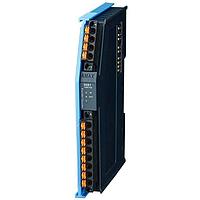
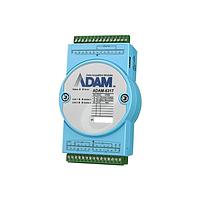
I/O Modules
Reliable signal handling is at the core of modern automation, especially when field devices, controllers, and supervisory systems need to exchange data without adding unnecessary wiring complexity. In many industrial environments, the practical answer is to use I/O Modules that bridge sensors, switches, relays, temperature inputs, and analog signals with PLC, SCADA, or Ethernet-based control networks.
This category brings together I/O solutions used for signal acquisition, output control, and distributed integration in machines, panels, utility systems, and process applications. Whether the goal is to collect digital status signals, transmit analog control values, or expand remote monitoring capacity, the right module helps improve flexibility, simplify installation, and support more scalable system architecture.
Where I/O modules fit in industrial systems
I/O modules act as the interface layer between field signals and control platforms. They are commonly used to read digital inputs such as push buttons, limit switches, or dry contacts, and to drive outputs such as relays, indicators, or actuators. In more advanced setups, they also handle analog signals for process control, including current and voltage output, as well as sensor-specific inputs such as RTD temperature measurement.
These devices are especially useful when control points are distributed across a machine, production cell, or facility. Instead of routing every signal back to a central cabinet, engineers can place modules closer to the equipment and communicate through protocols such as Modbus RTU or Modbus TCP. This approach can reduce wiring effort, support maintenance access, and make future expansion easier.
Common signal types available in this category
The category covers several signal handling needs rather than a single hardware format. Some modules are designed for digital input and output tasks, making them suitable for basic machine interfacing and status monitoring. Others focus on analog output, where a controller must send command signals such as 0-20 mA, 4-20 mA, or voltage ranges to downstream devices.
There are also modules intended for direct sensor acquisition. For example, RTD-capable units are useful in temperature-related applications where stable and accurate measurement is required. If your system also depends on compatible field termination and signal connection hardware, it can be helpful to review related I/O connectors for a more complete installation approach.
Examples of I/O modules for different control tasks
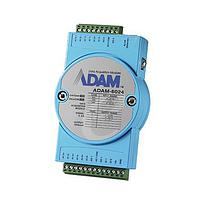
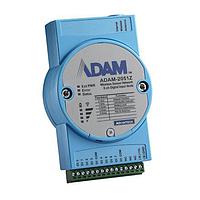
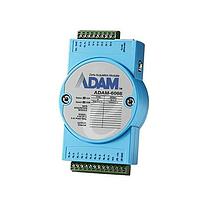
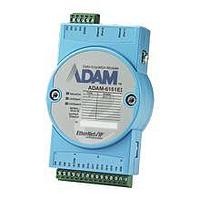
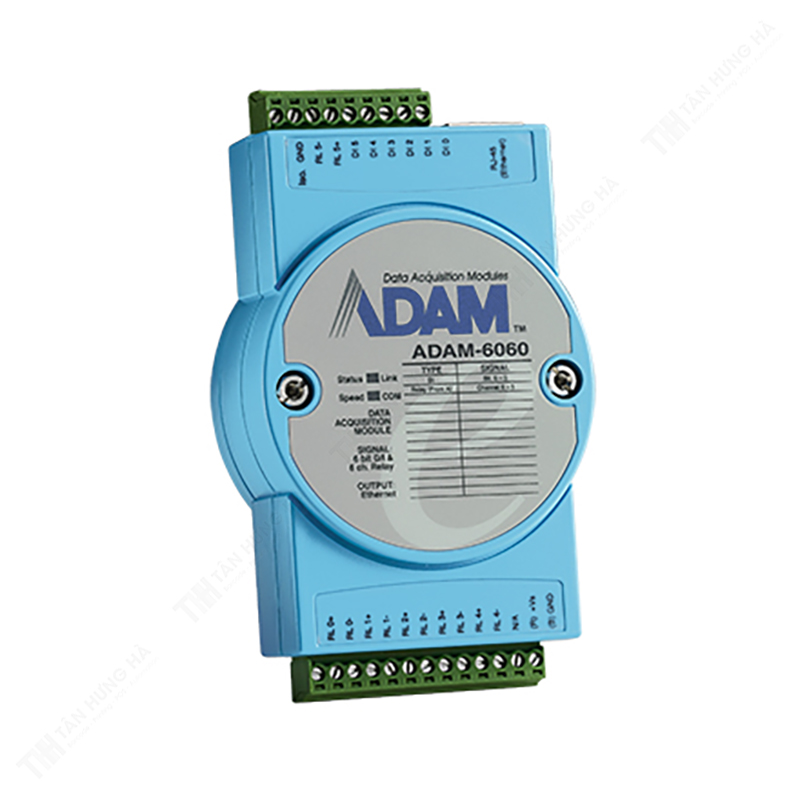
Within this category, Advantech is one of the featured manufacturers, with modules that address several common automation requirements. The Advantech ADAM-6060 is a practical example for applications that need both digital input monitoring and relay-based switching over Ethernet. With Modbus TCP communication, it can fit into remote control and building or industrial monitoring projects where network accessibility matters.
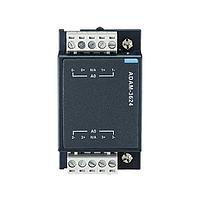
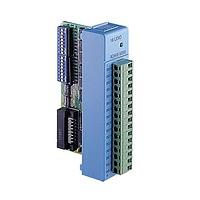
For digital point expansion, the Advantech ADAM-6050 combines multiple digital inputs and outputs in a single Ethernet module. This type of design is often useful for alarm status collection, contact sensing, or basic output actuation across distributed equipment. Where analog command signals are needed, the Advantech ADAM-4024 provides analog output capability and can be considered in systems that interface with drives, valves, or other analog-controlled devices.
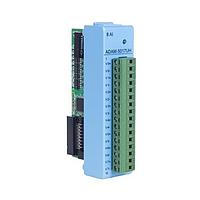
Temperature acquisition is represented by the Advantech ADAM-4015, a module built for RTD inputs such as Pt100 and Pt1000. In practice, this kind of module is relevant for thermal monitoring in process equipment, HVAC-related control panels, test benches, and utility skids where dependable sensor integration is more important than a broad mix of I/O types.
How to choose the right I/O module
The first selection step is to define the signal type and point count. A digital module may be enough for simple on/off monitoring, but applications involving process control may require analog output or dedicated temperature inputs. It is also important to confirm whether the installation needs relay outputs, open collector outputs, or a specific input logic type for dry and wet contact signals.
Next, consider communication method and system architecture. RS-485 modules are often selected for serial Modbus networks in compact or cost-sensitive systems, while Ethernet modules are better suited to distributed architectures that benefit from remote access and easier integration into plant networks. Environmental factors such as operating temperature, isolation, and power supply range should also be reviewed, particularly for harsh panels or field installations.
Finally, think beyond the module itself. The success of an I/O installation also depends on enclosure layout, wiring method, and connector strategy. For projects that require more rugged field interconnection, related options such as heavy duty power connectors may be relevant elsewhere in the system, even if they are not part of the I/O module itself.
Why protocol and isolation matter
In industrial automation, communication compatibility is not just a convenience; it directly affects commissioning time and long-term maintainability. Modules that support established protocols such as Modbus RTU or Modbus TCP are often easier to integrate with a wide range of PLCs, gateways, HMIs, and SCADA software. This is one reason Ethernet and RS-485 based I/O products remain widely used across OEM, utility, and plant retrofit projects.
Signal isolation is another key consideration. Isolation helps protect control electronics from noise, ground potential differences, and transient disturbances that may occur in real-world installations. For systems exposed to electrical interference, motor switching, or long cable runs, selecting modules with suitable isolation characteristics can contribute to more stable data acquisition and output performance.
Brand ecosystem and application context
This category sits within a broader industrial connectivity landscape that includes manufacturers such as AMP Connectors - TE Connectivity, Amphenol, Eaton, Festo, and HARTING. While these brands may serve different roles across interconnection and automation infrastructure, the key for buyers is choosing components that match the application rather than selecting by brand alone. In many projects, I/O hardware is part of a larger ecosystem that also includes connectors, power distribution, and panel-level communication interfaces.
If your design involves broader distributed control or remote signal expansion, it may also be useful to compare other industrial I/O module options in this category based on network type, output method, and sensor compatibility. A careful comparison usually leads to better fit, especially in applications where maintenance access, signal integrity, and future expansion are important.
Practical buying considerations for B2B users
For OEMs, system integrators, and maintenance teams, the best choice usually comes from matching the module to the real field requirement rather than focusing only on channel count. Consider how many spare points are needed, whether the module will be mounted in a cabinet or near equipment, and how technicians will troubleshoot it later. Power availability, communication topology, and cable routing should be reviewed early to avoid redesign during installation.
It is also worth checking how the selected module fits with adjacent components in the panel or machine. In some builds, standard signal interfacing may be enough; in others, the project may require additional connectivity hardware from related categories such as FFC & FPC connectors for compact electronic assemblies. Looking at the full system context helps ensure the module performs well not only on paper, but also in day-to-day operation.
Conclusion
Choosing the right I/O hardware starts with a clear view of the signals you need to monitor or control, the network you plan to use, and the environment where the module will operate. From digital input/output expansion to analog output and RTD temperature acquisition, this category supports a range of practical industrial automation tasks with products suited to distributed and panel-based architectures alike.
If you are comparing options for machine building, retrofits, or process monitoring, use this category to narrow choices by signal type, communication interface, and installation needs. A well-matched module can make system integration more straightforward, improve serviceability, and provide a more dependable foundation for long-term automation performance.
Get exclusive volume discounts, bulk pricing updates, and new product alerts delivered directly to your inbox.
By subscribing, you agree to our Terms of Service and Privacy Policy.
Direct access to our certified experts