
Power Line Filters
Electrical noise on the power line can quietly affect system stability, signal integrity, and compliance performance long before it becomes an obvious failure. In industrial panels, embedded electronics, and connected equipment, the right Power Line Filters help reduce conducted interference, protect sensitive circuits, and support more reliable operation across demanding environments.
This category brings together filtering components used to suppress unwanted EMI and EMC-related disturbances on power inputs and supply lines. Whether you are designing a new machine, upgrading a control cabinet, or refining the power stage of an electronic assembly, selecting the right filter approach starts with understanding the noise source, current path, mounting constraints, and the overall power architecture.
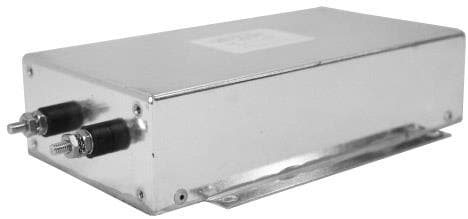
Where power line filters fit in industrial and electronic systems
EMI filtering is commonly used at the point where power enters a device or subsystem. The goal is to attenuate unwanted high-frequency noise that can travel along conductors, interfere with nearby electronics, or contribute to failed EMC performance during validation and deployment.
In practice, power line filters are used in industrial automation equipment, control panels, power conversion stages, communication devices, and compact electronics where noise suppression must be achieved without redesigning the entire system. They are often considered alongside upstream and downstream power components such as DIN rail power supplies or conversion stages that can introduce switching noise into the installation.
Common filter types found in this category
This category includes different filtering approaches rather than one single device style. Some parts are designed specifically as power line filters for EMI/EMC suppression on supply lines, while others represent related filter structures used in specialized electronic circuits.
Examples from the range include the KEMET LLD4036ATHT3, GF-2100, GF-2200, GF-2150, and GF-2050 series, along with devices such as the KEMET FLLD3050AANI9, FLLD3055AMHT5, and FLLD3100AMHT6. For more compact board-level filtering, the Bourns EMI220T-RC illustrates a T-circuit EMI filter format, while the KYOCERA AVX LP0603A1747ANTR shows how low-pass filtering concepts are also used in high-frequency signal environments.
Although their physical construction and intended use can differ, these components share the same broader purpose: reducing unwanted noise in a controlled and predictable way. That makes selection highly application-dependent, especially when line voltage, current, frequency range, and installation method all matter.
How to choose the right filter for your application
A good starting point is the electrical operating condition. Engineers typically check rated voltage, current capacity, expected noise spectrum, and whether the filter is intended for DC, AC, or a specific signal path. Mechanical details also matter, especially when working with limited PCB area, panel space, or thermal constraints inside enclosed equipment.
It is also important to consider where the noise is coming from. If the interference is generated by switching power stages, motor drives, or digital electronics, the filter must be matched to the actual conduction path rather than chosen only by package size. In broader power-system design, related components such as industrial control transformers may also affect grounding strategy, isolation, and the behavior of the complete installation.
For board-level designs, compact dimensions and insertion loss characteristics may be central. For cabinet-level or equipment input filtering, installers often focus more on line current, environmental robustness, connection style, and how the filter integrates with the rest of the power entry layout.
Representative manufacturers and product options
Several established brands appear in this category, with KEMET standing out strongly in the current product mix. Its portfolio in this category includes multiple power line and EMC filter options suited to different current levels, package formats, and suppression needs. Products such as the GF series and FLLD series are useful examples of how the same manufacturer can offer different form factors for different integration requirements.
Bourns is another relevant name here, particularly for compact EMI filtering solutions like the EMI220T-RC. KYOCERA AVX also appears in the category with a thin-film low-pass filter example, which is valuable context for engineers who work across both power integrity and signal conditioning tasks. Other listed manufacturers in the broader range help support sourcing flexibility when project requirements call for a particular brand preference or approved vendor list.
Application considerations beyond the filter itself
Even a well-chosen filter may underperform if the surrounding layout is poor. Cable routing, grounding, enclosure bonding, lead length, and the physical separation between noisy and sensitive circuits can significantly influence real-world EMI behavior. In many systems, the filter should be viewed as one part of a broader noise mitigation strategy, not the only solution.
This is especially true in industrial environments with switching supplies, distributed loads, and backup power equipment. For example, systems that rely on UPS solutions or multiple conversion stages may require attention to both source-side and load-side noise paths. Proper installation practice often makes the difference between acceptable and repeatable EMC performance.
Typical use cases for power line filtering
Power line filters are commonly selected for control cabinets, automation modules, power entry sections, communication hardware, instrumentation, and embedded electronic devices. In these applications, they can help reduce conducted emissions, improve immunity margins, and limit the transfer of switching noise between subsystems.
They are also relevant when retrofitting existing equipment that has become more noise-sensitive after the addition of new drives, communication modules, or switched-mode power conversion. In some designs, filters are paired with regulated conversion hardware such as DIN rail mount isolated DC/DC converters to improve overall power quality and system resilience.
Finding a suitable product in this category
When narrowing down options, it helps to compare the intended electrical function first and the package style second. A part that fits physically but is not matched to the line condition or interference profile may provide limited benefit. Reviewing current rating, filter topology, mounting format, and the target use case will usually lead to a better shortlist than focusing on model names alone.
If you are comparing devices such as KEMET GF-series filters, FLLD-series EMI/EMC filters, or board-level options like the Bourns EMI220T-RC, the most useful question is how each part fits into the complete power path. That system-level view is often the key to selecting a component that supports stable operation, cleaner power, and smoother integration into industrial or electronic designs.
For buyers, designers, and maintenance teams, this category is best approached as a practical toolkit for reducing conducted noise at the source or along the line. With the right filter type, suitable electrical ratings, and careful installation, power line filtering can play a meaningful role in improving reliability and EMC performance across a wide range of applications.
Get exclusive volume discounts, bulk pricing updates, and new product alerts delivered directly to your inbox.
By subscribing, you agree to our Terms of Service and Privacy Policy.
Direct access to our certified experts