
Rack Mount Power Supplies
Reliable power architecture is a core requirement in telecom rooms, data infrastructure, test environments, and industrial control cabinets where centralized distribution and serviceability matter. When a project calls for higher power density, structured installation, and easier maintenance, rack mount power supplies are often the practical choice for building stable DC power systems within standard rack-based setups.
In this category, buyers typically compare output format, voltage range, installation constraints, cooling approach, and how easily a unit fits into a broader power distribution strategy. The products shown here are relevant for applications that need organized power delivery in equipment racks, shelves, and technical enclosures rather than simple bench-level or panel-only supply arrangements.
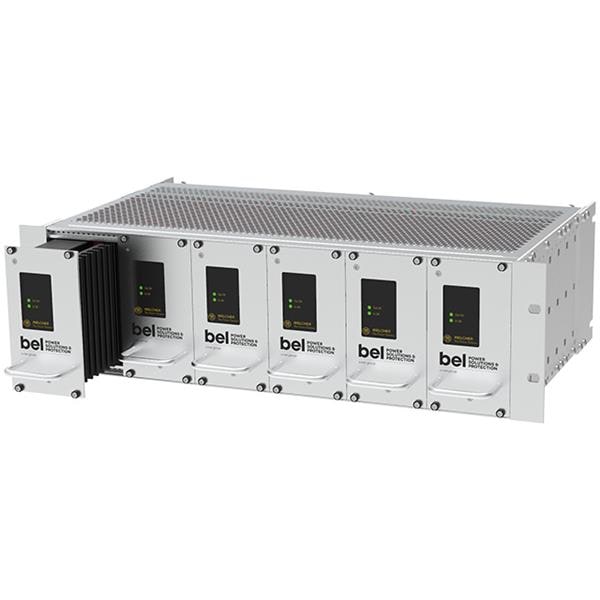
Where rack mount power supplies fit best
A rack-mounted supply is well suited to installations where multiple loads must be powered from a central source and where physical layout is just as important as electrical performance. In these environments, standardized mounting helps simplify integration, cable routing, replacement, and future expansion.
This makes the category relevant for telecom power systems, network infrastructure, lab and validation setups, industrial electronics, and other applications that benefit from a clean, serviceable power backbone. In some systems, rack-mount units may also work alongside UPS solutions to improve continuity during input power disturbances.
Common selection criteria for industrial and technical buyers
Choosing the right unit usually starts with the required output voltage, current capacity, and the number of loads to be supplied. Buyers also look at whether the design is intended for a single high-power output, multiple outputs, or shelf-based distribution within a larger power platform.
Mechanical format is another major factor. Rack height, depth, access for wiring, airflow direction, and operating temperature range all affect whether a supply can be deployed safely and maintained efficiently. For installations outside a 19-inch or shelf-based architecture, a separate category such as DIN rail power supplies may be more appropriate.
It is also important to consider power quality and system compatibility. In technical environments, engineers often review regulation behavior, ripple and noise, input power requirements, and applicable safety or EMC expectations before finalizing a purchase.
Examples from this category
Several products in this range illustrate the different use cases found in rack-based power design. The Advanced Energy FCM33K-SHF-L-W-T Open Rack Power Shelf is a good example of a higher-capacity platform intended for structured DC power delivery. Based on the provided data, it offers a total output power of 33 kW through six individual outputs at 49 VDC, making it relevant for applications that need scalable rack-level power distribution.
For lower-power or more application-specific requirements, the Emerson Network Power LCC600 series represents another typical approach within the category. Models such as LCC600-36U-9P, LCC600-36H-4P, and LCC600-12H-9P reflect how rack-mount and stabilized DC power solutions are often offered in multiple voltage or configuration variants to match different system demands.
The Agilent E3631A stabilized DC power supply highlights a different use profile, with adjustable outputs that can support bench, development, or validation work where controlled DC rails are needed. Meanwhile, the Infineon ICE2B765P AC to DC converter module shows how conversion building blocks can also be relevant within the wider power ecosystem, especially when engineers are comparing centralized rack supplies with embedded conversion approaches.
Rack systems, shelves, and broader power architecture
Rack-mount power is rarely chosen as a standalone component decision. In most industrial and B2B projects, it is part of a broader power distribution architecture that may include upstream protection, backup power, conversion stages, and downstream distribution to multiple loads.
For example, some installations use rack supplies as the main DC source while integrating outlet-level distribution through power outlet strips for associated equipment. Others combine rack-mounted sources with isolated conversion closer to field devices, where DIN rail mount isolated DC/DC converters can help adapt voltage levels or improve electrical isolation in control panels.
Manufacturer landscape in this category
This category includes products and related solutions associated with established industrial and electronics brands such as Advanced Energy, Agilent, Emerson Network Power, and Infineon. Each of these names is typically associated with different power design priorities, from high-density rack infrastructure to stabilized DC sources and conversion modules.
Other manufacturers in the wider industrial power landscape, including Eaton, Delta Electronics, Inc., and Advantech, may also be relevant when buyers compare platform compatibility, installation standards, and long-term sourcing strategy. The right selection usually depends less on brand alone and more on how well the product matches the application’s electrical, mechanical, and service requirements.
How to choose the right model for your application
A practical buying process starts with the load profile: total wattage, nominal voltage, startup behavior, and whether the connected equipment is sensitive to ripple, regulation drift, or brief input disturbances. From there, it helps to define mounting constraints, input power availability, and whether the system needs future expansion capacity.
For centralized telecom or infrastructure-style deployments, higher-output shelves and modular rack solutions may be the better fit. For development, electronics servicing, or mixed-voltage work, a stabilized DC supply with adjustable outputs may be more useful. If the requirement is primarily panel-based rather than rack-based, another form factor may offer a cleaner installation and lower integration effort.
It is also worth reviewing environmental conditions and maintenance expectations. In continuous-duty settings, access to terminals, replaceability, thermal management, and overall serviceability can be just as important as the headline power rating.
Final considerations
Rack-mounted power products are most valuable when a system needs organized installation, centralized DC delivery, and a layout that supports maintenance over time. Whether you are specifying a high-power shelf such as the Advanced Energy FCM33K-SHF-L-W-T, evaluating Emerson Network Power LCC600 variants, or comparing a stabilized supply like the Agilent E3631A, the key is to match the power format to the real operating context.
A careful review of voltage, load behavior, mounting format, and system expansion needs will usually lead to a more reliable choice than focusing on wattage alone. For engineering teams building robust industrial or technical power systems, that approach helps ensure the selected solution fits both the rack and the application around it.
Get exclusive volume discounts, bulk pricing updates, and new product alerts delivered directly to your inbox.
By subscribing, you agree to our Terms of Service and Privacy Policy.
Direct access to our certified experts