Solar Panels & Solar Cells
When a system needs compact, maintenance-friendly power from ambient light or direct sun, choosing the right energy harvesting component matters as much as selecting the load it will support. This category brings together Solar Panels & Solar Cells used in embedded electronics, industrial support devices, low-power sensing, and small standalone power applications where conventional wired power may be impractical.
From miniature photovoltaic cells for energy harvesting circuits to larger panel-style options for outdoor use, the range in this category supports different installation environments, electrical requirements, and mechanical constraints. The key is not simply finding a solar device, but matching cell technology, output level, mounting style, and expected lighting conditions to the application.
Where solar panels and solar cells fit in industrial and electronic designs
In B2B and engineering contexts, solar devices are often used for more than basic renewable power generation. They can serve as energy harvesting sources for ultra-low-power electronics, support backup charging functions, or provide standalone power for remote devices where wiring is expensive or difficult.
Typical use cases include environmental sensing, distributed monitoring nodes, portable electronics, compact control accessories, and outdoor installations. In some designs, a solar cell works alongside storage and power management circuitry; in others, a larger panel is used as the primary source for a low-voltage load.
Understanding the range in this category
This selection includes both small-form solar cells and more application-ready solar panels. Smaller parts are typically suited to low-current energy harvesting, light-powered circuits, and design-in work where engineers need to integrate photovoltaic capability directly into a board-level or compact assembly.
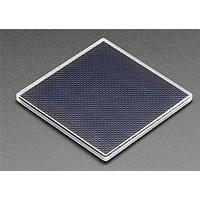
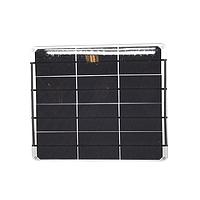
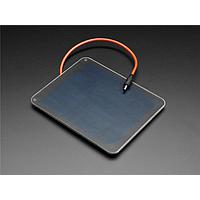
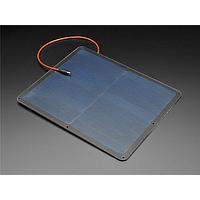
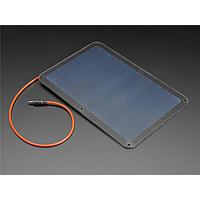
Larger panel options are better aligned with practical field deployment, prototyping, education, portable charging, or outdoor auxiliary power. For example, the Adafruit 5367 5V 5W solar panel is representative of a more complete panel format, while devices such as the Panasonic Battery AM-5608CAR and AM-8702CAR illustrate compact amorphous silicon solar cell options intended for lower-power use.
Cell type, light conditions, and output expectations
One of the most important selection factors is the relationship between available light and required output. A solar product that performs well outdoors in direct sun may behave very differently under indoor lighting or shaded conditions. For that reason, engineers should evaluate not only nominal voltage, but also expected current, power output, and operating conditions under real deployment scenarios.
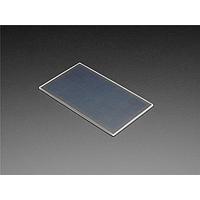
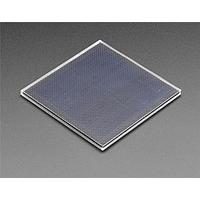
Some products in this category are especially relevant for low-light or compact energy harvesting concepts. The TDK BCSC491B6 film solar cell, for instance, reflects the kind of photovoltaic device often considered when space is limited and the available illumination is modest. By contrast, larger outdoor-oriented options such as the Adafruit 5367 are better suited when the application can benefit from broader surface area and higher power delivery.
Examples from leading manufacturers
This category includes solutions from manufacturers such as TDK, Littelfuse, Maxim Integrated, Adafruit, Panasonic Battery, and Weidmuller. Each name appears in slightly different use contexts, from compact electronic components to panel-style products used in prototypes, field equipment, or supporting assemblies.
Examples include the Maxim Integrated MAX20361DEWC+T solar-cell for power harvesting designs, Littelfuse CPC1831N and CPC1832N solar-cell devices for compact integration, and Panasonic Battery AM-series amorphous silicon solar cells for outdoor use. These examples help show the breadth of the category without suggesting that one part is universally suitable for every load profile or lighting environment.
How to choose the right product for your application
A practical starting point is to define the load clearly: required voltage, peak and average current, duty cycle, and whether the device must operate continuously or only charge storage over time. In many low-power designs, the solar component is just one part of a broader power architecture that may also include regulation, storage, and protection.
Mechanical considerations also matter. Engineers often need to account for footprint, thickness, connection style, enclosure constraints, and whether the product will be mounted indoors, outdoors, or on a portable device. For installations that combine photovoltaic input with conditioned system power, related products such as DIN rail power supplies or isolated DC/DC converters may also be relevant elsewhere in the power chain.
Solar cells versus complete power solutions
It is important to distinguish between a solar cell or panel and a complete power system. A photovoltaic device generates electrical energy from light, but stable operation of industrial or embedded equipment may still require charging control, voltage regulation, energy storage, and power distribution components.
For that reason, solar products are often selected as part of a wider system design rather than as a standalone answer. In applications where uptime is critical or sunlight is intermittent, engineers may also evaluate support equipment such as UPS units for backup continuity, depending on the architecture and power budget.
What buyers and engineers should compare before ordering
When comparing products in this category, focus on the parameters that affect real performance: output voltage range, current capability, power level, environmental suitability, connection method, and package format. For outdoor deployment, durability and installation context are often just as important as electrical rating.
It is also helpful to think in terms of operating profile rather than just headline specifications. A small photovoltaic cell may be entirely appropriate for a low-duty-cycle sensor beacon, while a larger panel is more realistic for sustained output or charging tasks. Matching the product to the application will usually deliver better results than selecting solely by maximum voltage or physical size.
Supporting efficient sourcing for energy harvesting and low-power design
This category is intended to help engineers, buyers, and system integrators compare solar components across different power levels and form factors. Whether you are building a compact energy harvesting circuit, evaluating outdoor auxiliary power, or sourcing replacement photovoltaic parts, the selection provides a useful starting point for practical design decisions.
By reviewing the available form factors, manufacturer options, and intended use cases, it becomes easier to narrow down the right solar panel or solar cell for the job. If your project also involves regulated distribution, backup, or panel-side conversion, it may be worth considering the broader industrial power ecosystem alongside the photovoltaic source itself.
Get exclusive volume discounts, bulk pricing updates, and new product alerts delivered directly to your inbox.
By subscribing, you agree to our Terms of Service and Privacy Policy.
Direct access to our certified experts