Switching Power Supplies
Stable DC power is a basic requirement in control panels, industrial equipment, medical systems, and embedded electronics. When efficiency, compact size, and flexible output options matter, switching power supplies are often the practical choice for converting incoming AC power into regulated DC for downstream devices.
On this page, you can explore power supply options used across industrial and technical environments, from compact rail and panel installations to higher-power configurable systems. The range includes solutions suited to machine building, ITE hardware, and other applications where reliable output, thermal performance, and installation format all influence the final design.
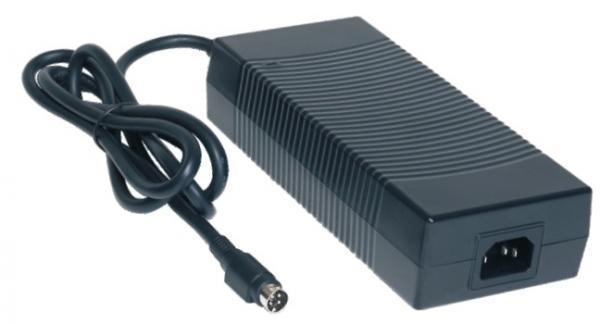
Why switching power supplies are widely used in industrial systems
A switching design offers an efficient way to convert electrical energy while reducing heat and saving installation space compared with many traditional linear approaches. In industrial settings, that usually translates into easier panel integration, lower thermal load, and more flexibility when powering PLCs, HMIs, sensors, communication devices, and control electronics.
Another advantage is the broad variety of form factors and output architectures available. Some applications need a straightforward fixed-output unit, while others benefit from adjustable output, multiple slots, or modular expansion. This makes the category relevant not only for replacement parts, but also for new equipment design and system upgrades.
Common product types within this category
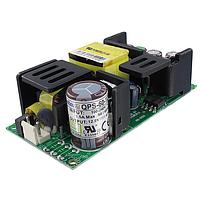
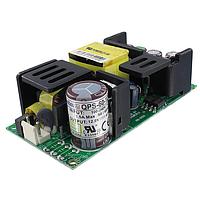
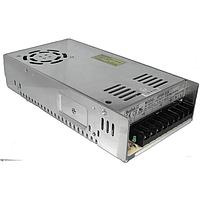
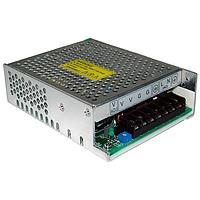
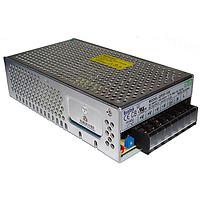
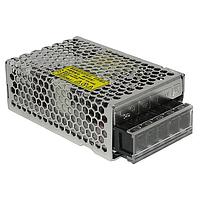
Although all products in this category serve the same core function, they are not selected in the same way. Compact single-output models are often used where the load is known and the installation needs to remain simple. Higher-capacity versions support more demanding loads, while modular chassis-based solutions give engineers greater freedom to configure outputs for mixed-voltage systems.
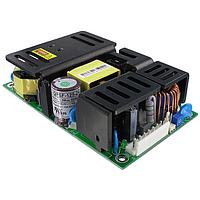
For example, Advanced Energy offers configurable AC/DC modular solutions such as the CME and CMH series variants listed here, including models with 1 output or 3 slots and power levels ranging from 90 W up to 550 W. In parallel, Delta Group products such as PMR, DRF, and DRC series items illustrate the wide range of compact industrial power options available for different output voltages and installation needs.
How to choose the right switching power supply
The starting point is always the electrical load. Output voltage must match the equipment requirement, while current and total wattage should cover steady-state demand with reasonable headroom for startup conditions and future expansion. In many control applications, engineers also check isolation, expected ambient temperature, and the physical mounting constraints inside the enclosure.
Input range is equally important, especially in systems deployed across multiple regions or variable mains conditions. Several products in this category support broad input ranges such as 85V AC to 264V AC, helping simplify global machine design. If your project uses rail-based installation rather than chassis mounting, it may also be useful to compare this range with dedicated DIN rail power supplies.
Where multiple DC rails are required, a modular platform can reduce redesign effort. A model such as the Advanced Energy CME AC/DC modular power supply is more suitable for configurable systems than a simple fixed single-output unit, while compact Delta Group models can be a practical fit for standard panel power distribution.
Examples from Advanced Energy and Delta Group
Advanced Energy is represented here by modular AC/DC power supply options built around the CoolX600 ecosystem, including the CMH AC/DC modular power supply, the CMC-W01 unit, and the 73-554-0220I modular power supply. These products are relevant when designers need configurable outputs, chassis mounting, or application coverage across industrial, ITE, and medical environments.
Delta Group products in this category highlight more compact industrial power choices across several output classes. Examples include PMR-24V150W1AT, PMR-48V600W1BT, PMR-12V600W1BT, DRF-12V240W1GTA, DRF-24V240W1GTA, and DRC-24V060W1RZ. Together, these listings show how this category supports both lower-power control circuits and higher-power DC loads within the same broader application space.
Rather than focusing on brand alone, it is better to compare the output architecture, power level, mounting style, and system context. A modular chassis power supply may be the better fit for a configurable machine platform, while a more compact industrial unit may be easier to deploy in standard automation cabinets.
Application areas and system context
Switching power supplies are used in a wide range of B2B environments, including factory automation, test equipment, communications hardware, control cabinets, and OEM machine assemblies. In these systems, the power supply is not an isolated component; it affects reliability, thermal management, maintenance access, and power quality across the full installation.
In some projects, the power supply works alongside backup and protection equipment. If continuity during mains interruptions is a priority, users may also evaluate UPS systems as part of the wider power architecture. For applications that need voltage conversion at distributed nodes, DIN rail mount isolated DC/DC converters can also complement the primary AC/DC stage.
Selection factors beyond basic electrical ratings
Once voltage and wattage are defined, practical integration details often decide the final product choice. Engineers typically review enclosure space, wiring access, cooling method, serviceability, and whether the supply will be used in a standardized cabinet design or a custom-built machine. These points matter because a technically suitable unit is not always the easiest one to integrate or maintain.
It is also important to think about future scaling. A system with possible I/O expansion, added communication hardware, or upgraded actuators may benefit from additional output margin or a more flexible platform from the beginning. This is one reason modular solutions remain attractive in complex builds, while compact fixed-format units continue to make sense for stable, repeatable designs.
Finding the best fit for your project
This category brings together power solutions for applications that range from straightforward DC supply needs to more configurable, multi-output system designs. Whether you are specifying a replacement unit, designing a new control cabinet, or building a broader industrial power architecture, the key is to match the supply to the real electrical and mechanical demands of the installation.
By comparing output requirements, mounting format, thermal considerations, and system expansion needs, buyers can narrow the range more effectively. If your project also involves upstream distribution hardware, it may be helpful to review related items such as industrial control transformers to build a more complete power strategy around the selected switching supply.
For many industrial and technical applications, the right switching power supply is the one that delivers stable output, fits the installation cleanly, and supports long-term system reliability without unnecessary complexity.
Get exclusive volume discounts, bulk pricing updates, and new product alerts delivered directly to your inbox.
By subscribing, you agree to our Terms of Service and Privacy Policy.
Direct access to our certified experts