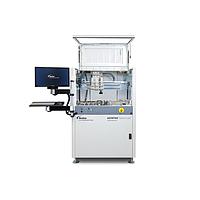
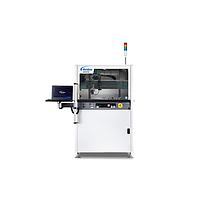
Automatic Spray Cabinet
In modern electronics production, applying protective coatings consistently is just as important as the coating material itself. Manufacturers looking for repeatable coverage, stable throughput, and cleaner process control often turn to Automatic Spray Cabinet systems to support selective and automated coating operations on PCB assemblies and other sensitive components.
This category is relevant for production environments where manual spraying can introduce variation, overspray, or bottlenecks. Automated coating equipment helps improve process stability, supports traceable manufacturing, and makes it easier to handle changing product mixes without sacrificing application accuracy.
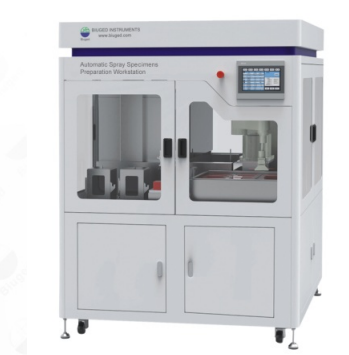
Where automatic spray cabinet systems fit in production
Automatic spray cabinet equipment is commonly used in electronics manufacturing lines that require controlled application of conformal coating or similar protective fluids. These systems are designed to move boards or workpieces through a defined process area, where spray or jet application can be managed with better precision than manual methods.
In practical terms, this matters when a process needs uniform film build, selective coverage around keep-out areas, and repeatable motion. Automated platforms with servo-driven movement, programmable travel paths, and application control can reduce operator dependency and help standardize coating quality across shifts and batches.
Typical advantages of automated coating platforms
A key reason buyers evaluate this category is the combination of repeatability, process flexibility, and production efficiency. Instead of relying on hand movement and operator technique, automatic systems use defined motion profiles and software-controlled dispensing to support stable results over time.
These systems are also well suited to inline manufacturing. Conveyor-based handling, adjustable width settings, and compatibility with different fluid delivery methods make them easier to integrate into broader assembly processes. In facilities where environmental control matters, supporting equipment such as compressed air treatment equipment can also help maintain application consistency and protect pneumatic components.
Examples from the Nordson range
Among the representative solutions in this category, Nordson is a notable manufacturer for automated conformal coating systems. The Nordson Select Coat SL-940 and Nordson Select Coat SL-1040 illustrate the type of equipment buyers often consider when they need controlled, programmable coating in electronics assembly.
These systems show the value of closed-loop motion control, inline conveyor handling, and software-based process management. They are built for selective application using different fluid delivery approaches, which is important when production needs vary between non-atomized film coating, atomized spray, or more precise jet-based methods.
What to evaluate when selecting an automatic spray cabinet
Choosing the right system usually starts with the workpiece and the production target. Travel range, usable clearance, board size accommodation, and payload limits affect whether a machine can support your assemblies reliably. If your product mix includes different PCB dimensions or pallets, adjustable conveyor width and tooling flexibility become especially important.
Another major factor is the application method. Some processes prioritize broad coverage, while others require selective coating in tighter areas to protect connectors, test points, or no-coat zones. Buyers should also review software usability, recipe management, and maintenance access, since these influence daily operation as much as the hardware itself.
Utilities and factory readiness should not be overlooked. Air supply, ventilation, power requirements, and installation footprint all affect implementation planning. In some production environments, thermal management around surrounding equipment may also matter, which is why related support systems such as an industrial water cooler or chiller can become part of the wider process infrastructure.
Why motion control and process stability matter
For automated coating, motion performance is not just a mechanical detail. Axis speed, acceleration behavior, resolution, and positional repeatability directly affect how accurately fluid is placed on the target area. Better motion control supports more predictable edge definition, more stable coating thickness, and less unnecessary material usage.
The representative Nordson systems in this category demonstrate this industrial logic well. Their servo-based architecture and controlled X-Y-Z motion are aligned with the needs of electronics manufacturers that require consistent deposition on complex assemblies. When throughput and quality both matter, process stability often becomes the deciding factor rather than headline speed alone.
Integration with the wider manufacturing workflow
An automatic spray cabinet should be evaluated as part of a complete production cell, not as a standalone machine in isolation. Upstream board handling, downstream curing or shrinking steps, operator access, ventilation, and maintenance routines all influence the total effectiveness of the investment. In some workflows, related finishing equipment such as a heat shrinking machine may appear elsewhere in the line, depending on the product and packaging process.
For electronics manufacturers in particular, the best results usually come from matching the coating platform to actual line conditions: board mix, takt time, coating chemistry, and changeover frequency. A system that is easy to program and stable under daily production pressure is generally more valuable than one that looks capable on paper but is difficult to integrate.
Who this category is suitable for
This category is especially relevant for EMS providers, PCB assemblers, and manufacturers of industrial, automotive, telecom, and control electronics that need reliable protective coating processes. It is also a practical option for facilities moving from manual application toward more controlled and scalable automation.
Whether the priority is better coating consistency, reduced rework, or easier line integration, automatic systems can provide a more structured path to quality control. For buyers comparing available options, it makes sense to focus on application method, motion capability, factory utility requirements, and long-term maintainability rather than looking at one specification in isolation.
Conclusion
Automatic spray cabinet systems play an important role in coating processes where repeatability, selective coverage, and production control are essential. For industrial buyers, the right choice depends on how well the equipment fits the real process: product dimensions, coating method, line layout, and operational demands.
If you are reviewing this category, use it as a starting point to compare automation level, motion performance, and integration requirements. A well-matched system can help create a more stable coating process, support higher-quality output, and make production planning easier as demand changes over time.
Get exclusive volume discounts, bulk pricing updates, and new product alerts delivered directly to your inbox.
By subscribing, you agree to our Terms of Service and Privacy Policy.
Direct access to our certified experts