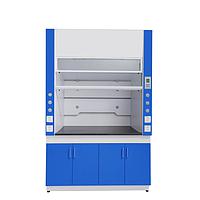
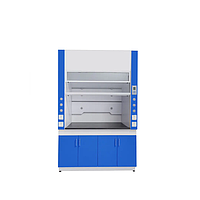
Fume hood
Controlling hazardous vapors at the point of use is a basic requirement in many chemical, pharmaceutical, educational, and industrial laboratories. A fume hood helps protect personnel by capturing and removing fumes generated during handling, transfer, heating, or reaction processes, while also supporting a cleaner and more controlled work area.
On this page, you can explore bench-top, ducted, and filtering configurations for different laboratory layouts and chemical workflows. The range includes compact units for light-duty tasks as well as larger ducted systems designed for routine chemical handling, with models from manufacturers such as JEIOtech and DaiHan.

Why fume hoods matter in daily laboratory operation
In practical use, laboratory safety depends not only on PPE and procedures but also on reliable engineering controls. A hood creates a contained working zone where airflow helps prevent vapors from spreading into the room, reducing exposure during common tasks such as reagent preparation, solvent handling, sample digestion, and acid-related work.
The right enclosure also improves process consistency. When airflow, sash position, and work practices are properly managed, users gain better visibility, a more organized work area, and greater confidence when working with volatile or corrosive substances.
Main fume hood configurations in this category
This category covers more than one enclosure style, which is important because selection depends heavily on the application. Ducted fume hoods are commonly used where fumes must be exhausted from the room through a connected duct system, while filtering fume hoods are typically chosen for applications that benefit from localized filtration and flexible installation.
For example, the JEIOTECH PMH-720 Bench Top Fume Hood is a compact bench-top unit suitable for limited spaces and smaller-scale tasks. In contrast, the DaiHan FHD series includes larger ducted multiuse models with different working widths and airflow concepts, giving laboratories more flexibility when matching hood size to process needs.
Where corrosive chemicals are involved, material compatibility becomes especially important. The DaiHan HD-2100 PP and HD-C2100 PP models illustrate this need by using PP-based construction intended for acids and corrosive environments rather than general-purpose laboratory duty.
How to choose the right size and airflow concept
One of the first decisions is working area. A hood that is too small can restrict operator movement and reduce safe placement distance from the sash opening, while an oversized hood may consume more installation space and utility capacity than necessary. In this category, available work areas range from compact bench-top dimensions to larger full-size ducted units such as the DaiHan FHD-12, FHD-15, FHD-18, and FHD-21 families.
Airflow design is another selection factor. Some models are described as air curtain types, while others use a by-pass concept. In general terms, these designs aim to maintain stable containment under changing sash conditions, but the best choice depends on facility design, operating habits, and the type of procedures performed inside the hood.
If your workflow also includes flame-based heating or gas-related lab tasks, it may be useful to review related equipment such as burners and torches so the overall workstation is planned with safety and compatibility in mind.
Material considerations for chemical resistance and durability
Construction materials have a direct effect on long-term performance. General laboratory hoods may use combinations of polyethylene, polycarbonate, aluminum framing, phenolic work surfaces, powder-coated steel cabinets, or tempered safety glass sash assemblies, depending on the intended operating environment.
For laboratories handling stronger acids or corrosive media, material selection becomes more critical than appearance or cabinet style. PP-based models such as the DaiHan HD-2100 PP and HD-C2100 PP are positioned for corrosive applications, whereas other multiuse units in the category use double-wall structures and phenolic worktops that are better aligned with broader routine chemical work.
When evaluating a hood, it is worth checking not only the enclosure body but also the sash material, work surface, frame, and any built-in utility fittings. These details affect cleanability, chemical compatibility, and service life under repeated exposure.
Representative products and where they fit
Several products in this category help illustrate the available range. The JEIOTECH PMH-720 is a light, compact bench-top hood with adjustable face velocity in a small footprint, which can be useful for localized handling tasks, educational labs, or installations where space is limited.
The DaiHan FHD-12C, FHD-15C, FHD-18C, and FHD-21C represent larger ducted multiuse fume hoods with air curtain airflow, while the DaiHan FHD-12, FHD-15, FHD-18, and FHD-21 offer by-pass airflow versions across similar working sizes. This allows buyers to compare layout, airflow preference, and process scale without moving outside the same product family.
For filtration-based use cases, the DaiHan FHF-09 Filtering Utility-Fume Hood provides a different approach with multi-filter capability and a compact internal working chamber. That can be relevant where facilities need a smaller enclosure for utility work and where the process is suitable for a filtering design rather than a conventional ducted exhaust system.
Safe use and routine maintenance
Even a well-designed hood depends on correct operation. Before use, operators should confirm that airflow is active, the sash moves smoothly, and the working area is free from unnecessary clutter. If the system includes filters, those filters should be checked regularly and replaced according to application demands and manufacturer guidance.
During operation, materials should remain inside the designated work zone, and the sash should stay at the recommended working height whenever possible. After the procedure ends, it is good practice to allow the hood to continue running briefly so residual fumes can be cleared before shutdown and cleaning.
Routine maintenance also includes surface cleaning with suitable agents, checking utility fittings, and monitoring any signs of reduced airflow performance. For a complete lab safety setup, many users also review supporting items such as laboratory apparels to strengthen protection beyond the enclosure itself.
Choosing by application, installation, and facility constraints
Selection should start with the chemistry and the room environment rather than the product name alone. Consider what substances will be used, whether the process generates corrosive vapors, how much bench space is available, whether a duct line already exists, and what electrical or utility connections are required at the workstation.
It is also helpful to think in terms of workflow. A compact bench-top hood may be enough for occasional sample preparation, while routine wet chemistry or larger apparatus setups often require a full-size ducted enclosure with more internal width and integrated service fittings. When moving heavy bottles, containers, or support equipment around the lab, adjacent categories such as carts and trolleys can also be relevant to overall workspace efficiency.
For organizations standardizing around a preferred supplier, browsing the broader DaiHan lineup may also help align hood selection with other laboratory equipment already in use.
Find a fume hood that matches your laboratory process
A suitable hood is not defined by size alone; it should fit the chemistry, installation conditions, and day-to-day working method of the lab. From compact bench-top units to larger ducted and corrosion-oriented configurations, this category is intended to support different containment needs without forcing a one-size-fits-all choice.
If you are comparing models, focus on airflow approach, usable workspace, material compatibility, and maintenance requirements. That makes it easier to narrow the range and select a laboratory fume hood that supports both safety and practical operation over the long term.
Get exclusive volume discounts, bulk pricing updates, and new product alerts delivered directly to your inbox.
By subscribing, you agree to our Terms of Service and Privacy Policy.
Direct access to our certified experts