Specimen Container
Reliable sample handling starts with choosing the right container for storage, transport, and routine laboratory workflows. In clinical, research, and general lab environments, a well-matched specimen container helps reduce mix-ups, supports cleaner organization, and makes day-to-day handling more consistent across teams.
This category brings together practical container options used where volume, shape, compartment layout, and material compatibility matter. Whether the priority is separating contents, improving bench organization, or preparing samples for short-term handling, the selection here is intended to support structured lab processes with straightforward, reusable formats.
Designed for organized laboratory handling
In many workflows, containers are more than simple storage items. They help define how samples are grouped, protected, and moved between preparation, observation, and temporary holding stages. That is especially important when labs need containers in multiple capacities without changing the overall handling approach.
Within this range, users can find rectangular, square, and sectional formats that suit different bench layouts and storage preferences. If your broader setup also involves related consumables or handling accessories, it can be useful to review adjacent labware such as bags for lab storage and transport where appropriate for supporting sample organization.
Container styles available in this category
The assortment reflects common lab and utility storage needs rather than a single fixed format. Some products are built as standard PP rectangular containers, while others use sectional designs that can help keep materials separated inside one unit. This can be useful when a process requires dividing contents by batch, portion, or work step.
Examples in this category include compact options such as the LOCK&LOCK L3.HPL805 Container pp ractangular type 180ml and LOCK&LOCK L3.HPL806 Container pp ractangular type 350ml, as well as mid-size formats like the LOCK&LOCK L3.HPL811 Container pp ractangular type 600ml and LOCK&LOCK L3.HPL817 Container pp ractangular type 1000ml. For users who need divided storage, models such as the LOCK&LOCK L3.HPL815C Container sectional 550ml and LOCK&LOCK L3.HPL817C Container sectional 1000ml illustrate how compartment-style layouts can fit into routine handling tasks.
Choosing the right size and shape
A practical selection usually starts with capacity and footprint. Smaller containers are easier to allocate to individual samples or limited quantities, while larger formats can be more suitable for bulk holding, staging, or grouped materials. Shape also affects how efficiently containers fit on shelves, trays, refrigerators, or workbenches.
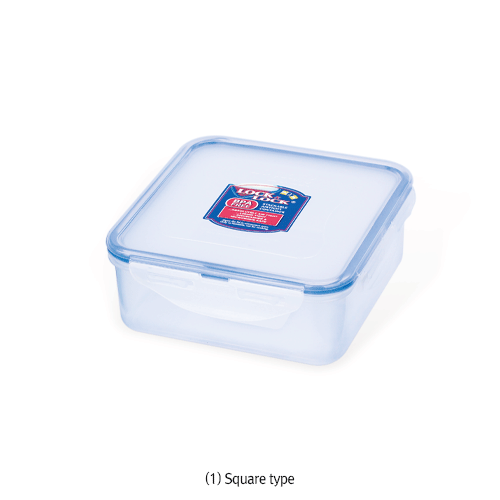
For example, a square style such as the LOCK&LOCK L3.HPL822D Container pp square type 1200ml may suit certain storage arrangements, while larger rectangular units like the LOCK&LOCK L3.HPL834 Container pp ractangular type 3900ml offer more volume in a familiar layout. Where dimensions are critical to an existing rack or storage area, products such as the LOCK&LOCK L3.HPL826M Container pp ractangular type 248×180×h76㎜ may be relevant because physical size matters just as much as stated volume.
Labs that work with several sample formats often benefit from standardizing around a small set of capacities. This can simplify labeling, stacking, temporary holding, and replacement planning over time.
Sectional containers and standard containers
Not every task calls for the same internal layout. A standard container is generally preferred when a sample or material should remain in one uninterrupted space. A sectional container, by contrast, may be useful when contents need to remain separated while still being handled together as one unit.
This distinction can influence workflow efficiency. Models such as the LOCK&LOCK L3.HPL834C Container sectional 3900ml provide a divided format for organized separation, while non-sectional alternatives such as the LOCK&LOCK L3.HPL815M Container pp ractangular type 850ml focus on simple volume handling. Choosing between these formats depends less on the container itself and more on how the material is prepared, sorted, and accessed during lab use.
Manufacturer context and product range
A large share of the featured products in this category comes from LOCK&LOCK, with multiple capacities and form factors available for users who want a more consistent container range. That consistency can be helpful when standardizing storage practices across benches, prep rooms, or support areas.
Depending on the broader laboratory setup, buyers may also review other manufacturers represented on the site, including Simport and DaiHan, when comparing product ecosystems across labware needs. The most suitable choice often depends on the application, preferred handling style, and whether the goal is everyday storage, sample separation, or compatibility with existing lab routines.
How specimen containers fit into a broader labware setup
Specimen containers are usually selected as part of a wider handling system rather than in isolation. Labs often pair them with transfer tools, packaging materials, bowls, or specialty dispensing items depending on the process stage. Looking at the wider workflow helps avoid selecting a container that fits the volume requirement but not the real use case.
For related storage or preparation tasks, some users also browse categories such as bowls for open handling steps or bottle top solvent pumps where liquid transfer is part of the overall lab process. These are not direct substitutes, but they can be relevant when building a more complete labware purchasing list.
What to consider before ordering
Before selecting a container, it is worth checking a few practical points: required volume, preferred shape, need for sectional or non-sectional storage, and the available storage space in the lab. For routine operations, consistency across sizes can be just as valuable as any individual product feature.
It is also helpful to think about how the container will be used after filling. Will it be stored, moved between stations, grouped by test batch, or used for temporary separation of materials? Answering those questions makes it easier to narrow the category to the most suitable format instead of choosing by capacity alone.
Find a container format that matches your workflow
This selection is built for laboratories and technical users who need practical container options across small, medium, and larger capacities. From compact rectangular units to larger sectional formats, the category supports organized sample handling with layouts that are easier to align with real bench and storage conditions.
If you are comparing options, start with the intended sample volume, the required internal layout, and the available storage footprint. That approach will usually lead to a more suitable specimen container for your workflow than focusing on size alone.
Get exclusive volume discounts, bulk pricing updates, and new product alerts delivered directly to your inbox.
By subscribing, you agree to our Terms of Service and Privacy Policy.
Direct access to our certified experts