Vials
Accurate sample handling often depends on details that seem small at first glance: the right container volume, a suitable closure, and materials that match the liquid being stored or transferred. In laboratory workflows, vials play that role every day, supporting sample preparation, storage, transport, and analytical procedures where consistency matters.
This category brings together vial-related labware used in routine and specialized work. It also includes supporting closure components such as caps, septa, and seals, which are essential for building a complete sample containment setup rather than treating the vial as a standalone item.
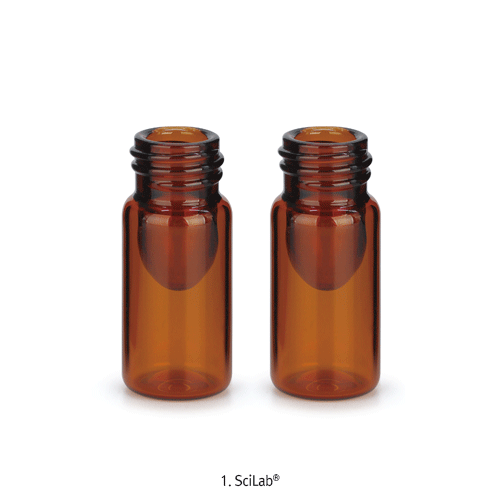
Where vials fit in laboratory work
Vials are commonly used when samples need to be held in small volumes with good control over contamination, evaporation, and handling convenience. Depending on the workflow, they may be used for short-term storage, sample aliquoting, transport between process steps, or preparation before instrumental analysis.
In practice, performance is not determined by the vial body alone. The combination of vial, cap liner, septum, or seal directly affects how securely the sample is contained and how easily it can be accessed. For related sample handling formats, some labs also compare vials with ampoule options when a different sealing approach is needed.
Key product types in this category
This selection reflects the broader vial ecosystem. Alongside vial bodies, users can find closure and sealing components designed to complete the assembly. That is especially useful in labs where replacement parts are ordered separately to match existing containers or established methods.
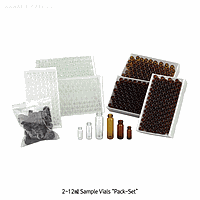
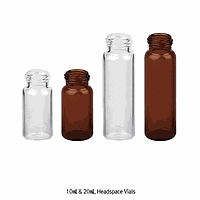
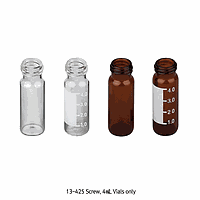
Examples from the range include amber vial formats such as the SciLab SL.Vi1401 Vial, V, 0.6ml, amber, 15*35mm and the SciLab WH.W986316NG Vial v-vial amber w/o cap 2.0ml. The category also includes complementary items such as the SciLab WH.W240586A Septa tef./sil. 20mm, SciLab WH.W240516 Cap phen. 20/400, and SciLab WH.240416 Cap tef. lined 20-400, as well as sealing components like Wheaton WH.224191 Seal solid-top 20mm, natural and Wheaton WH.224197.01 Seal tear-off 30mm, natural.
Choosing the right vial setup
A practical selection process usually starts with the sample type and the intended handling method. Small-volume work may call for compact vial dimensions, while workflows involving repeated access may need a closure that can be opened, pierced, or removed in a controlled way. Amber versions are often preferred when light-sensitive contents need additional protection.
The next step is checking compatibility between the vial finish and the closure system. Cap size, neck format, and septum or liner material should work together as one assembly. For that reason, many buyers source vial bodies and accessories from the same product family or trusted makers such as SciLab or Wheaton when maintaining consistency across routine purchases.
Why caps, septa, and seals matter
Closure components are more than accessories. They influence sealing performance, ease of access, and the suitability of the container for different lab procedures. A septa element can support sampling through a closure, while lined caps help create a more controlled barrier between the sample and the outside environment.
Seal style also affects use at the bench. Solid-top, tear-off, flip-cap, and center tear-out designs each serve different handling preferences and procedural requirements. In regulated or high-throughput environments, the right seal format can help standardize how samples are opened, accessed, and protected during repeatable workflows.
Material and format considerations
When evaluating lab vials, users generally look at volume, color, opening size, and closure style together rather than as separate decisions. Amber vial formats in this category are relevant where sample stability can be influenced by light exposure. Small-volume formats can also help reduce waste when only limited sample quantities are available.
Closures with PTFE-lined or Tef./sil. septa-based designs are often considered where chemical contact and sealing behavior are important selection factors. The exact choice depends on the liquid, the handling routine, and whether the vial is used mainly for storage, transfer, or repeated sample access. Labs that also manage broader consumable workflows may review nearby categories such as lab bags or bottle top solvent pumps alongside vial purchases.
Brand coverage and procurement context
This category highlights products from established labware manufacturers, with examples in the current range notably including SciLab and Wheaton. These brands are relevant for buyers who need common vial components and matching closure parts for day-to-day laboratory operations.
The wider brand context of the category also includes names such as Simport, VITLAB, DaiHan, Kartell, Alain Lab, and Heinz. Availability may vary by item type, but the overall category is structured to support procurement teams, laboratories, and technical buyers looking for reliable sources of small-format sample containers and associated closure hardware.
Typical use cases in the lab
Vials are used across analytical, research, quality control, and educational laboratories. They can support sample collection, aliquot preparation, reagent portioning, and organized temporary storage between process steps. In many workflows, choosing the right vial and seal combination helps reduce handling errors and improves sample traceability.
Because this category includes both containers and supporting components, it can also simplify replacement purchasing. Instead of sourcing caps, septa, and seals separately from unrelated ranges, buyers can review compatible options in one place and build a setup that better fits their existing lab procedures.
Final considerations
Selecting vials is usually less about buying a simple container and more about matching volume, protection, and closure method to the actual laboratory task. A well-chosen vial system can make sample handling cleaner, more repeatable, and easier to manage across routine work.
Whether you are looking for amber vial formats, replacement caps, PTFE- or silicone-based septa, or tear-off and solid-top seals, this category provides a focused starting point for comparing suitable options. Reviewing vial body style together with closure compatibility will usually lead to a better fit for both daily use and long-term purchasing consistency.
Get exclusive volume discounts, bulk pricing updates, and new product alerts delivered directly to your inbox.
By subscribing, you agree to our Terms of Service and Privacy Policy.
Direct access to our certified experts