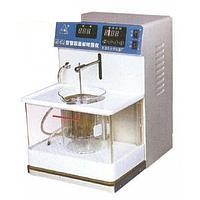
Tablet Disintegration Tester
In tablet and capsule quality control, one of the most important checks is whether the dosage form breaks down within the expected time under controlled test conditions. A Tablet Disintegration Tester helps laboratories verify this behavior consistently, supporting routine QC work, formulation studies, and compliance-focused testing in pharmaceutical environments.
On this page, you can explore equipment designed for disintegration testing of tablets and capsules, including compact single-basket units and multi-basket laboratory systems. These instruments are commonly used where repeatable basket movement, stable temperature control, and clear timing functions are essential for day-to-day testing.

Why disintegration testing matters in pharmaceutical laboratories
Disintegration testing is a fundamental step in evaluating how a solid oral dosage form behaves when exposed to a liquid medium at controlled temperature. The purpose is not the same as a full dissolution study, but rather to confirm that the tablet or capsule breaks apart as required before subsequent drug release can occur.
For many labs, this test is part of a broader workflow alongside medicine hardness testing and visual or physical quality checks. When combined with other routine pharmaceutical equipment, disintegration data helps build a more complete picture of product consistency, batch performance, and process stability.
Typical features of a tablet disintegration tester
Most systems in this category are built around a heated vessel or beaker, a basket assembly, and a lifting mechanism that moves the basket at a controlled frequency and stroke height. In practical use, laboratories usually look for stable operation around standard test conditions, especially controlled temperature near 37°C and repeatable up-and-down basket motion.
Another useful aspect is the level of automation. Some models support simple timed operation and LED-based result display, while others provide more flexible parameter setting for time and temperature. Temperature stability, basket movement accuracy, and ease of operation are often more important in daily QC work than excessive interface complexity.
Examples of instruments available in this category
The range may include straightforward entry-level units such as the CHINA BJ-1 Gauge disintegration, which is positioned as an automatic tester with a single cup setup and LED display. This type of configuration can suit laboratories that need a basic, focused solution for routine checks without unnecessary extras.
For users who need higher throughput, the BIOBASE BK-BJ2 Disintegration Tester offers a two-basket arrangement and a larger beaker capacity, which can be helpful when handling more regular batch testing. Where programmable control and broader setting flexibility are important, the Lonroy ZB-1D Lab Capsules Tablets Intelligent Disintegrator represents another style of instrument used for capsule and tablet evaluation.
If your lab already standardizes on a preferred supplier, it can also be useful to review related product lines from BIOBASE or Lonroy to compare interfaces, basket configurations, and operating ranges within the same brand ecosystem.
How to choose the right model
Selecting the right tester starts with your expected workload and test routine. A lab performing occasional checks on a limited number of samples may prefer a simpler single-basket instrument, while production QC or contract testing environments often benefit from a multi-basket configuration to improve efficiency.
You should also review the instrument’s timing range, temperature control precision, and basket movement specifications. These factors directly affect repeatability and usability. In addition, consider practical points such as display readability, available power supply, footprint on the bench, and whether the unit is intended for continuous daily use.
For a broader pharmaceutical QC setup, it is often helpful to compare disintegration testing with adjacent methods such as friability testing or drug dissolution testing. These categories address different performance questions and are complementary rather than interchangeable.
Where these testers are commonly used
Tablet and capsule disintegration equipment is commonly found in pharmaceutical manufacturing plants, university and research laboratories, formulation development labs, and third-party quality control facilities. It is especially relevant wherever oral solid dosage forms must be evaluated against internal specifications or pharmacopeial procedures.
In development work, the tester helps compare how changes in excipients, compression force, or coating influence breakup behavior. In routine QC, the same type of equipment supports batch release workflows by providing a consistent and traceable test process under defined laboratory conditions.
Key evaluation points before purchase
Before choosing a system, it is worth checking whether the basket quantity, vessel arrangement, and control interface match the way your team actually works. A feature-rich instrument is not always the best fit if your process mainly requires simple, repeatable operation and quick operator training.
It is also advisable to look at maintenance practicality, heater performance, timer usability, and the clarity of test status display. Repeatability, operating convenience, and suitability for your internal SOPs are usually better decision criteria than focusing on specifications alone.
Supporting a complete oral dosage form testing workflow
Disintegration testing is one part of a wider analytical and physical testing process for tablets and capsules. Depending on the product and the lab’s responsibilities, it may be used alongside hardness, friability, melting-related measurement, or dissolution methods to build a fuller understanding of dosage form behavior.
That broader perspective is important when selecting equipment. Rather than viewing this category as a standalone purchase, many buyers assess how well the instrument fits into the lab’s existing pharmaceutical testing workflow, data handling practices, and daily sample volume.
Find the right tablet disintegration tester for your lab
A suitable tablet disintegration tester should match your sample volume, operating routine, and level of control required in the lab. Whether you need a compact unit for routine checks or a more configurable system for regular pharmaceutical QC, the best choice is usually the one that delivers stable temperature control, consistent basket motion, and straightforward operation for your team.
Explore the available models in this category to compare basket configuration, control style, and intended laboratory use. With the right setup, disintegration testing becomes a reliable part of a more efficient and well-structured pharmaceutical quality control workflow.
Get exclusive volume discounts, bulk pricing updates, and new product alerts delivered directly to your inbox.
By subscribing, you agree to our Terms of Service and Privacy Policy.
Direct access to our certified experts