Other mud and soil testing equipment
Not every soil investigation fits neatly into a single instrument type. In practice, laboratories, agronomy teams, environmental consultants, and field technicians often need supporting tools that cover moisture tension, soil structure, density, mixing, contamination screening, and basic nutrient assessment. This is where other mud and soil testing equipment becomes useful: it fills the gaps between core sampling and standard permeability or density workflows.
Rather than focusing on one measurement principle alone, this category brings together equipment used across preparation, observation, and interpretation stages. That makes it relevant for users building a broader soil testing setup or replacing specialized items for routine field and lab work.
Equipment that supports real soil and mud testing workflows
Many testing tasks depend on more than just collecting a sample. Teams may need to evaluate how strongly roots must pull water from soil, prepare mixed samples for analysis, examine aggregate behavior, estimate porosity, or screen for visible contamination. A category like this is valuable because it covers those supporting measurement and preparation tasks that are essential in real operating conditions.
For example, tensiometers are commonly used to monitor soil water tension in crop management and greenhouse work, while tools such as wet sieving apparatus or air pycnometers are better suited to physical soil characterization in research and laboratory environments. If your workflow starts with sample collection, it may also be helpful to review soil samplers for upstream sample acquisition.
Typical applications across agriculture, environment, and laboratory testing
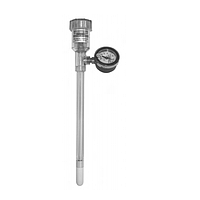
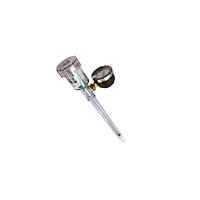
This category can support a wide range of use cases. In agriculture and horticulture, tensiometers help users understand when irrigation should be adjusted by indicating how hard plant roots are working to extract water from the soil. Low-tension models are particularly relevant in coarse soils or greenhouse media, while other versions are used in field or tree crop conditions.
In laboratory and environmental work, equipment may be used for assessing soil structure, density, porosity, mixing consistency, or contamination indicators. Products such as an oil detection pan are suited to on-site observation of oil-related contaminants in soil and groundwater contexts, while a soil stirrer helps improve sample preparation consistency before further analysis.
Representative product types in this category
Several products in this range illustrate how broad the category is. From Spectrum Technologies, examples include the 6419, 6420, and 6423 Irrometer Tensiometers for field or tree crops, along with the 6419LT, 6421LT, and 6422LT Low Tension Irrometer Tensiometers for coarse soils or greenhouse media. The 6425 Tensiometer Service Kit plays a supporting role by providing the tools needed to set up and maintain tensiometers correctly.
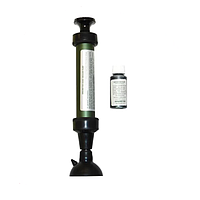
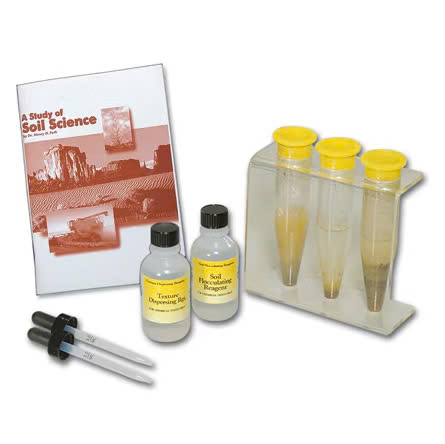
From Eijkelkamp, the range includes specialized laboratory and field support tools such as the 98.23 Soil stirrer, 08.60 Air pycnometer, 08.13 Wet sieving apparatus, and 20.02 Oil detection pan. For more basic chemical screening, the OMEGA ITK-1067 Individual Soil Nutrients Test Kit is another example of equipment that extends beyond purely mechanical or physical measurement tasks.
How to choose the right instrument for your testing objective
The best starting point is to define what parameter or condition you actually need to evaluate. If the goal is irrigation management or root-zone water monitoring, a tensiometer is often the relevant choice. If the objective is to understand physical soil behavior in the lab, tools for porosity, density, aggregate stability, or sample preparation may be more appropriate.
It also helps to consider where the equipment will be used. Field and greenhouse applications typically require straightforward operation and durable handling, while laboratory setups may place more emphasis on repeatability and controlled test conditions. For projects that also need hydraulic behavior analysis, a dedicated soil permeability meter category may be the better fit than this broader miscellaneous range.
Why accessories and preparation tools matter
In soil testing, reliable results depend not only on the main instrument but also on proper setup and sample handling. A good example is the Spectrum Technologies 6425 Tensiometer Service Kit, which includes tools needed for tensiometer setup and upkeep. Without correct preparation and servicing, readings may become less useful for irrigation decisions or trend monitoring.
The same logic applies in laboratory workflows. Mixing devices, wet sieving systems, and density-related instruments support repeatable preparation and interpretation. When these supporting steps are overlooked, the final result may reflect inconsistent handling rather than the actual condition of the soil or mud sample.
Building a more complete testing setup
Users rarely purchase this type of equipment in isolation. A complete workflow may combine sampling tools, specialized measurement devices, and supporting lab instruments depending on the project scope. For example, a site investigation may begin with collection equipment, continue with moisture or contamination checks, and then move into physical characterization in the lab.
If your work extends into sediment or sludge applications, related categories such as sludge and sediment samplers can complement this selection. This broader approach is often more practical than choosing equipment based only on one isolated test method.
What to look for when comparing products
When reviewing options in this category, compare them based on intended sample type, measurement purpose, and operating environment rather than brand name alone. Key questions include whether the instrument is meant for field use or laboratory use, whether it supports disturbed or undisturbed samples, and whether it is designed for physical, chemical, or observational testing.
It is also worth checking whether the product is a main measuring instrument or a supporting accessory. Some items, such as service kits, are essential for operation but serve a different role than a primary test device. Understanding that distinction helps avoid buying a tool that does not match the actual testing step you need to perform.
Choosing with the full workflow in mind
This category is especially useful for buyers who need specialized tools that do not fall into a single narrow equipment family. From soil water tension monitoring to sample preparation, aggregate stability work, porosity assessment, and contamination screening, these products support important parts of the testing process across agriculture, environmental work, and laboratory analysis.
When selecting from other mud and soil testing equipment, it is usually best to start with the measurement goal, then match the instrument to the sample condition and working environment. That approach makes it easier to build a practical, consistent testing workflow instead of treating each instrument as a standalone purchase.
Get exclusive volume discounts, bulk pricing updates, and new product alerts delivered directly to your inbox.
By subscribing, you agree to our Terms of Service and Privacy Policy.
Direct access to our certified experts