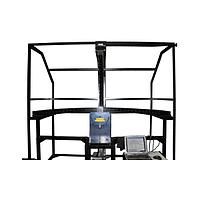
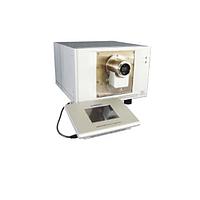
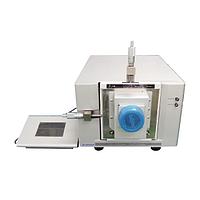
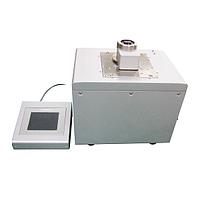
Camera Tester
Accurate evaluation of camera bodies, optical alignment, and light-related performance is essential in manufacturing, assembly, repair, and quality control. On this page, you can explore Camera Tester equipment used for precision measurement in imaging devices and related optical systems, including tools for sensor position verification, lens eccentricity measurement, and flash light distribution analysis.
These systems are typically selected when a production line or technical team needs repeatable measurement data rather than visual inspection alone. Depending on the task, that may mean checking the distance from a lens mount to an image sensor, measuring lens decentering during centering work, or evaluating flash output distribution under controlled conditions.
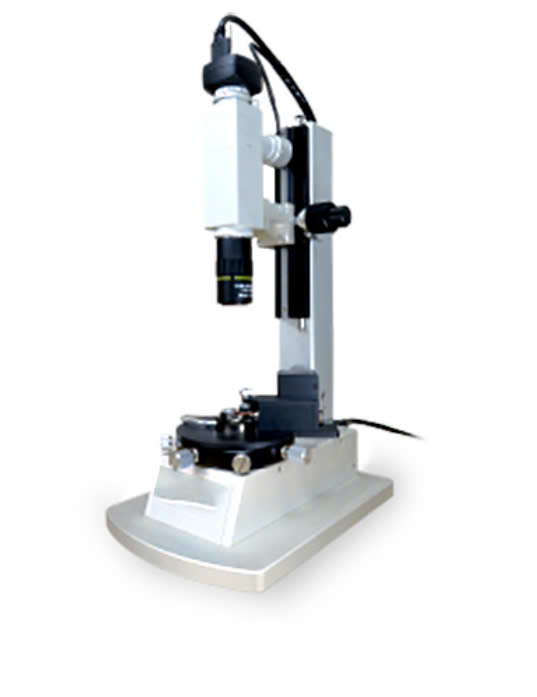
Measurement needs covered in this category
Camera testing is not limited to one inspection point. In practice, technical users may need to verify sensor-to-mount distance, detect eccentricity in optical components, or assess how a flash source performs across multiple measurement points. The instruments in this category support these kinds of tasks with dedicated measurement methods rather than general-purpose visual tools.
For example, photosensitive area distance measuring instruments such as the Kyoritsu Electric RSM-5000, RSM-6000, RSM-7000, and RSM-E1000 are oriented toward checking the positional relationship between the mount and the image sensor surface. In parallel, eccentricity measuring devices such as the CS-A1100, CS-A3000, US-A1, US-A1000, CL-M1, and TR-A1 support optical centering and decentering analysis for lenses and related components.
Representative Kyoritsu Electric solutions
This category is strongly associated with Kyoritsu Electric, a manufacturer represented here with several specialized systems for camera and optical measurement. The portfolio shown on this page spans both compact inspection devices and more application-specific equipment for optical manufacturing environments.
Among the notable examples, the RSM series is intended for distance measurement on digital camera bodies, including APS-C and full-size compatible applications depending on the model. For optical alignment work, the TR-A1 supports both reflection and transmission measurement, while the US-A1 and US-A1000 are aimed at ultra-small lens eccentricity measurement. For cylindrical lens work, the CL-M1 provides a more specific measurement approach suited to that geometry.
Lens eccentricity and centering in camera-related production
In optical systems, eccentricity measurement helps determine how closely the optical axis aligns with the mechanical axis of a lens or assembled component. Even small decentering can affect imaging performance, assembly consistency, or downstream calibration, which is why this type of inspection is relevant in lens processing and camera module production.
Different instruments in this category use reflective or transmissive methods depending on the lens shape and measurement target. The Kyoritsu Electric CS-A1100 and CS-A3000, for example, are transmission-type eccentricity measuring devices suitable for centering accuracy measurement and lens bonding workflows. The TR-A1 extends flexibility by supporting both transmission and reflection measurement, which is useful when the inspection scope includes a broader range of lens forms and focal characteristics.
Users comparing these systems often look at the required lens diameter, focal range, measurement method, and whether the workflow focuses on standalone inspection or active centering work. For applications involving alignment optics and beam-based inspection setups, it may also be useful to review related collimator equipment as part of the wider optical test environment.
Distance measurement for image sensor positioning
Another important task in camera production and servicing is verifying the distance from the lens mount to the image sensor surface. This check supports assembly accuracy, helps identify deviation from a reference value, and can be important in maintaining consistent imaging performance across units.
The RSM series from Kyoritsu Electric addresses this area with models such as the RSM-5000 and RSM-7000 for APS-C size applications, the RSM-6000 for full-size and APS size bodies, and the RSM-E1000 for broader sensor compatibility information as listed on this page. These instruments are intended for precise distance measurement via USB-connected systems and are relevant wherever camera body dimensional accuracy must be quantified rather than estimated.
Flash light distribution testing and light performance evaluation
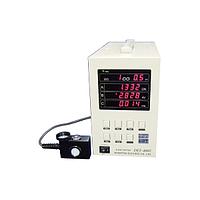
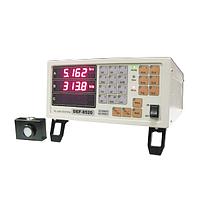
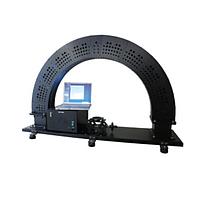
Camera-related testing can also extend beyond the body or lens and into illumination performance. Flash evaluation is relevant for product development, inspection, and comparative analysis of light output behavior. In this category, Kyoritsu Electric DEF-9300 and DEF-9E are examples of flash light distribution testers designed for xenon and, depending on the model, LED flash and fixed light sources.
These systems measure multiple points and are used to assess values such as exposure and related light output characteristics under defined test conditions. If your workflow also involves broader illuminance measurement outside dedicated flash testing, you may also want to compare suitable instruments in the light meter category.
How to choose the right camera tester
Selecting the right system starts with the actual measurement objective. If the requirement is camera body dimensional verification, a sensor distance measuring instrument may be the correct path. If the task is optical centering or lens decentering analysis, a reflective, transmissive, or dual-method eccentricity measuring machine will be more appropriate. For flash evaluation, a dedicated distribution tester is the better fit than a general optical meter.
It is also important to review the practical conditions of use: supported sample size, measurable diameter, focal or curvature range, required resolution, interface requirements, and whether the instrument is used for inspection only or also during adjustment work. In environments where color-related evaluation is also relevant, complementary tools such as color sensors may help complete the inspection setup.
Applications across manufacturing, repair, and quality control
Equipment in this category can be relevant in a variety of technical settings, including optical component manufacturing, camera body assembly, imaging device calibration, repair centers, and incoming or outgoing quality inspection. The common requirement across these environments is a repeatable way to measure physical or optical characteristics that directly affect performance.
Because the available products range from compact eccentricity testers to flash distribution systems and sensor distance measurement instruments, this category supports both component-level inspection and broader camera-related evaluation workflows. The best fit depends on whether your process centers on lenses, camera bodies, or light source performance.
Finding a suitable system for your inspection workflow
When comparing options in this category, it helps to define the sample type first: lens element, cylindrical lens, bonded lens assembly, SLR body, or flash unit. From there, you can narrow the shortlist by measurement method, range, supported geometry, and the level of precision needed for your production or lab process.
Whether you are building a new optical inspection line or refining an existing measurement process, this Camera Tester category provides a focused starting point for evaluating specialized instruments from Kyoritsu Electric. Reviewing the intended measurement target and workflow conditions carefully will make it easier to choose equipment that matches your technical requirements with less trial and error.
Get exclusive volume discounts, bulk pricing updates, and new product alerts delivered directly to your inbox.
By subscribing, you agree to our Terms of Service and Privacy Policy.
Direct access to our certified experts
![Kyoritsu Electric AFD-2000 AV Tester (-13.10~+13.10[Ev] / 0.00~15.10[Av])](/s-cdn/48/4808fae11748e87b76be075611222968d1a65120.jpg)
![Kyoritsu Electric AFD-4000 AV Tester (-13.10~+13.10[Ev] / 0.00~15.10[Av])](/s-cdn/8d/8df9910ca36aba184330336fb101a7ba6b1ae4ce.jpg)