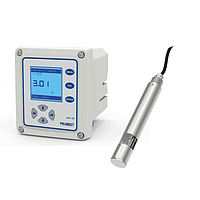
Color Sensors
Accurate color detection plays an important role in automated inspection, sorting, packaging, printing, and process control. In production environments where visual consistency affects product quality, Color Sensors help detect color differences quickly and repeatably without relying on manual inspection alone.
This category is intended for engineers, machine builders, and purchasing teams looking for practical solutions for color recognition in industrial settings. Whether the goal is to verify labels, identify marks, distinguish product variants, or stabilize a quality control process, selecting the right sensor starts with understanding the application conditions and the required detection logic.
Where color sensors are used in industrial applications
Color sensing is commonly applied when a machine needs to recognize a specific surface color, confirm the presence of a printed mark, or separate products by shade or contrast. These tasks appear in packaging lines, electronics assembly, food and beverage production, printing systems, and component handling processes where reliable pass/fail decisions are needed at speed.
Compared with basic photoelectric detection, a color sensor is used when simple contrast is not enough. It can help distinguish between similar objects, verify whether a cap, label, wire, or part matches the required variant, and support automated decisions that would otherwise depend on human visual checks.
What to consider when selecting a color sensor
The first consideration is the target itself: surface finish, material, size of the detection area, and the number of colors that must be identified. Glossy, reflective, textured, or uneven surfaces can influence measurement stability, so the sensing method should be matched to the real production condition rather than only to a lab sample.
Ambient light, installation distance, cycle time, and mounting space also matter. In many applications, repeatability is more important than broad measurement capability. Buyers should look at how the sensor will be taught, how outputs are integrated into the control system, and whether the setup can remain stable over long production runs.
For projects that involve broader optical inspection, related tools such as light meter instruments may also be useful when checking illumination consistency around the sensing point.
Color sensing in the wider optical inspection workflow
In practice, color detection is rarely isolated from the rest of the machine. Performance can be affected by lighting quality, viewing angle, background material, and the mechanical stability of the product position. That is why color sensing is often part of a wider optical inspection strategy rather than a standalone component choice.
In more demanding systems, users may combine color detection with alignment or imaging tools depending on the task. For example, applications that require image-based verification may be better supported by camera tester solutions, while setups that depend on optical alignment may involve collimator equipment as part of the broader test environment.
Key benefits for automation and quality control
A well-matched color sensor can improve consistency, reduce operator dependency, and increase inspection speed. This is especially valuable in lines where products change frequently or where small visual differences indicate the correct version, batch, or assembly state.
Another practical benefit is easier integration into automated equipment. Once taught correctly, the sensor can provide fast output signals for PLC-based control and help reduce errors caused by fatigue, subjective judgment, or unstable manual inspection routines. In many cases, this supports lower rework rates and more stable production quality over time.
Working with Probest solutions
For buyers comparing available brands in this category, Probest is one of the relevant manufacturers to consider. When evaluating a supplier or brand, it is useful to look beyond the basic sensor function and consider application fit, integration requirements, and long-term maintainability within the actual machine or production line.
This is particularly important in B2B purchasing, where the best choice depends on the process requirement, target material, and control architecture. A sensor that performs well in one application may not be ideal in another if lighting conditions, mounting distance, or object variation are significantly different.
How to choose the right setup for your process
Before selecting from this category, it helps to define the job clearly: which colors must be recognized, how much variation is acceptable, what the background looks like, and whether the sensor must identify presence, match, or difference. These details shape the required sensing performance much more than the product name alone.
It is also good practice to review the surrounding environment. Dust, vibration, changing ambient light, and product movement can all affect reliability. In some applications involving ultraviolet response or UV-related process checks, complementary tools such as UV meter devices may be relevant in the wider inspection workflow.
FAQ
Are color sensors only used for color matching?
No. They are also used for presence verification, mark detection, part differentiation, label checking, and product sorting where color or shade is a useful control point.
Can a color sensor replace manual visual inspection?
In many repetitive industrial tasks, it can reduce dependence on manual checks and improve consistency. However, the result still depends on proper setup, stable lighting, and correct application matching.
What is the difference between a color sensor and a standard photoelectric sensor?
A standard photoelectric sensor typically detects presence or contrast, while a color recognition device is used when the machine must distinguish specific colors or subtle visual differences.
Supporting better purchasing decisions
Choosing from a range of color sensors is easier when the decision is tied to the real inspection task, not just to general specifications. The most effective selection usually comes from balancing detection reliability, environmental conditions, installation constraints, and control integration.
This category is designed to support that process by focusing on practical industrial use. If your application involves automated quality checks, product differentiation, or optical process control, the right sensor selection can help create a more stable and efficient production workflow.
Get exclusive volume discounts, bulk pricing updates, and new product alerts delivered directly to your inbox.
By subscribing, you agree to our Terms of Service and Privacy Policy.
Direct access to our certified experts