Material adhesion tester
Reliable bonding performance is critical in packaging, converting, electronics, printing, coatings, and many other production environments. When tapes, labels, laminates, soldered parts, or bonded surfaces need to be verified under controlled conditions, a Material adhesion tester helps turn subjective handling checks into repeatable test data that supports quality control, product development, and supplier evaluation.
This category brings together instruments used to assess peel force, tack, holding power, release behavior, and related adhesion characteristics across different materials and test methods. It is especially useful for laboratories and manufacturing teams that need consistent comparison between samples, batches, or process settings.
Where adhesion testing is used
Adhesion testing appears in a wide range of industrial workflows because bonded materials rarely fail in the same way. A pressure-sensitive tape may need strong initial tack and stable holding power, while a laminated structure may require controlled peel behavior, and an electronic assembly may need dependable solderability on a small component surface.
That is why this category covers more than one testing principle. Some instruments focus on peel testing, others on tack or holding performance, and some support specialized methods such as wetting balance analysis for solderability. In practice, the right setup depends on the substrate, the adhesive system, the application standard, and the type of failure you want to understand.
Typical test methods covered in this category
One of the most common approaches is the peel test, used to measure the force needed to separate bonded layers at a defined angle and speed. Equipment such as the Aikoh FTN4-15A Peeling Tester illustrates this type of application, where controlled motion and force measurement are important for comparing adhesive performance between samples.
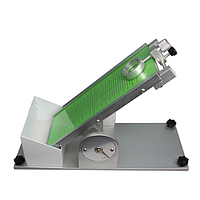
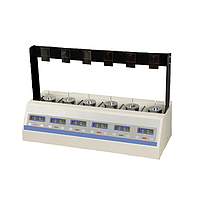
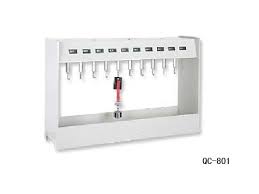
For pressure-sensitive tapes and labels, initial adhesion and holding power are often evaluated as separate properties. The Cometech QC-805, QC-805A, and QC-805P models are examples of initial adhesion testers, while the Cometech QC-801D Tape Holding Power Tester is designed for long-duration retention behavior. These methods help distinguish between fast grab, sustained load resistance, and overall application suitability.
There are also systems that support broader adhesion and release evaluation. The Cometech QC-527M2F Adhesion/Release Tester is relevant where release liners, bonded layers, or coating interfaces must be examined under controlled mechanical conditions, giving users a more structured way to compare materials than simple manual checks.
Specialized instruments for different materials
Not every adhesion-related requirement belongs to tapes alone. In electronics manufacturing, solderability is often assessed through wetting behavior rather than a conventional peel force method. The Metronelec MENISCO ST88 NEO Wetting Balance – Solderability Tester is an example of a specialized system used to evaluate how components interact with molten solder under defined parameters.
In print and binding applications, pull resistance may be the more relevant performance indicator. The Mecmesin 802-001 Page Pull Tester is an example of a dedicated fixture-based solution for a specific material format. This reflects an important point for buyers: adhesion testing is not a single universal test, but a family of methods tailored to real product behavior.
For coated metal sheets or formed materials, deformation-related adhesion performance can also matter. The JFM DEB-008 ERICHEN CUOOING TESTER fits that broader quality-control context where surface integrity and coating behavior may need to be assessed alongside mechanical deformation.
How to choose the right material adhesion tester
A practical selection process starts with the test objective. If you need to compare how strongly two layers separate, a peel tester is usually the most direct choice. If the concern is whether a tape will stay attached under load over time, a holding power tester is more appropriate. If quick surface grab matters, an initial adhesion tester may be the better fit.
The next step is to match the instrument to your sample type and test range. Consider specimen geometry, expected force level, travel or stroke, speed control, fixture compatibility, and whether the method requires angle control or timed exposure. For example, a motorized roller such as the Cometech QC-803H, QC-803J, or QC-803K may not be the primary measuring device, but it can play an important role in sample preparation consistency before the adhesion test itself.
Data handling is another factor, especially in B2B quality systems. Testers with software support, programmable conditions, and digital output can make it easier to standardize routines, create reports, and compare results across operators or production lots.
Why controlled test conditions matter
Adhesion results can vary significantly when pressure, dwell time, speed, temperature, specimen preparation, or alignment are not controlled. A structured testing setup improves repeatability by reducing operator-to-operator variation and by applying the same method each time. This is especially important when the data will be used for incoming inspection, failure analysis, or product qualification.
Controlled testing also helps separate material issues from process issues. If a tape, laminate, or solderable surface performs differently than expected, a proper tester can help determine whether the change comes from the adhesive, the substrate, storage conditions, surface treatment, or production parameters.
In some applications, adhesion is only one part of a wider material evaluation workflow. Related laboratory work may also involve barrier testing such as water vapor transmission rate systems or oxygen permeation systems, particularly in packaging and film development where bond performance and package protection must both be understood.
Leading brands and solution scope
This category includes equipment from recognized manufacturers such as Cometech, Mecmesin, Aikoh, Metronelec, and JFM. Each brand is represented through product types that align with different testing needs, from tape adhesion workflows and release testing to peel measurement and solderability evaluation.
Rather than focusing on brand names alone, it is better to compare the intended test method, force range, motion control, sample format, and reporting needs. That approach usually leads to a more suitable instrument choice for production QA, R&D, or laboratory verification.
What buyers often consider before ordering
For many technical teams, the main purchasing questions are straightforward: what material is being tested, what standard or internal method is being followed, how much force is expected, and how often the test will be run. These points affect whether a compact dedicated tester is sufficient or whether a more configurable system is needed.
It is also worth checking whether the workflow requires accessories, fixtures, rollers, or software. In adhesion testing, the ecosystem around the main instrument often has a direct effect on repeatability, operator efficiency, and how well results can be documented and compared over time.
Final considerations
Choosing a material adhesion tester is ultimately about matching the instrument to the actual failure mode or performance characteristic you need to measure. Peel, tack, holding power, release behavior, and solderability each require different test logic, and selecting the right method first usually leads to better equipment decisions.
With solutions from Cometech, Mecmesin, Aikoh, Metronelec, and JFM, this category supports a broad range of industrial adhesion and bonding evaluations. If you are comparing options, start with the specimen type, the required test method, and the level of control and data reporting your process demands.
Get exclusive volume discounts, bulk pricing updates, and new product alerts delivered directly to your inbox.
By subscribing, you agree to our Terms of Service and Privacy Policy.
Direct access to our certified experts