Gloss meter
Surface appearance is often one of the first quality indicators noticed in manufacturing, coating inspection, and finishing control. When a product needs a consistent visual finish across batches, a Gloss meter becomes an essential tool for checking how much light a surface reflects under defined conditions.
On this page, you can explore gloss meters used for paint, coatings, plastics, metal surfaces, ceramics, automotive parts, and other finished materials. The category includes practical options for routine inspection, incoming quality control, and more advanced measurement tasks where repeatability, angle selection, and data handling matter.
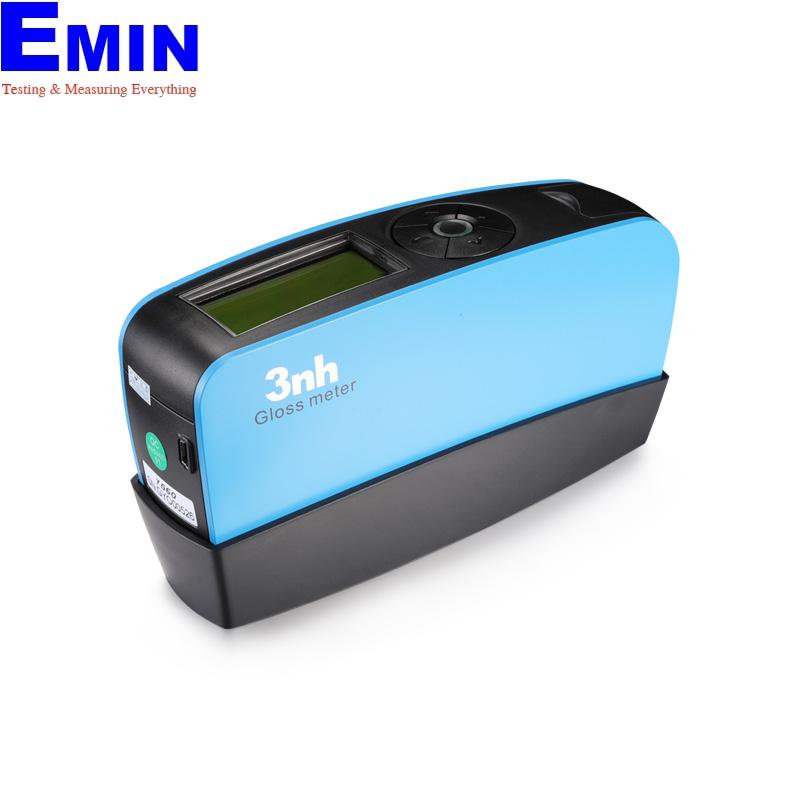
Why gloss measurement matters in industrial inspection
Gloss is a controlled optical property, not just a visual impression. A surface may look smooth or shiny to the eye, but production environments need a measurable value that can be compared from one sample to another. That is why gloss is commonly expressed in Gloss Units (GU), allowing operators and quality teams to evaluate whether a finish stays within specification.
Gloss control is widely relevant in coating lines, plating, plastics processing, printing, furniture finishing, and component manufacturing. In many cases, the goal is not the highest gloss, but a stable and repeatable finish that matches the product requirement. For broader dimensional and surface inspection workflows, users may also combine gloss evaluation with tools such as thickness meters when coating consistency is part of the same quality process.
How a gloss meter works
A gloss meter directs light onto a test surface at a specified angle and measures the intensity of the reflected light. The instrument then converts that reflected signal into a numerical gloss reading. This method helps reduce subjective visual judgment and supports consistent inspection between operators, production lines, and facilities.
In practical use, the operator places the measuring aperture on the sample, performs a reading, and compares the value with the required finish standard. Many modern instruments also support stored readings, statistics, calibration references, and data transfer, which is useful for traceability in industrial QA documentation.
Understanding measurement angles: 20°, 60°, and 85°
One of the most important selection points is the measurement geometry. Different gloss levels are better evaluated at different angles. In general, 60° is the most common all-purpose geometry for medium-gloss surfaces, while 20° is preferred for high-gloss finishes and 85° is often used for low-gloss or matte materials.
Single-angle instruments are suitable when the application is stable and the finish range is predictable. For example, products such as the ELCOMETER 480 Glossmeter (60°) or PCE GM 60Plus Gloss Meter are relevant when a standard 60° method fits the inspection routine. Where a wider range of finishes must be checked, multi-angle models such as the ELCOMETER 480 Glossmeter (20°; 60°) or PCE IGM 100 Gloss Meter can offer more flexibility for different materials and gloss classes.
Typical product types in this category
This category includes both compact handheld units for daily shop-floor use and more feature-rich instruments for deeper analysis. Models such as PCE GM 75, PCE GM 80, and their ISO calibration certificate variants are designed for straightforward gloss checks with portable operation, common measuring ranges, and onboard storage suited to routine inspection work.
For users who need broader capability, instruments from PCE and TQCSheen provide options with expanded range, multiple geometries, or software-based data handling. The TQCSheen GL0030 Glossmeter, for example, is positioned for users who need 20° / 60° / 85° measurement coverage and batch statistics. This makes it suitable for applications where coatings or finishes vary significantly between products or process steps.
How to choose the right gloss meter
The right choice depends on the surface type, required standard, and the way measurement data will be used. If most of your parts fall into a normal industrial gloss range, a 60° instrument is often a practical starting point. If you work with mirror-like coatings, polished surfaces, or very dull finishes, a multi-angle device may be more appropriate.
It is also worth checking the required measuring range, resolution, repeatability, and whether your workflow needs calibration certificates, data storage, USB connectivity, or statistical functions. For example, the PCE GM 80-ICA and PCE GM 75-ICA variants are relevant when documented calibration is important. If your inspection process also includes dimensional checks on parts before or after finishing, categories such as callipers can complement the broader quality-control setup.
Applications across coatings, plastics, metals, and finished parts
Gloss meters are widely used wherever surface finish influences product appearance, brand consistency, or acceptance criteria. Common examples include painted panels, powder-coated components, molded plastics, ceramic surfaces, printed materials, and decorative metal parts. In these environments, gloss measurement helps confirm that the process delivers the expected visual result.
They are also useful for comparing production samples against reference standards, checking changes after polishing or treatment, and identifying process variation between batches. In some inspection workflows, gloss is just one part of a broader surface evaluation strategy that may also include coating thickness, roughness-related assessment, or mechanical checking with instruments such as dial indicators depending on the application.
Examples of instruments featured in this range
Several representative products help illustrate the scope of this category. The ELCOMETER T48024798-HC Standard model of gloss meter and the ELCOMETER 480 series are suitable references for users looking for established portable gloss measurement solutions. The available 60° and dual-angle 20° / 60° versions support different levels of inspection flexibility.
From PCE, the category includes compact devices such as PCE GM 55, PCE GM 60Plus, PCE GM 75, and PCE GM 80, as well as the PCE IGM 100 for users who need 20° / 60° / 85° measurement capability. TQCSheen models such as GL0010 and GL0030 extend the selection for users who want multi-angle operation, data logging, and more advanced evaluation features. Rather than focusing on one model alone, it is usually better to match the instrument to the finish range, reporting requirement, and frequency of use.
Practical considerations before purchasing
Before selecting a device, it helps to define what materials will be measured most often, whether readings need to be documented for audits or customer reports, and whether a single-angle or multi-angle method is expected by your internal standard. A gloss meter used for quick pass/fail checks may be very different from one used in laboratory comparison or supplier quality verification.
It is also important to consider operating environment, portability, battery type, calibration routine, and measurement memory. If your team needs to compare many samples quickly, features such as stored readings, timestamps, and software export can improve efficiency. Choosing a model with capabilities aligned to your actual inspection process will usually provide more value than simply choosing the broadest specification set.
Final thoughts
A gloss meter is a practical instrument for turning visual surface quality into reliable, repeatable data. Whether the task involves routine checks on painted parts or more detailed comparison across different finish levels, the right device helps make inspection more objective and more consistent.
Explore the products in this category to compare angle configurations, measuring ranges, and data features. A careful match between material type, gloss level, and reporting needs will help you select a solution that fits your quality-control workflow with less guesswork.
Get exclusive volume discounts, bulk pricing updates, and new product alerts delivered directly to your inbox.
By subscribing, you agree to our Terms of Service and Privacy Policy.
Direct access to our certified experts