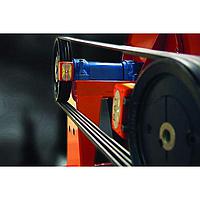
Laser pulley/Shaft alignment system
Misalignment in belt drives, rotating shafts, and parallel rolls can lead to vibration, premature bearing wear, higher energy consumption, and repeated maintenance work. In many production environments, a laser pulley/Shaft alignment system helps maintenance teams correct machine geometry faster and with more repeatable results than visual checks or basic straightedge methods.
This category brings together laser-based tools used for pulley alignment, shaft alignment, and related roll alignment tasks. The range is suitable for maintenance, reliability, and service teams that need practical alignment solutions for motors, pumps, fans, compressors, conveyors, and process equipment where precision directly affects uptime.
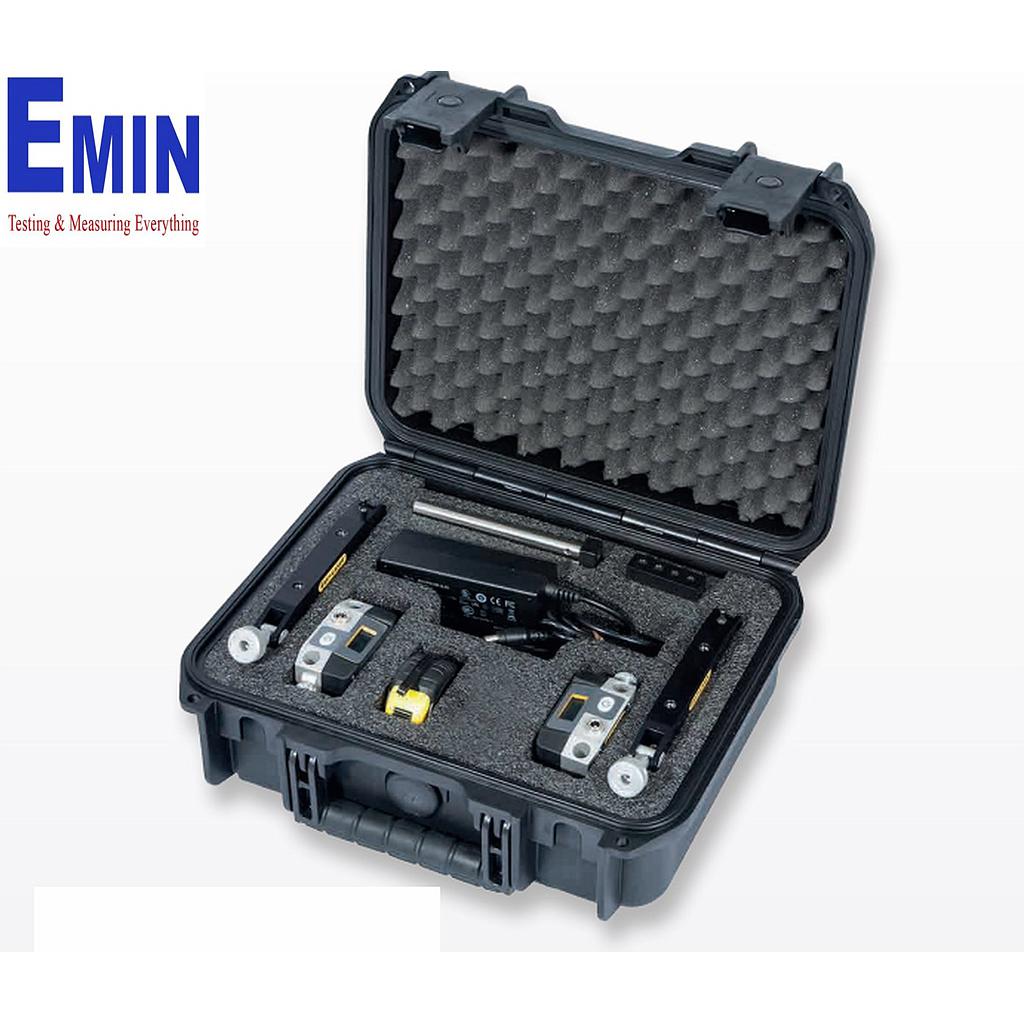
Where laser alignment systems are used
Laser alignment instruments are commonly selected when mechanical transmission components must run in the correct plane and angular position. Typical use cases include belt-driven machinery, coupled rotating equipment, and roll systems in manufacturing lines where even small alignment errors can create uneven loads, noise, and unnecessary heat.
For shaft work, these tools are often applied to horizontal and vertical machines, including motor-pump sets and driven equipment. For belt and pulley setups, the goal is to check parallelism, angularity, and offset so the belt tracks correctly. In some plants, technicians also compare results with contact-based tools such as dial indicators during setup, verification, or troubleshooting.
Main types in this category
This category includes several alignment approaches rather than one single tool format. Belt and pulley alignment tools typically use a laser transmitter and reflector arrangement to project a reference line across sheaves, making it easier to detect offset and angular error across a working distance.
Shaft alignment tools are designed for coupled rotating machines and usually combine laser sensors, inclinometer-based position tracking, and a display or mobile interface to calculate correction values. Some systems focus on compact field use, while others support reporting, machine libraries, wireless communication, and guided alignment workflows.
There are also systems aimed at parallel roll alignment, where longer structures and line geometry matter. Although the operating task differs from coupling alignment, the core benefit is similar: a visible and measurable laser reference that helps maintenance teams reduce setup time and improve repeatability.
Representative solutions from leading manufacturers
Among the featured brands, FLUKE offers alignment tools for both belt and shaft applications. The FLUKE-835 Laser Belt Alignment Tool is suited to pulley alignment work, while the FLUKE-831 ROW Laser Shaft Alignment Tool addresses coupled machine alignment with laser-based measurement and digital guidance.
SKF is well known for maintenance and rotating equipment support, and models such as the SKF TKSA 51 and SKF TKSA 41 are relevant for shaft alignment tasks where portability, guided measurement methods, and reporting functions are important. ACOEM also appears in this category with the AT-100 Shaft Alignment system for maintenance teams looking for a compact shaft alignment platform.
For pulley and roll-related applications, Seiffert provides several practical options. Examples include the KX-2550 and KX-3550 belt alignment tools, as well as RollCheck systems such as the SX-4150, SX-5150, and SX-6150 for roll alignment scenarios. EASYLASER is represented here by the D92 - BTA laser transmitter for belt alignment, which is relevant where sheave size and working distance are part of the selection criteria.
What to consider when choosing a system
The first step is to define the alignment task clearly. A belt drive, a direct-coupled motor-pump train, and a parallel roll line require different mounting methods, measurement logic, and working distances. Selecting by application type helps avoid buying a system with functions that do not match the actual maintenance routine.
Next, consider the practical conditions on site: shaft diameter range, coupling height, pulley size, available rotation angle, mounting space, ambient lighting, and whether the equipment is exposed to dust or water. For example, some systems in this category support limited shaft rotation, while others are built around magnetic or chain-based mounting and more rugged field use.
It is also useful to think about workflow requirements. If technicians need digital reports, stored machine history, QR-based identification, or smartphone/tablet operation, a more advanced shaft alignment platform may be the better fit. If the goal is simply quick belt correction during routine maintenance, a dedicated pulley alignment tool may be more efficient and easier to deploy.
Why laser-based alignment improves maintenance results
A properly selected laser alignment system helps reduce guesswork. Instead of relying only on visual estimation, technicians can work from a defined laser reference and measurable correction values. This supports more consistent setup quality between operators and across maintenance shifts.
Better alignment contributes to lower vibration, improved belt tracking, and reduced stress on bearings, seals, and couplings. In reliability-focused plants, laser alignment is often part of a wider precision maintenance program that may also include checks with callipers or a thickness meter for related dimensional verification during installation and maintenance.
Another advantage is speed. Many modern systems provide live correction guidance, wireless communication, or app-based interfaces that shorten the time needed to move from diagnosis to final adjustment. This is especially useful during shutdown windows where maintenance teams must complete alignment work efficiently without compromising accuracy.
Examples of selection logic by application
If the work mainly involves belt-driven fans, blowers, or motor-pulley systems, a dedicated tool such as the FLUKE-835, Seiffert KX-2550, Seiffert KX-3550, or EASYLASER D92 - BTA may be more appropriate than a full shaft alignment package. These tools are built around fast line-of-sight alignment between sheaves and can simplify routine drive correction.
For coupled rotating machinery, tools such as the FLUKE-831 ROW, SKF TKSA 51, SKF TKSA 41, or ACOEM AT-100 are better aligned with the task. They are intended for measuring the relative position of two shafts and supporting mechanical correction with guided methods rather than simple line projection alone.
Where the application involves rolls and longer alignment references, Seiffert RollCheck systems such as the SX-4150, SX-5150, and SX-6150 provide a more suitable format. The Seiffert KX-1250SET Offset Bracket Kit is also relevant as an accessory option when mounting geometry requires additional flexibility.
FAQ
What is the difference between pulley alignment and shaft alignment?
Pulley alignment focuses on the correct position of sheaves in a belt drive, while shaft alignment focuses on the centerline relationship between two coupled rotating shafts. The measurement methods and mounting hardware are therefore different.
Are laser tools better than straightedges for alignment?
In many maintenance situations, laser tools provide faster setup and more repeatable results, especially when accurate correction values are needed. Straightedges may still be used for quick checks, but laser systems are generally preferred for precision work.
Can one system handle every alignment job?
Not always. Some tools are purpose-built for belts, others for shafts, and others for roll alignment. The best choice depends on machine type, measurement distance, mounting conditions, and the level of reporting or guidance required.
Choosing the right alignment platform for your maintenance workflow
The most effective purchase usually comes from matching the tool to the maintenance task, not from choosing the most feature-heavy option. Belt drives, coupled shafts, and roll systems each have different alignment demands, so it makes sense to evaluate mounting method, machine geometry, measurement workflow, and reporting needs before selecting a system.
Within this category, you can compare compact belt tools, advanced shaft alignment solutions, and larger-format roll alignment systems from recognized manufacturers such as FLUKE, SKF, ACOEM, EASYLASER, and Seiffert. A well-matched system can help improve machine reliability, shorten alignment time, and support more consistent maintenance results across the plant.
Get exclusive volume discounts, bulk pricing updates, and new product alerts delivered directly to your inbox.
By subscribing, you agree to our Terms of Service and Privacy Policy.
Direct access to our certified experts